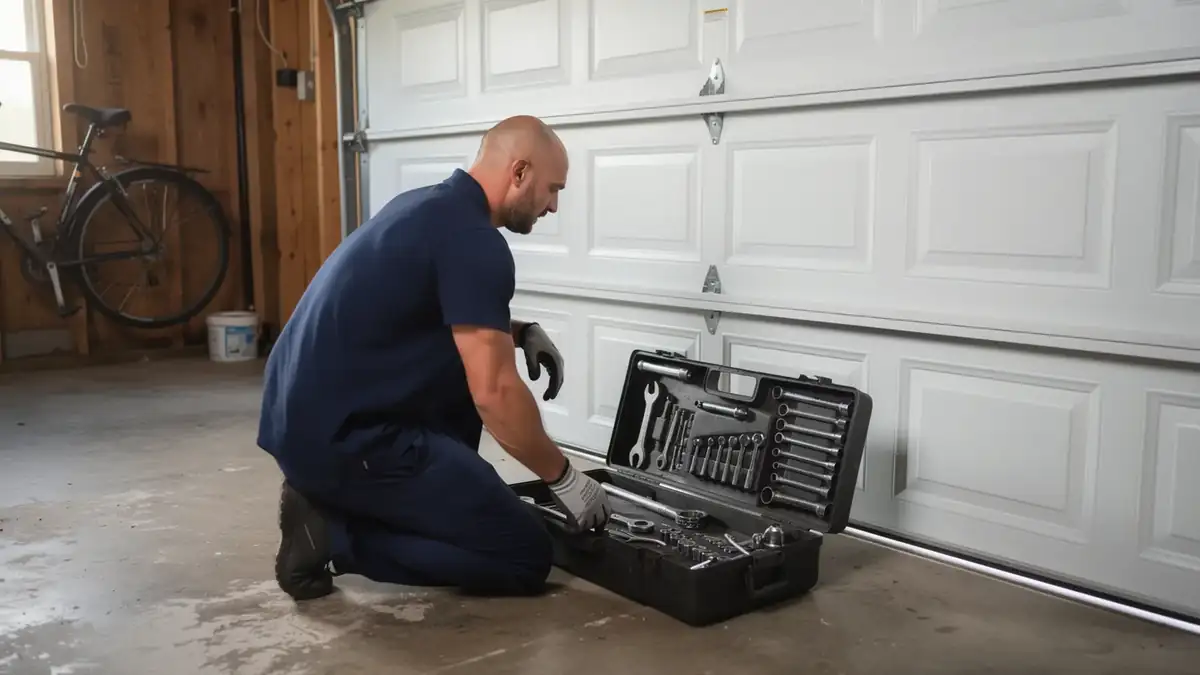
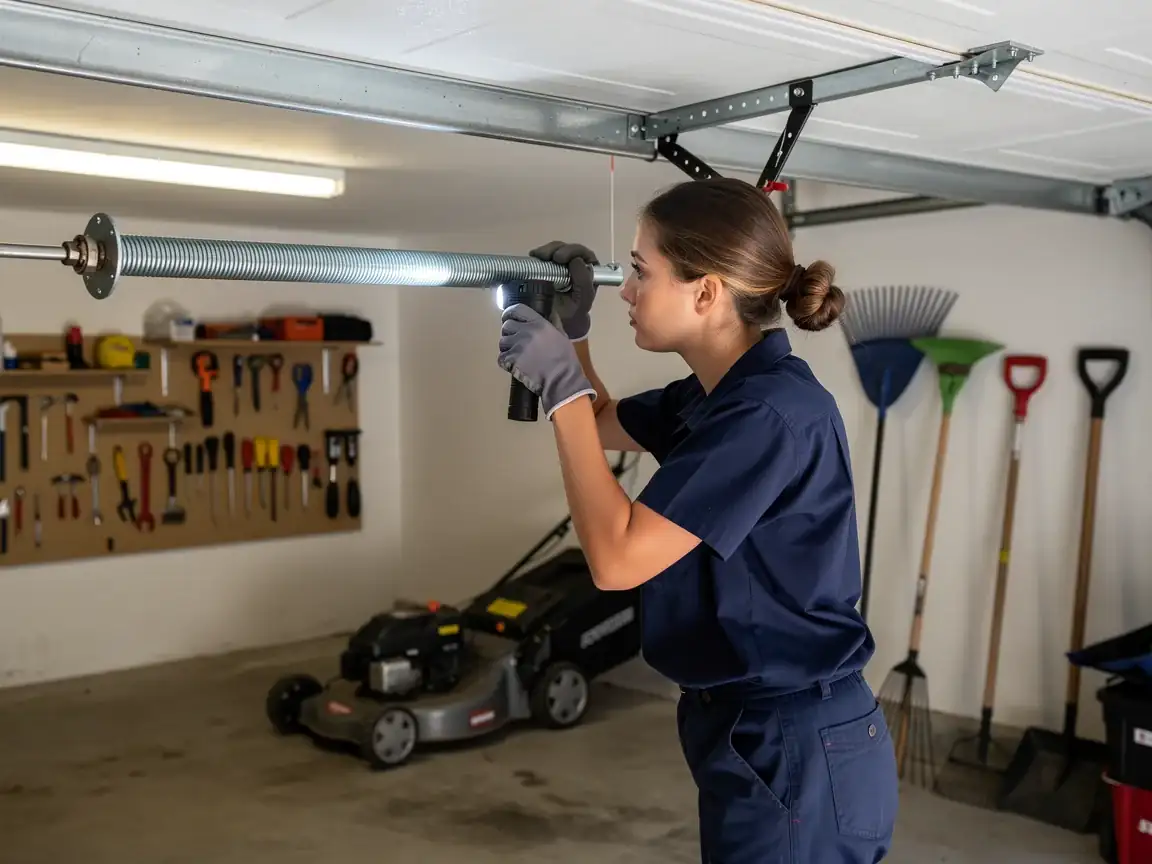
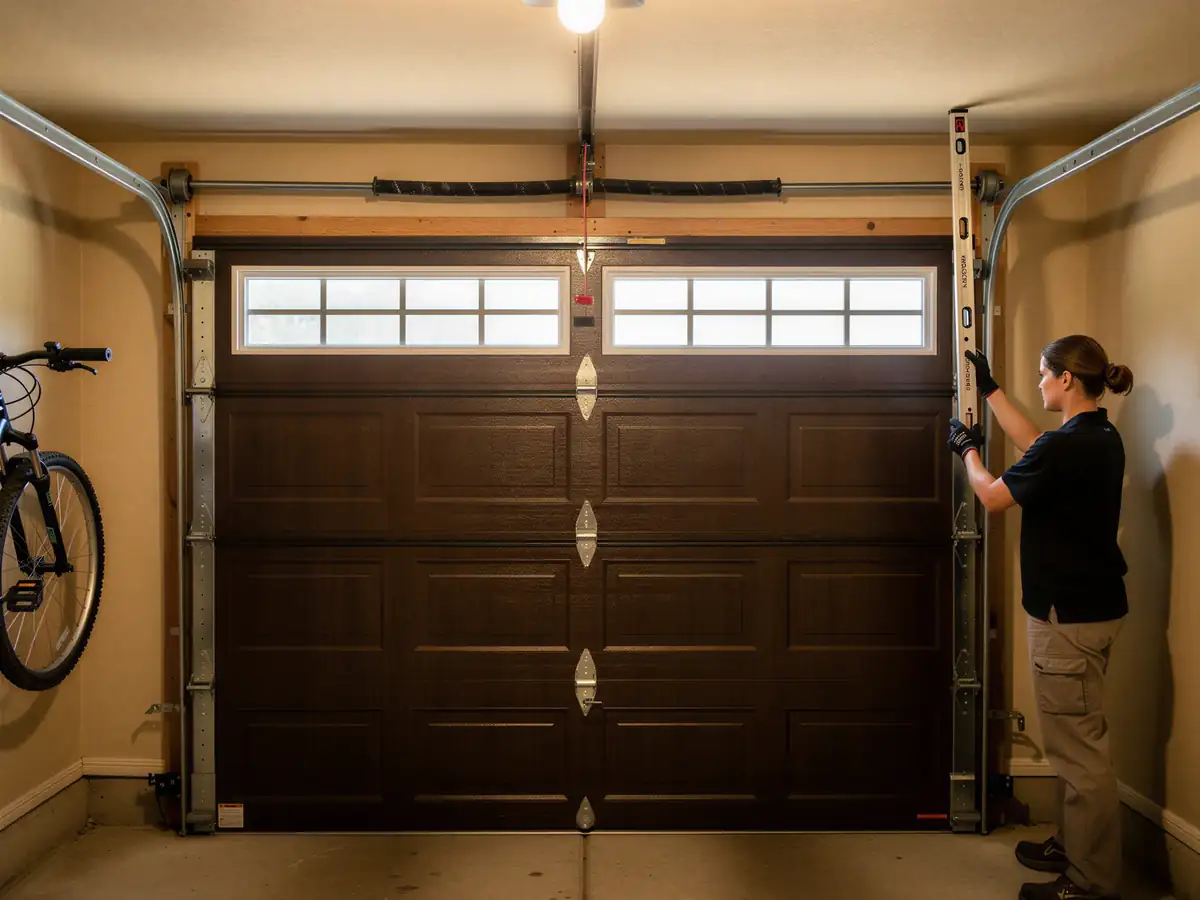
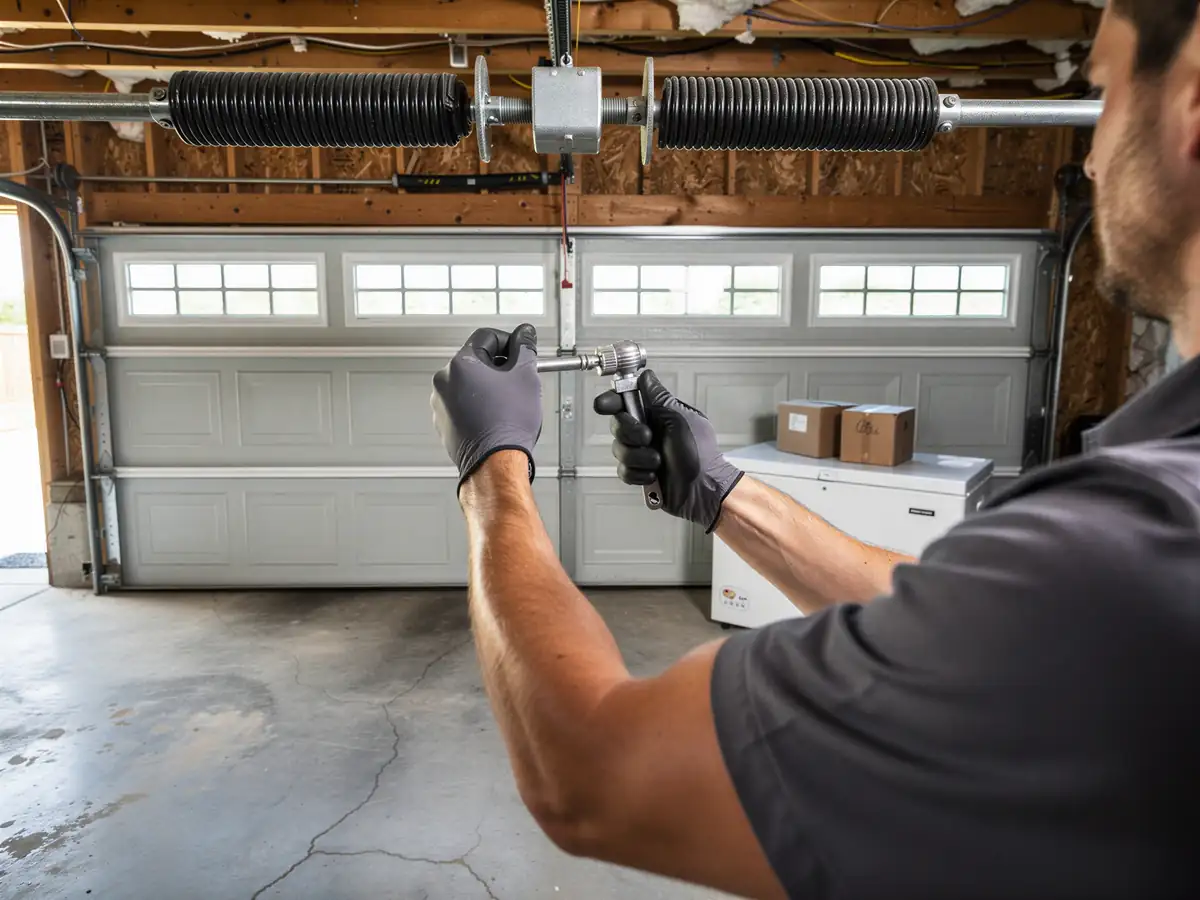
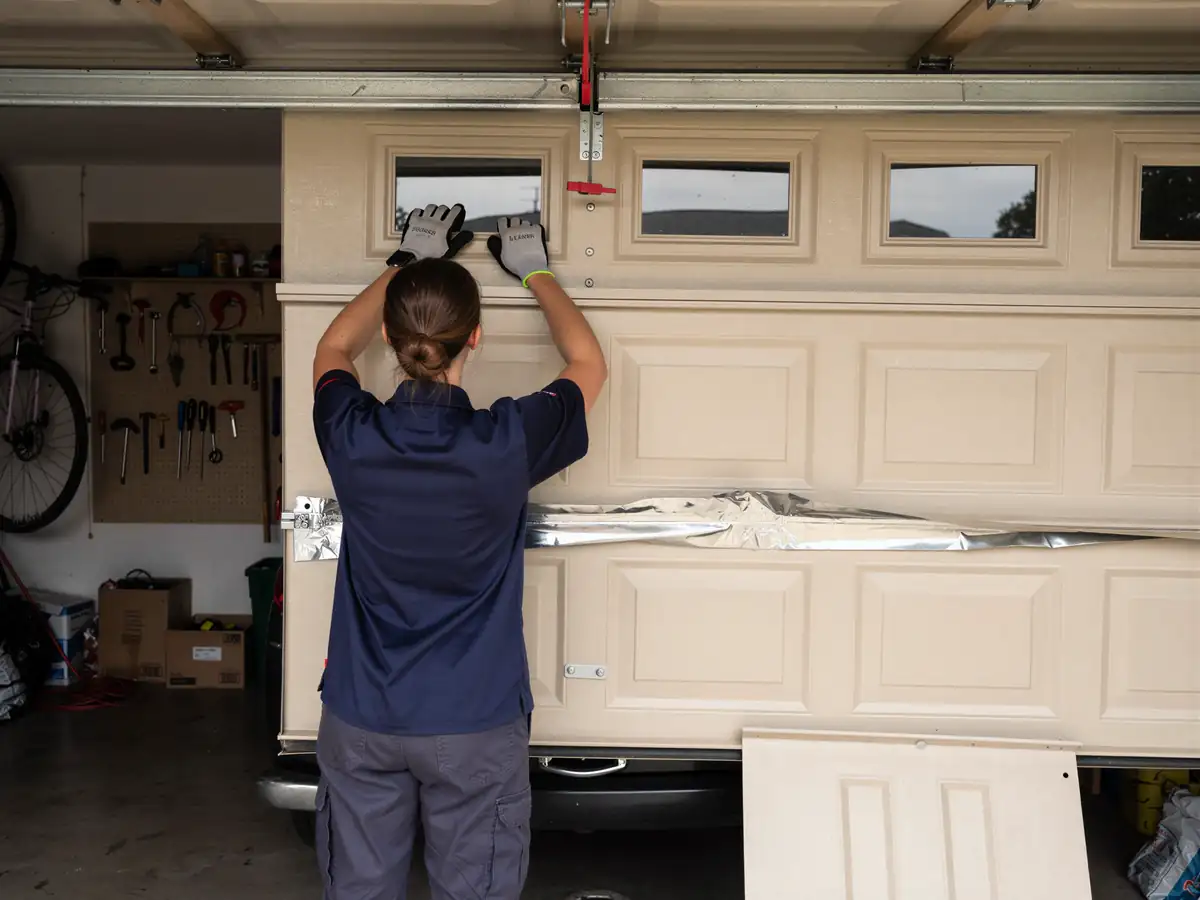
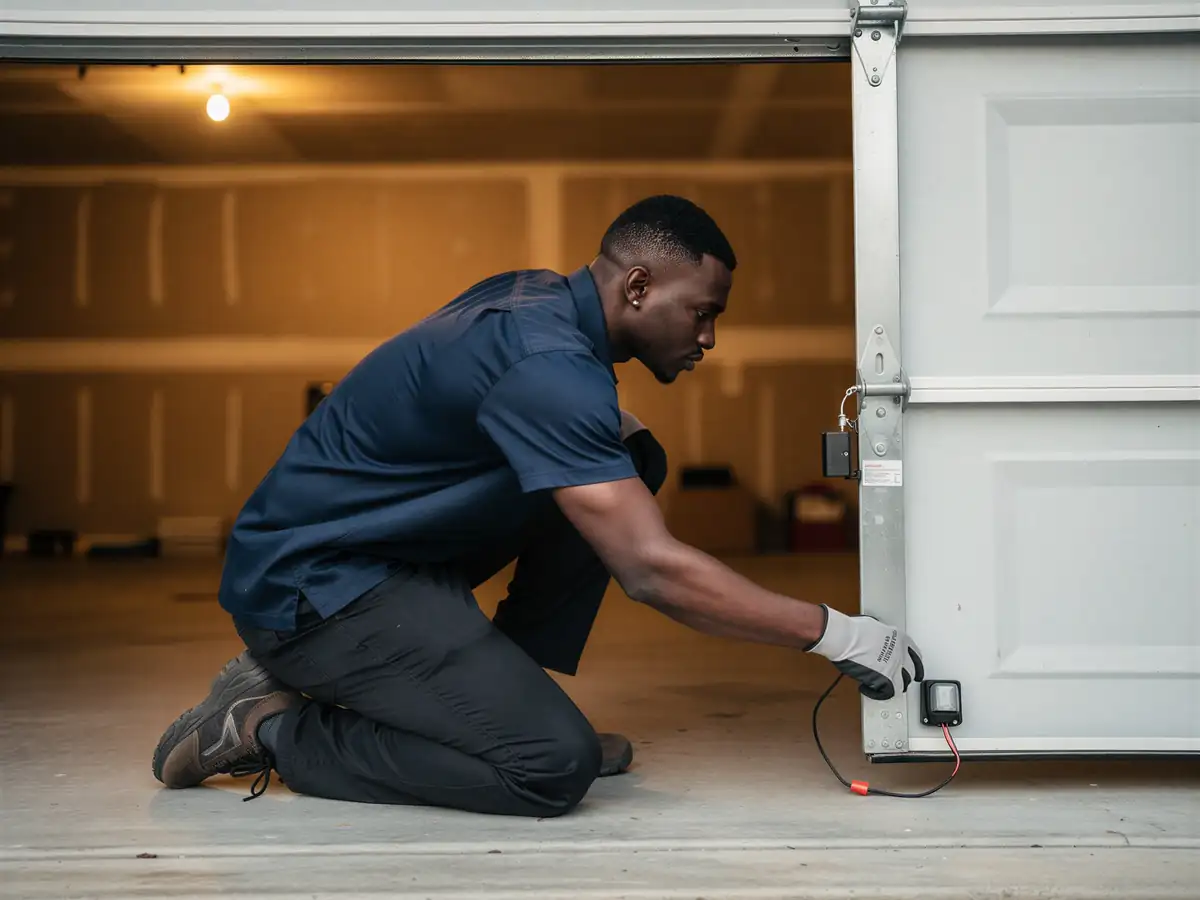
This area sits in a cold moderate climate band, and that matters more than most homeowners think. A garage door is a big moving panel of steel or wood hanging on steel hardware, and every winter the metal contracts, the lubricant in the rollers and hinges thickens, and the torsion spring loses a little tension just from the cold snapping it tight over and over. On a service call we're checking spring tension first, because a spring that's lived through forty or fifty winter cycles doesn't fail gently - it goes all at once, usually on the coldest morning of the year when you're already late. We also look at weatherstripping along the bottom and sides, since that's the part that takes the direct hit from frost heave and ice buildup at the slab edge. None of this is exotic. It's the same wear pattern you'd expect on any door that sits through a real winter season after season, not a one-time storm.
The Problem
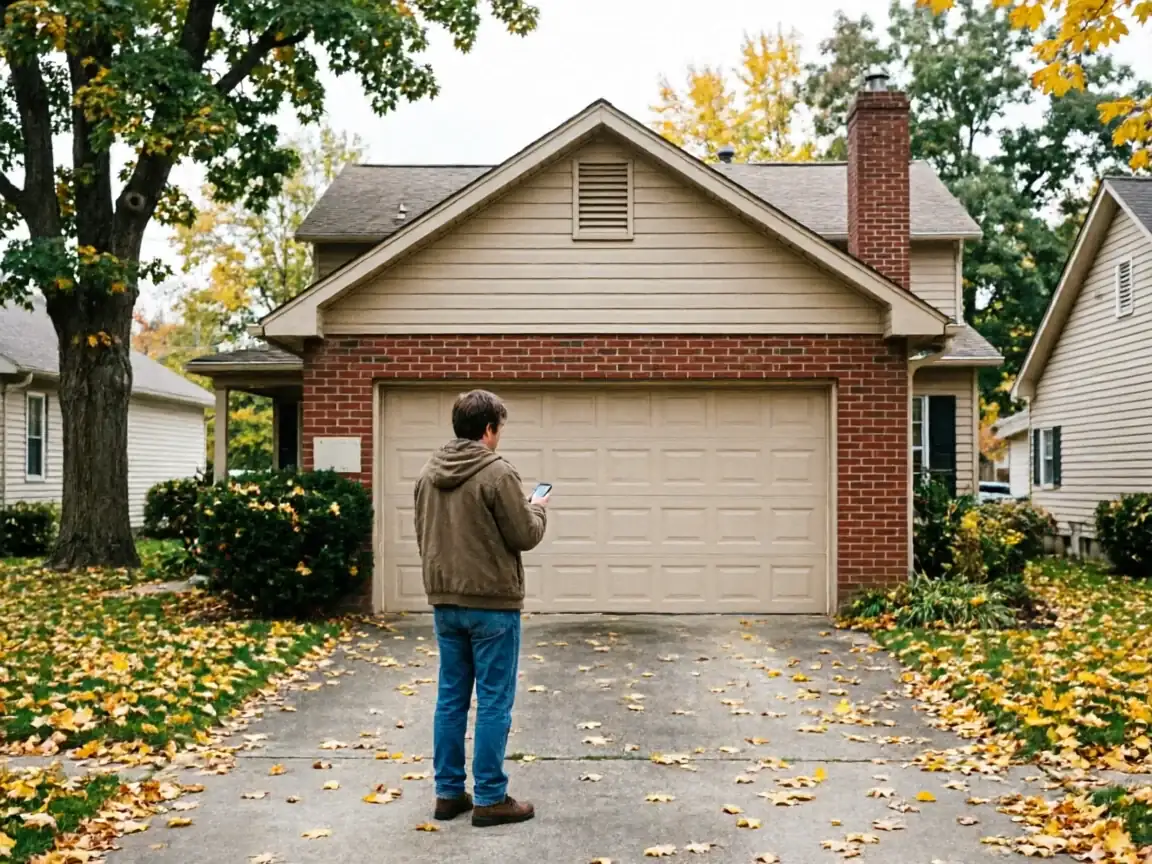
Most of the housing stock here was built between 1956 and 2005, with the bulk of it going up in the 1960s and 70s, and that era shows up in the hardware we find under the hood. A lot of these garages still have the original torsion spring setup or a replacement from a prior owner that wasn't sized right for the door. On an older door we're often dealing with a single spring doing the work that code now expects two springs to share, or a track that's been bent slightly out of plumb from decades of use and never realigned. The problem isn't that these doors are bad - it's that they're old enough to have outlived at least one owner's maintenance habits, and nobody's checked the cables or the bottom brackets in years. A service call on a house from this era usually turns up at least one worn part that's been quietly compensating for another one.
When to Get Help
Call before the door stops working, not after. If the door is noticeably slower to open than it used to be, if you hear a grinding or popping sound from the spring area, or if the door looks like it's hanging unevenly when it's halfway up, that's your window to get it looked at while it's still a parts-and-labor job instead of a stuck-door-at-6am job. We'll be honest about one thing: if your door and opener both date back to the original build and the springs, cables, and rollers are all worn together, patching one part is often a short-term fix. At that point replacement usually costs less over a few years than a string of individual repairs on parts that are all failing around the same age.
What Changes With the Season
Spring and fall are when we see the most calls, and it's not a coincidence. Coming out of a cold moderate winter, a spring that's been running under-tensioned for months finally gives, and a opener that's been straining to lift a heavier, stiffer door in the cold shows it first in the motor. Heading into fall, we're resetting tension and checking weatherstripping before the first hard freeze locks everything in place for months. If you own one of the 58,530 owner-occupied houses in the broader service area, chances are your door's maintenance rhythm should follow that same pattern - a look in spring, a look in fall - rather than waiting for a failure in January. We cover the Savage area out to places like Credit River, six miles off, and Jackson at eight, so the drive time for a seasonal check is usually short.
How it works
From “it’s stuck” to “it’s fixed”
01
Tell us what’s wrong
Describe the symptom - won’t open, loud bang, opener runs but the door won’t move.
02
On-site diagnosis
A technician tests the door under power and by hand and finds what actually failed.
03
Clear, up-front plan
You get the fix that’s needed and what drives the cost - before any work starts.
04
Repaired & tested
The repair is done, the door is set true and tested, and the work area left clean.
Not sure which repair your door needs in Savage, MN? Describe what it’s doing - every job starts with a diagnosis.
How often should I get my garage door serviced in Savage?
Twice a year works well given the cold moderate climate here - once before winter to check spring tension and weatherstripping, and once in spring after the hardware has gone through a full freeze-thaw cycle. Doors on homes built in the 1960s and 70s especially benefit from this, since the original hardware is decades past any factory lubrication.
Is it normal for my door to be slower in winter?
Yes, to a point. Cold thickens grease in the rollers and tightens steel slightly, so some slowdown is expected. But if it's dramatically slower or grinding, the spring tension has likely dropped and it's worth a call rather than waiting for a full failure.
My house was built in the 1970s - should I expect original parts?
It's common. A lot of homes in this area date from that stretch, and we regularly find original torsion springs or openers that were never upgraded. We'll tell you plainly whether a part is worth repairing or whether it's at the end of its service life.
Do you cover areas outside Savage itself?
We work the surrounding area out to towns like Jackson, Chanhassen, and Carver, roughly 8 to 13 miles out. If you're further, give us a call and we can tell you whether it makes sense for the job.
Ready to get your garage door sorted?
Tell us what it’s doing and where you are in Savage - we’ll take it from there.