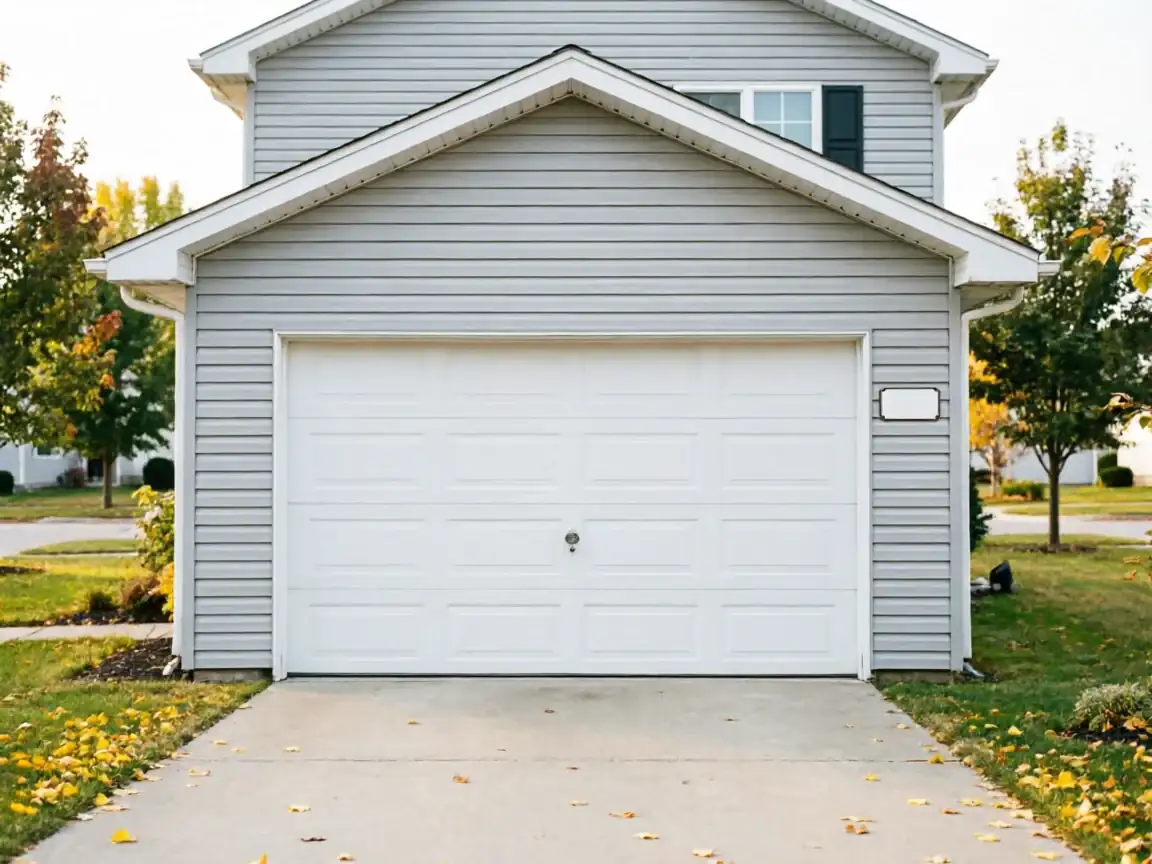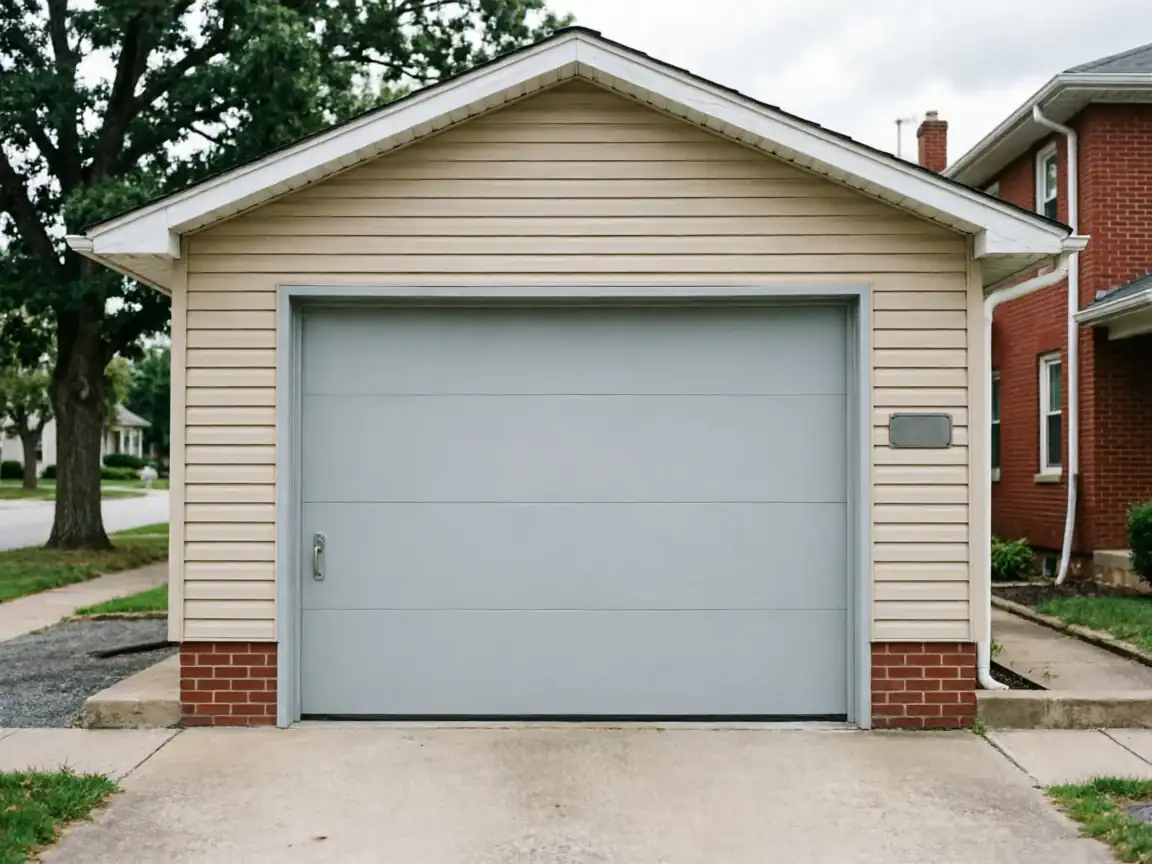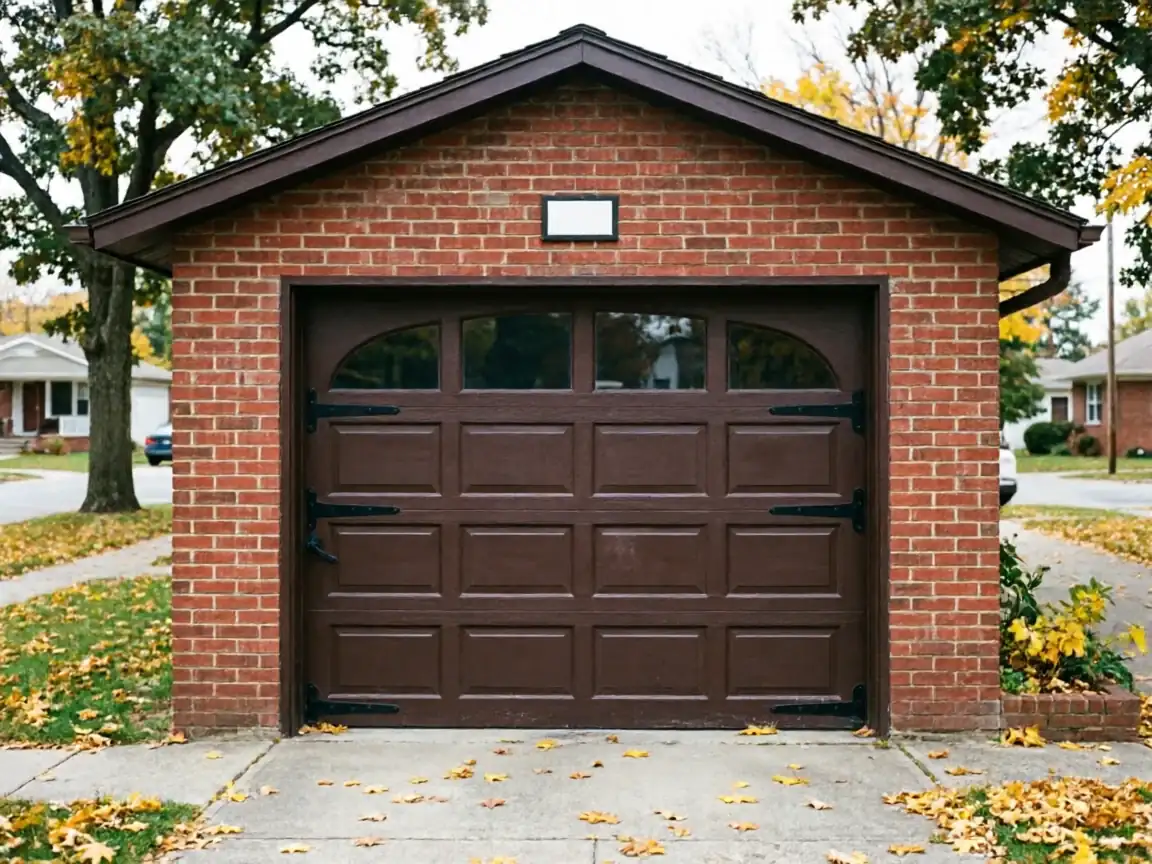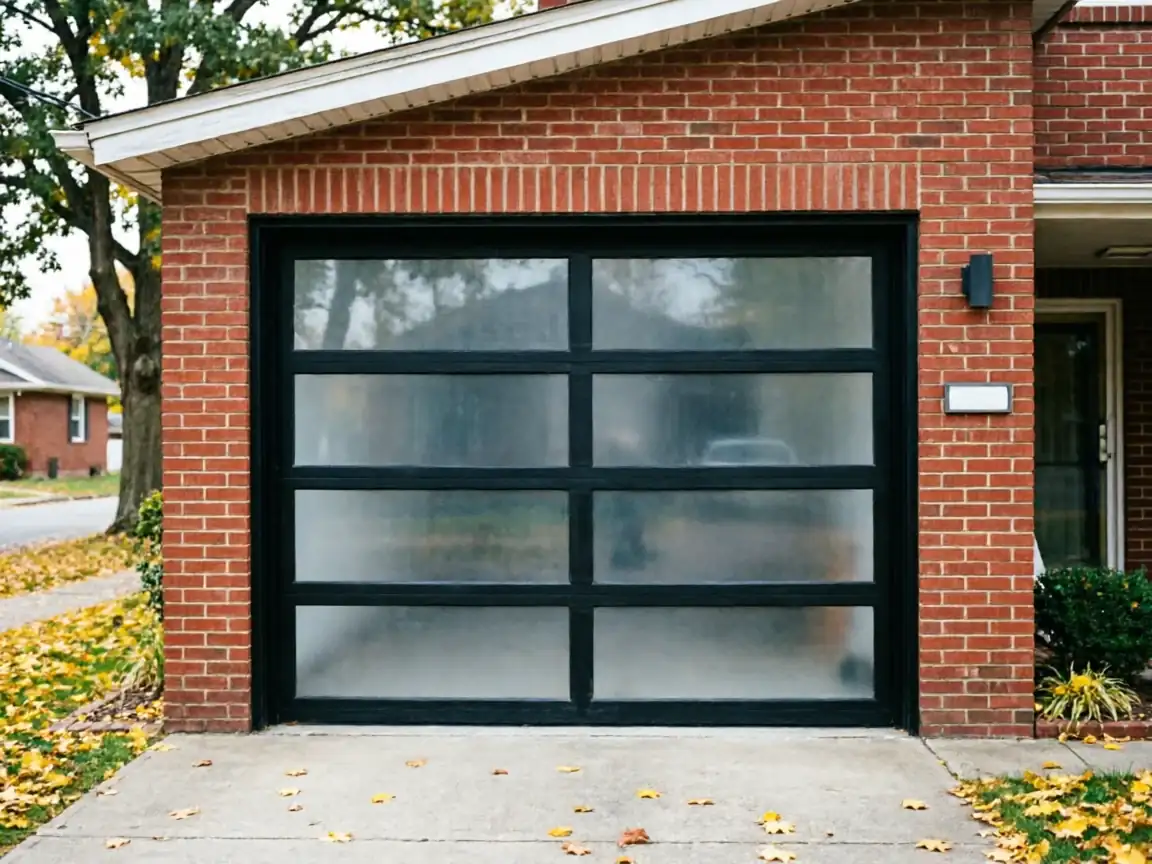
What You Are Seeing
If you're looking at installation instead of another repair
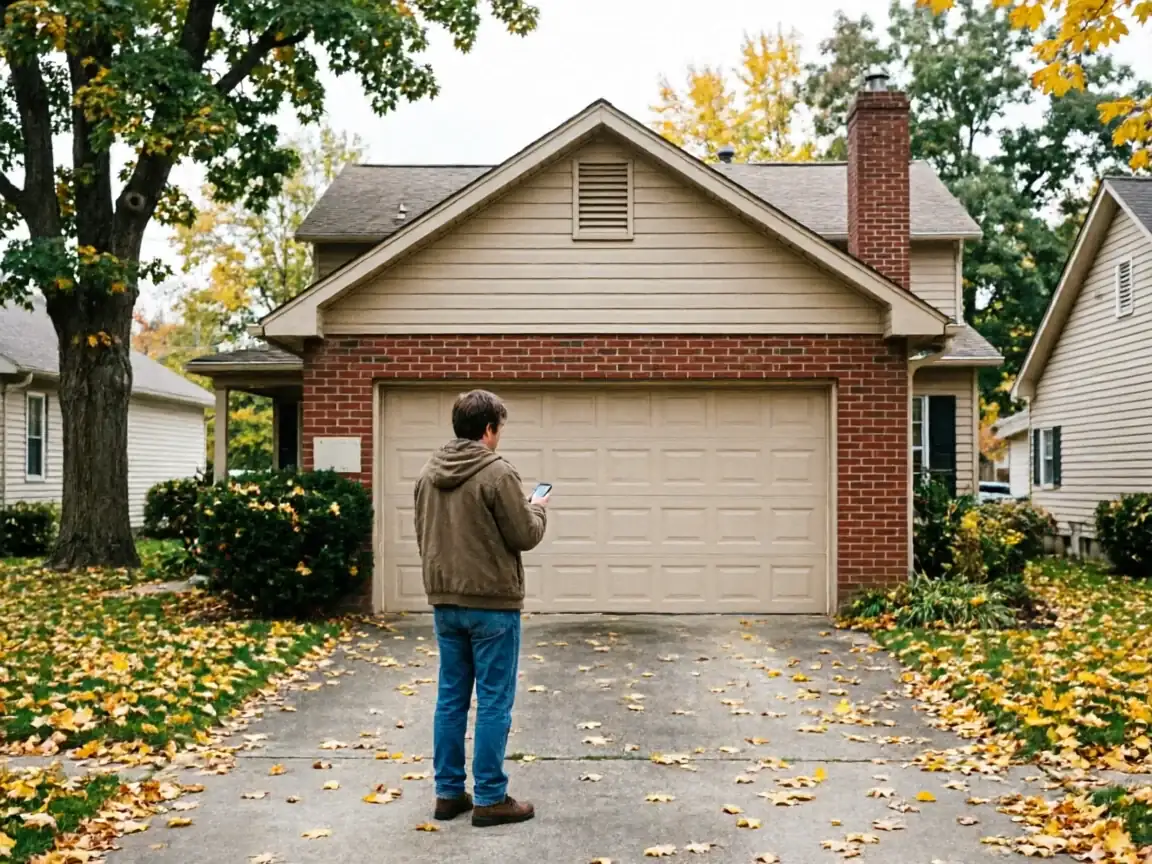
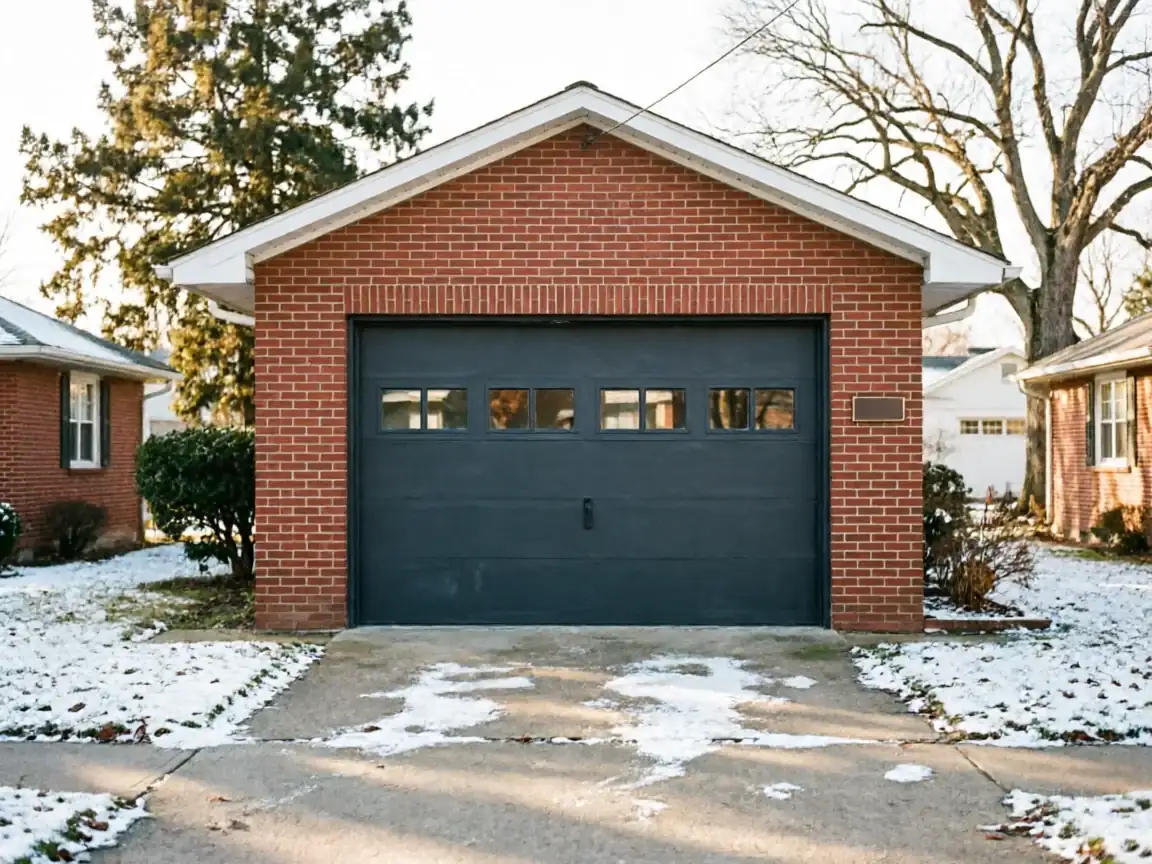
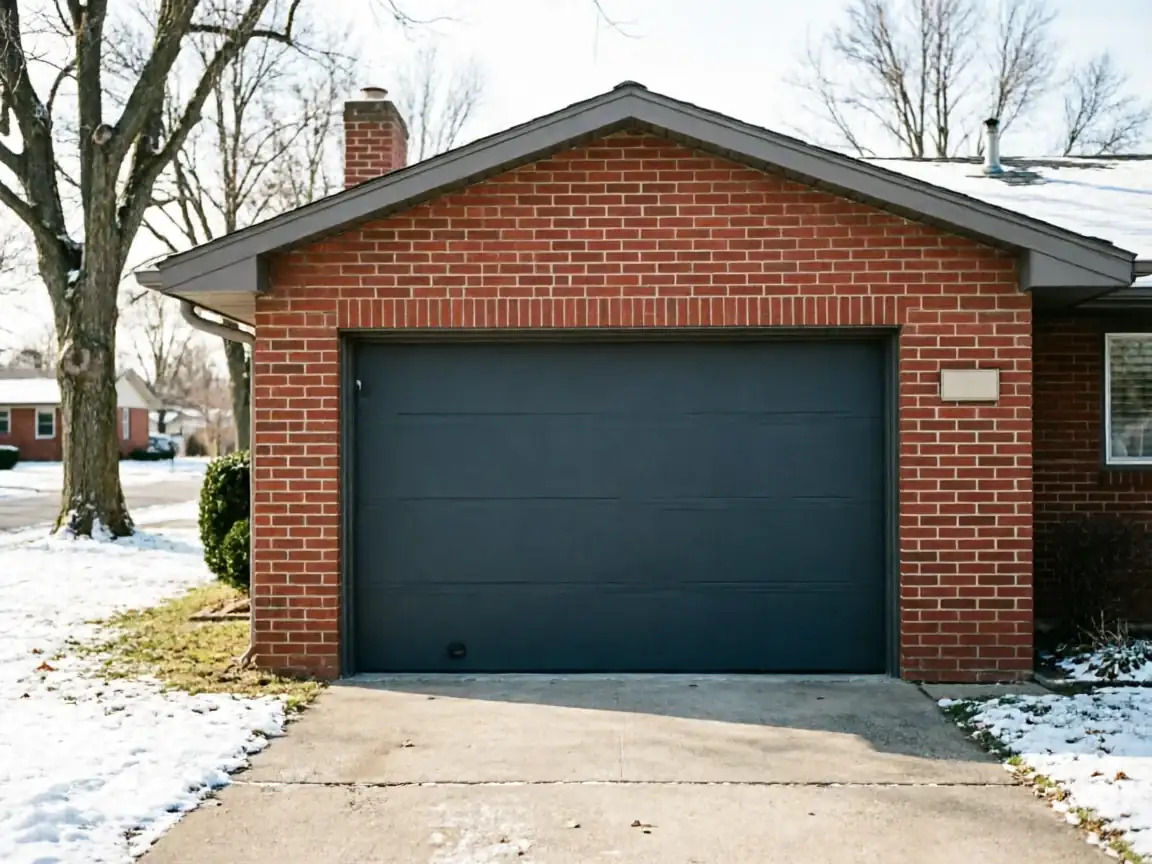
You've probably already been through a spring or cable fix and the door is still rough - it sags on one side, the panels have started to bow, or the opener strains on every cycle. In a lot of Savage houses, the door itself is original or close to it. Housing in this area was built mostly between 1956 and 2005, with the typical year sitting around 1975, and that generation of doors is single-layer steel with no insulation core and hardware that's hard to match today.
You're also seeing rust at the bottom panel seam, daylight around the weatherstrip
And a door that's heavier than it should be to lift by hand if the opener fails. None of that is a spring problem you fix and move on from - it's the door telling you it's done. We'll say plainly when a repair would just be a stall: if the track is pulling away from the jamb or the panels are curling, a new door costs less over a few years than another round of patch repairs on a frame that keeps shifting.
How Long You Are Without the Door
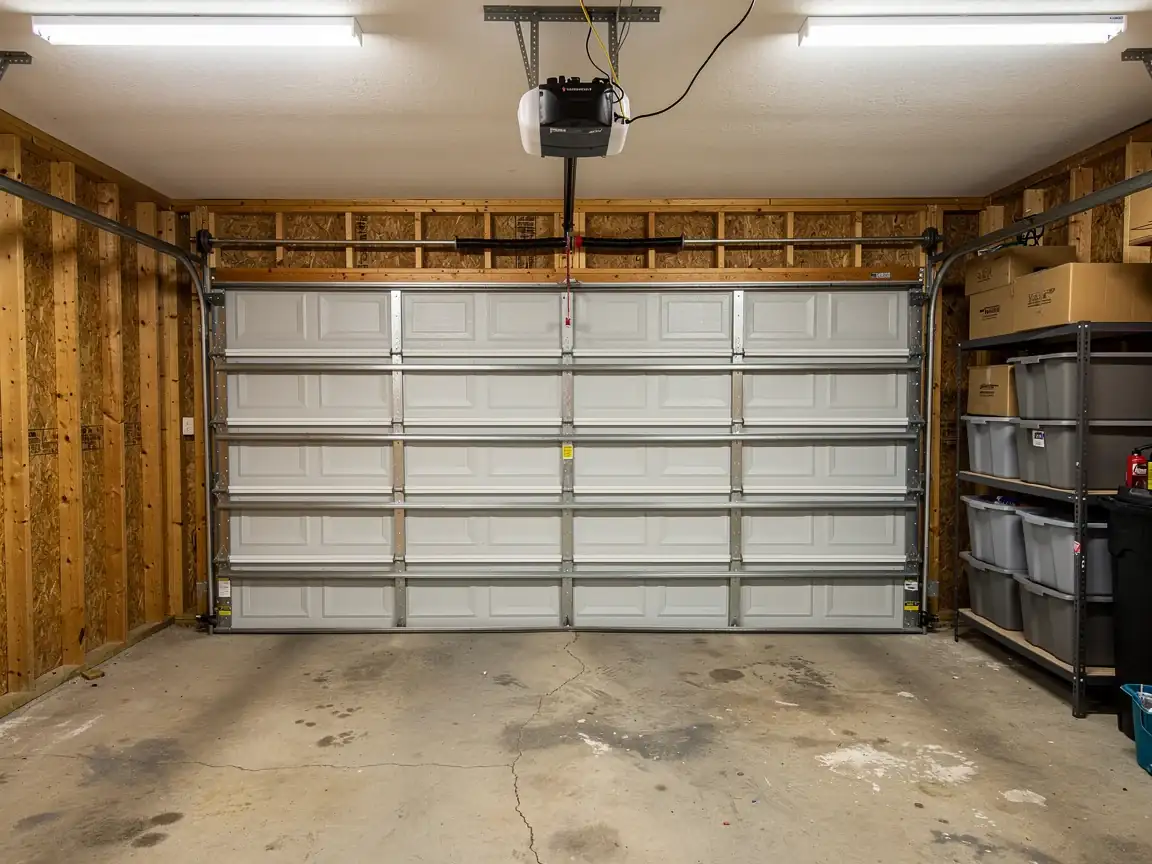
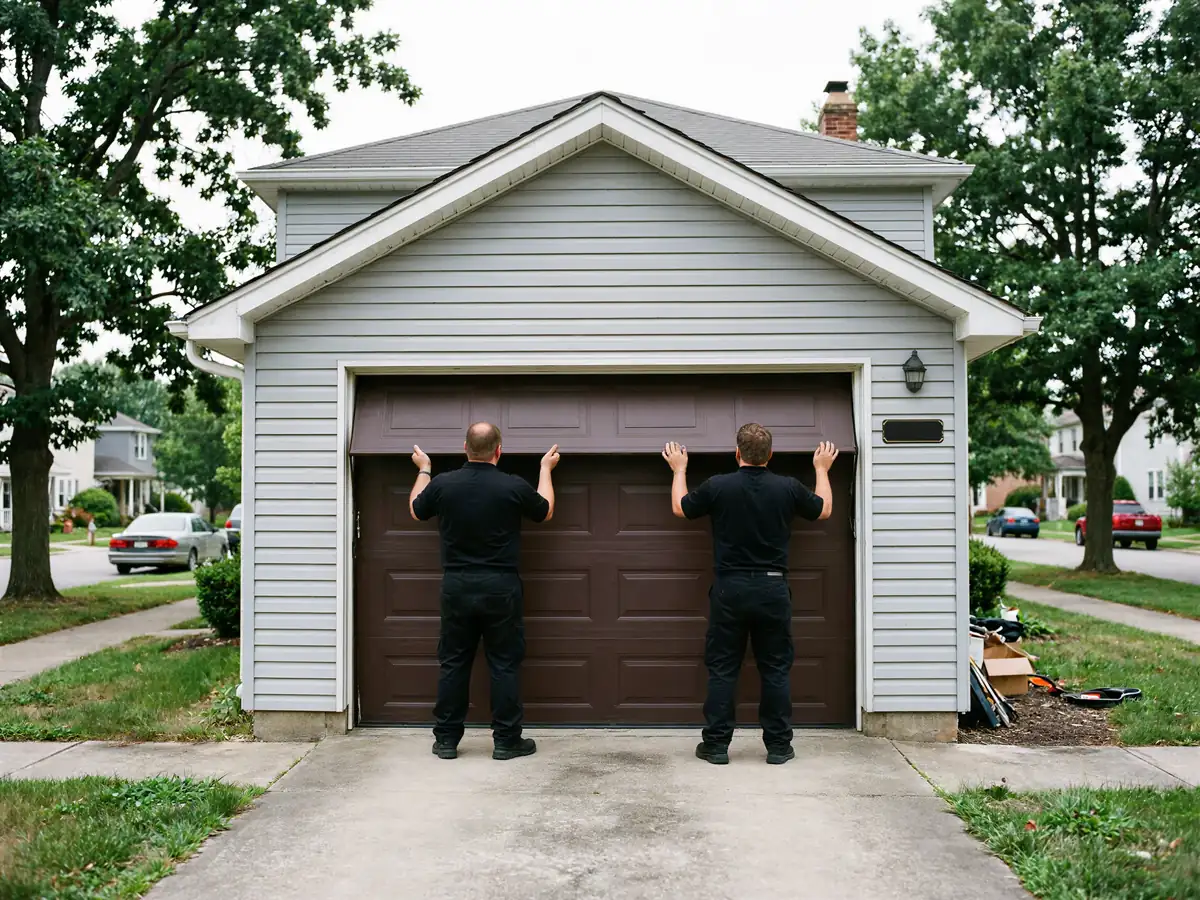
A full install isn't a same-day swap in most cases. We measure the opening, confirm headroom and backroom clearance for the track and spring system, and order the door to match - insulated steel sections sized for the opening, not a universal stock size forced to fit. That ordering step is the one we can't shortcut; lead time on the door itself depends on what's in stock versus what has to be built to size, and we won't guess a date we can't back up.
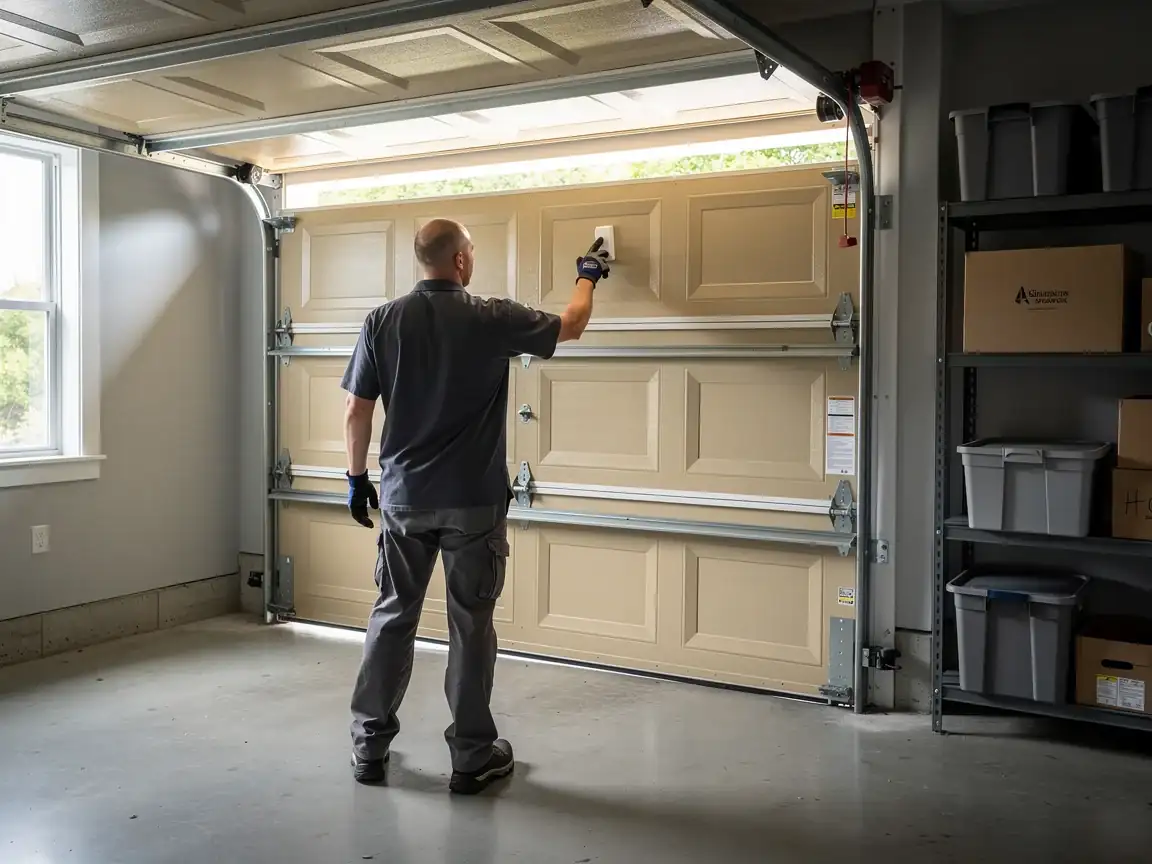
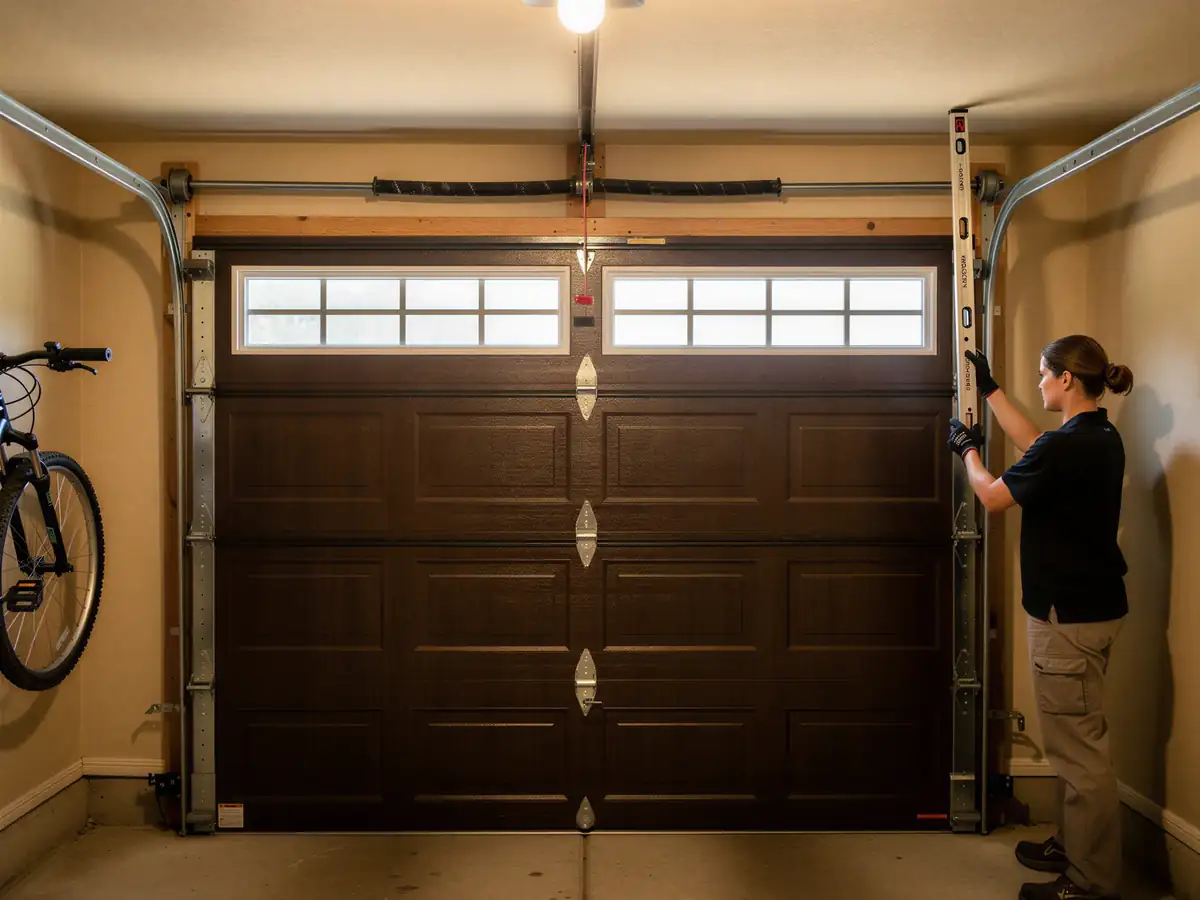
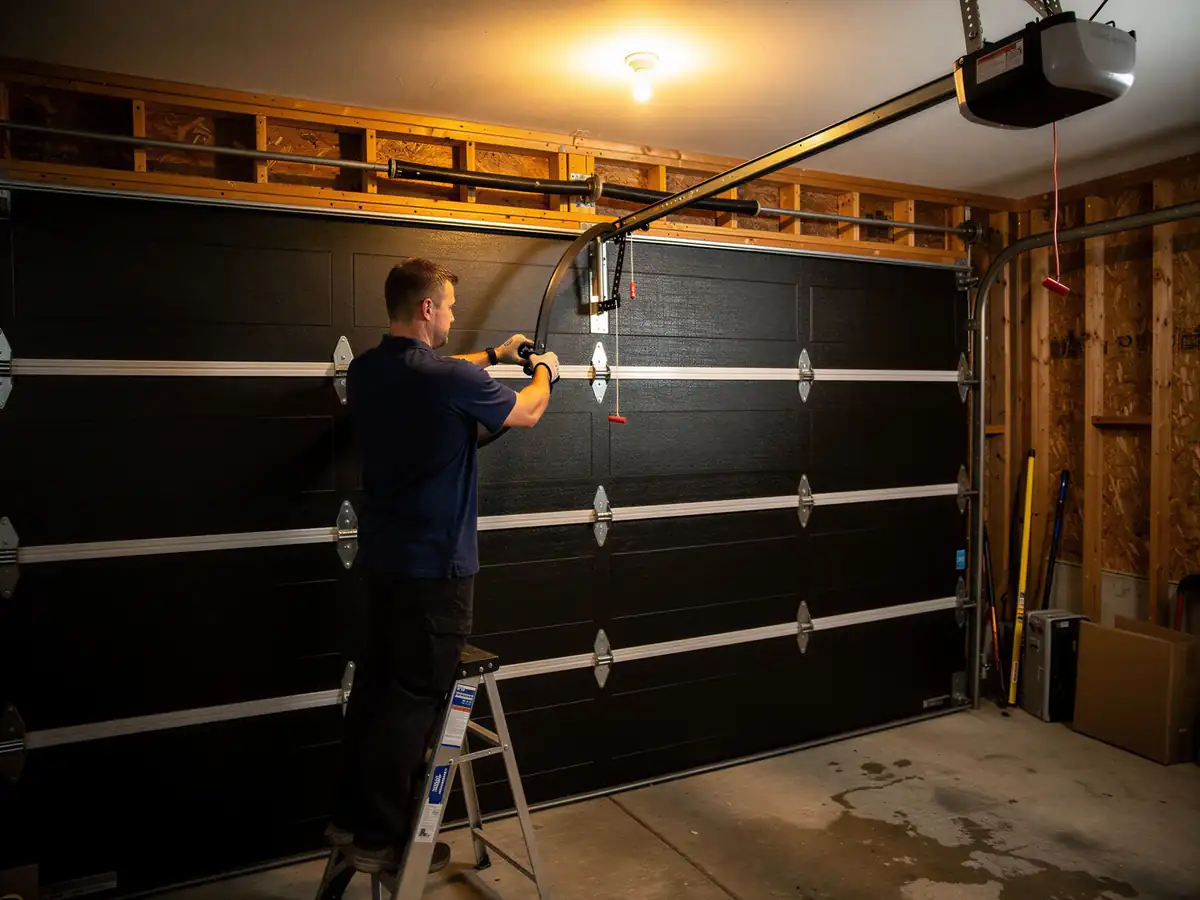
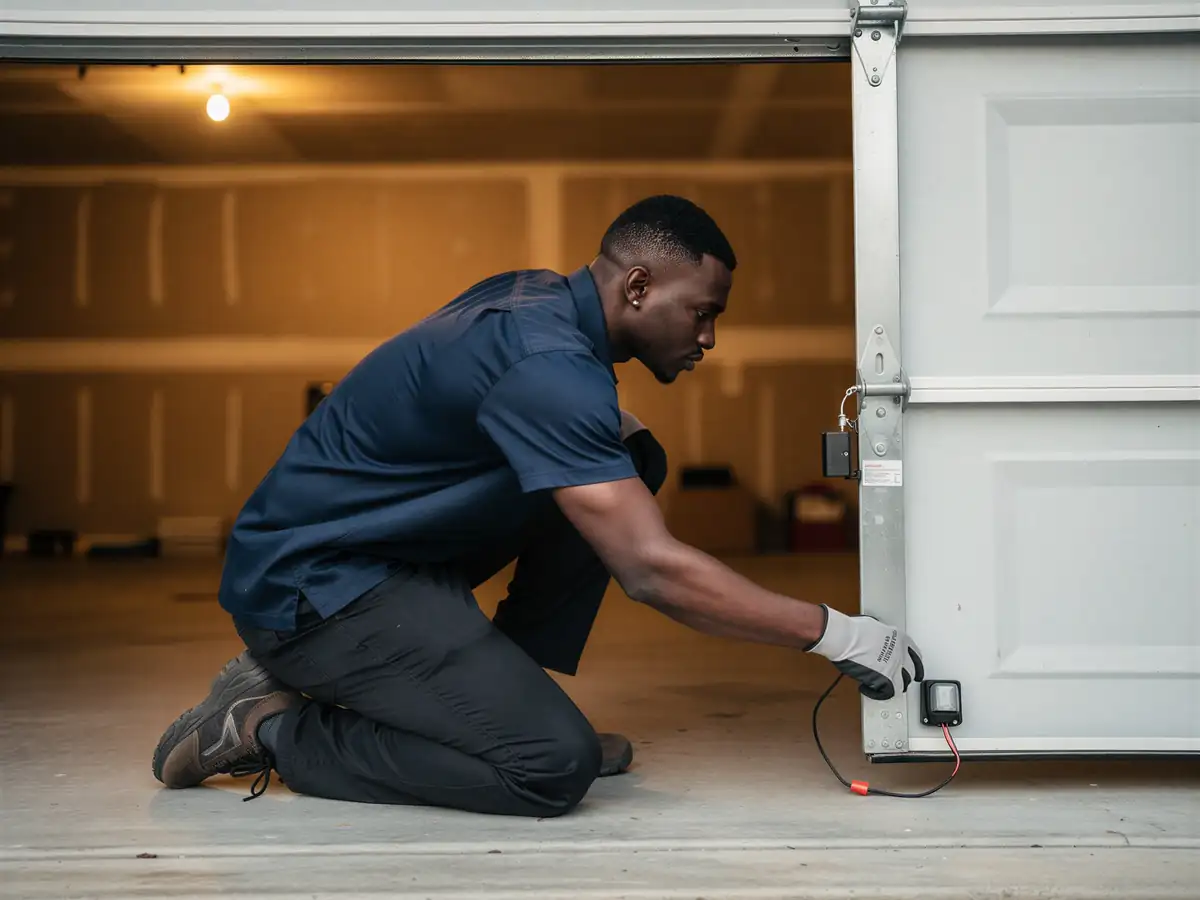
Once the door's on site, the actual removal and install is a single working day for most single or double openings - old door and track out, new jambs squared if the old frame has settled, new track, springs sized to the door's actual weight, and opener reconnected and tested. We don't leave an open bay overnight without a temporary closure if that's a risk. The honest limit here: if your opening is non-standard, or the slab has settled enough that the frame needs carpentry work first, that adds a day and it's not something we can diagnose without looking at it in person.
What The Repair Takes
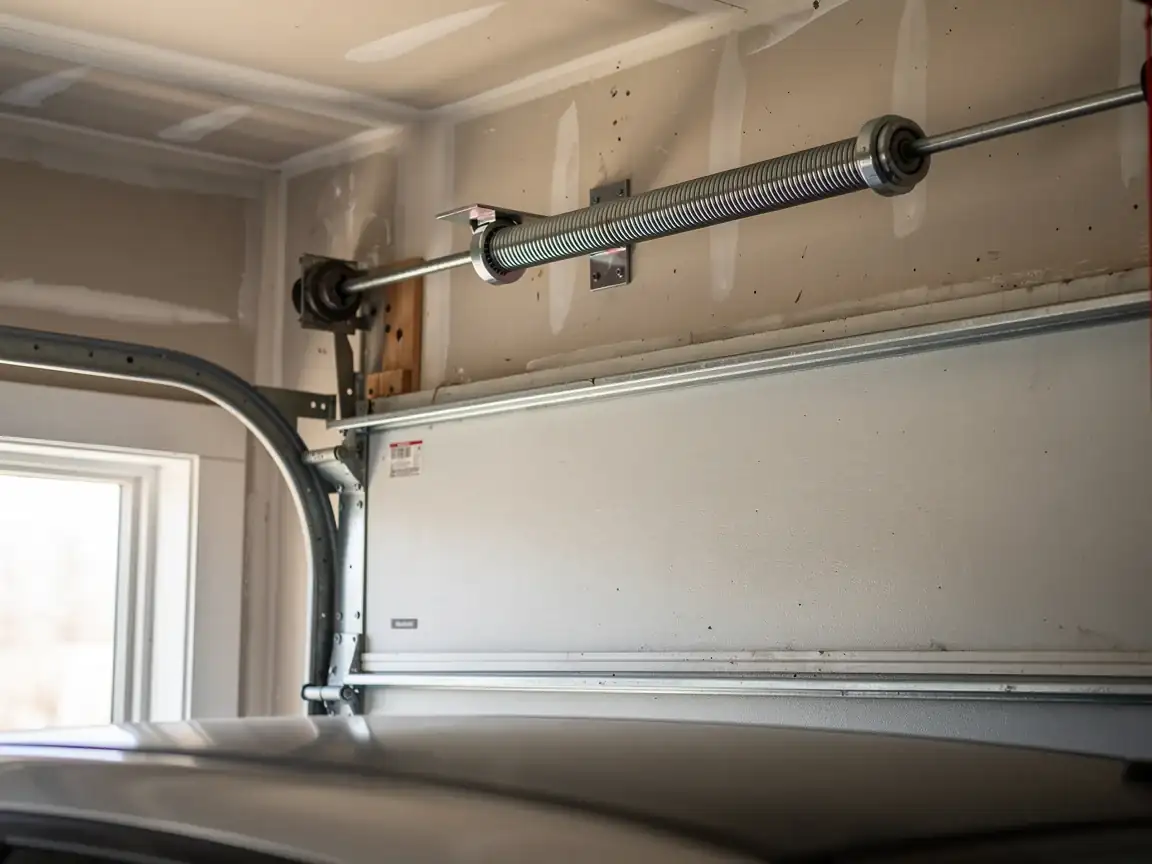
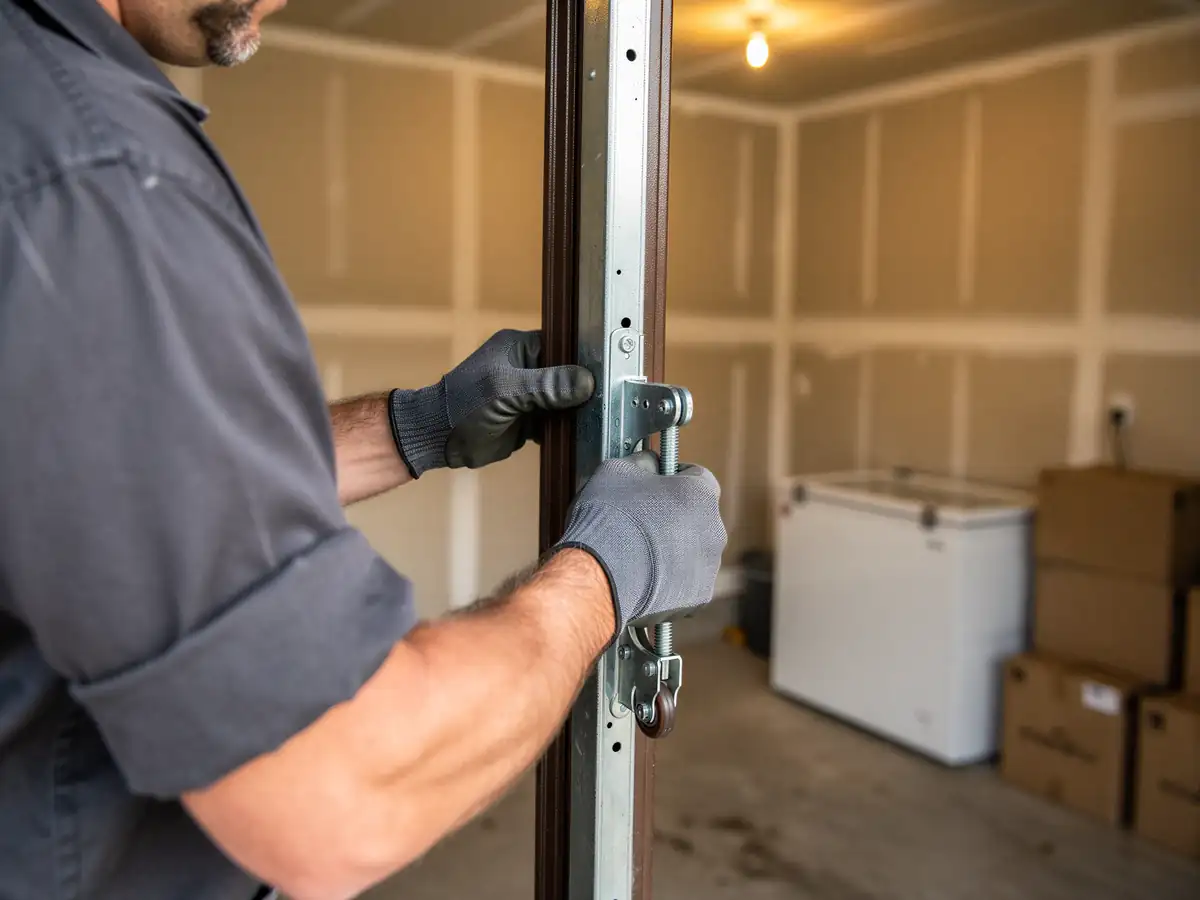
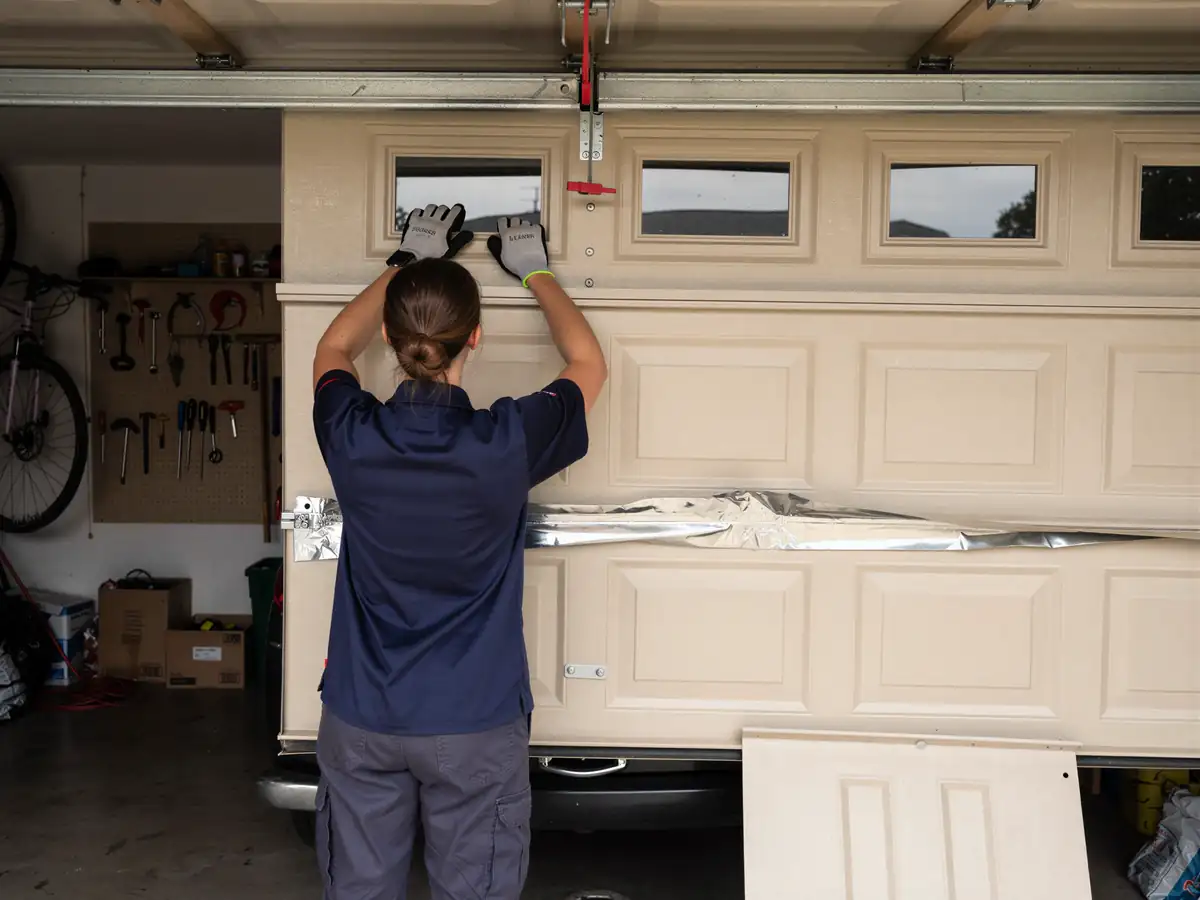
Installation starts with pulling the old door, track, and springs out entirely - we don't hang new panels on old rail if the rail has worn grooves or the radius is bent, which is common once a door's been fighting a misaligned track for years. The jambs get checked for square; in houses from the 1960s and 70s stock that makes up most of this area, framing has often shifted enough over fifty-plus years that shimming is part of the job, not an upsell.
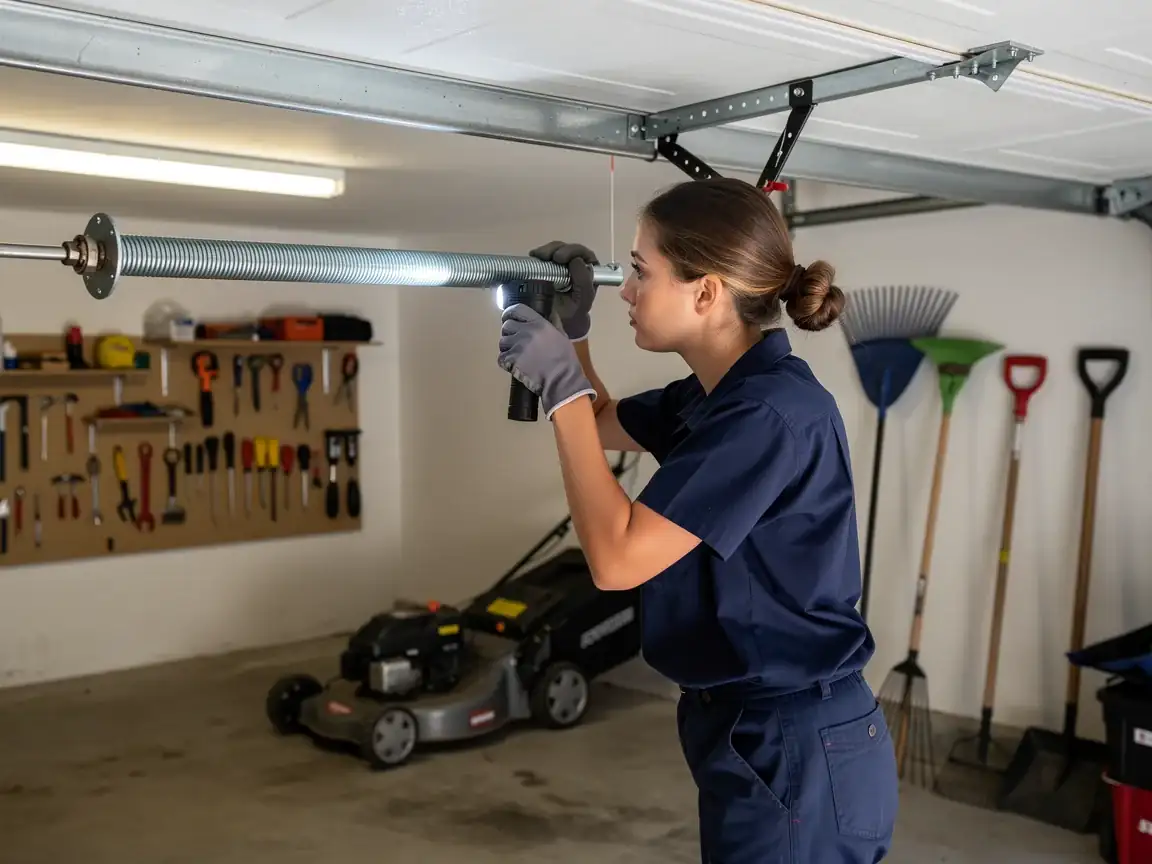
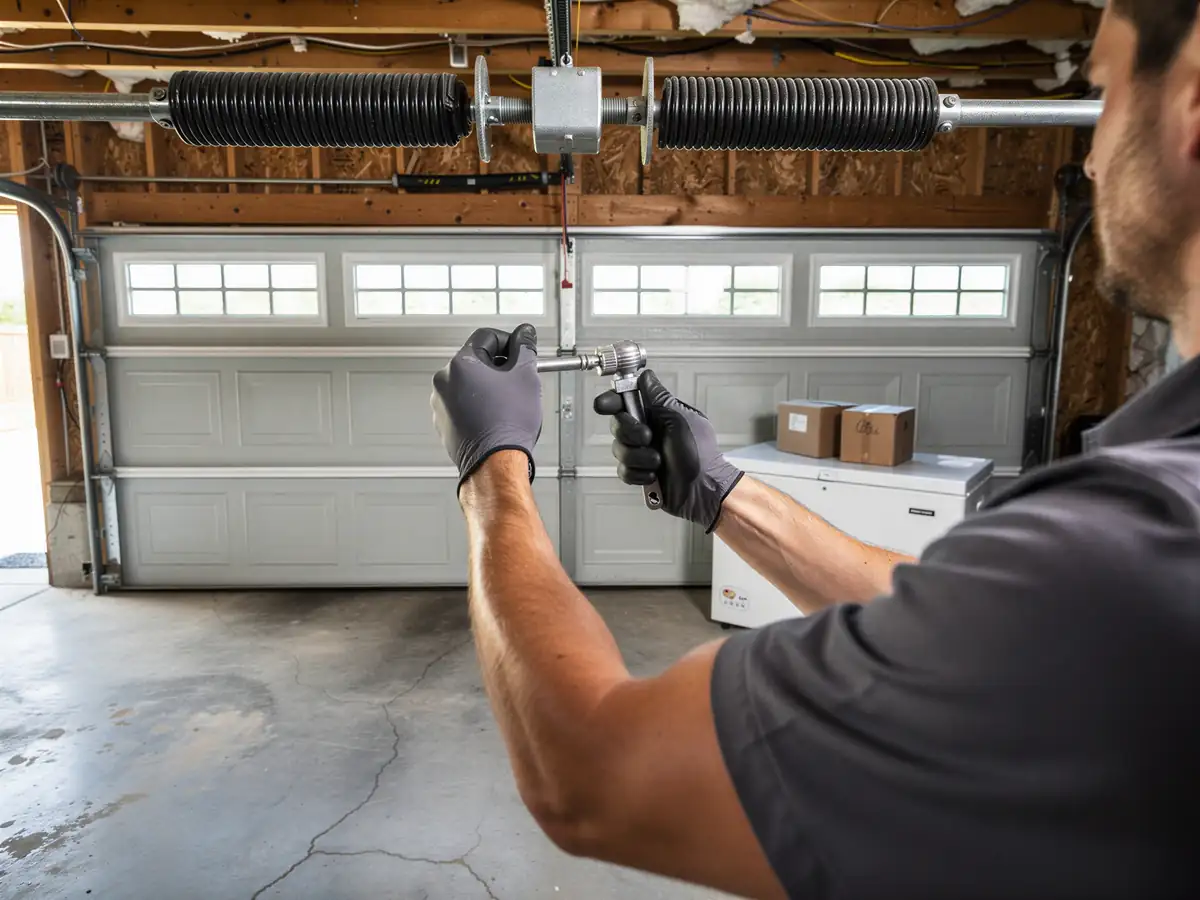
The new door gets insulated sections - given the cold-moderate climate here, an uninsulated single-layer door just transfers outside temperature straight into the garage, which matters if the garage shares a wall with living space. Springs are sized to the actual door weight, not guessed from the old spring's wind count, because the old spring may have been wrong for years and nobody noticed until it failed. Opener gets reconnected, travel limits and force settings reset, and the whole thing cycled a dozen times before we call it done. What we don't do: we don't re-use an old track on a new door just to save a part - mismatched wear patterns come back as noise and binding within a season.
Why It Happens Here
The root of most installation calls in this area is simple arithmetic
Housing here was built mostly between 1956 and 2005, median year around 1975, across the 31 named communities that make up this part of the metro - Savage included. That means a huge share of garage doors out there are original or close to it, built to a standard that predates insulated steel cores and modern torsion spring sizing. A door built in 1975 has had fifty years of cold-moderate winters cycling steel through freeze and thaw, and steel doesn't hold up to that forever even with regular maintenance.
Across the broader service area there are 109,890 households and 58,530 owner-occupied houses
And a meaningful share of those sit on doors from that same build era. Head six to eight miles out toward Credit River or Jackson and the housing pattern holds - same decades, same original hardware aging out at the same time. It's not bad luck hitting one house; it's a whole generation of garage doors in this part of Minnesota reaching the end of its run together.
- 109,890 households
- 58,530 owner-occupied