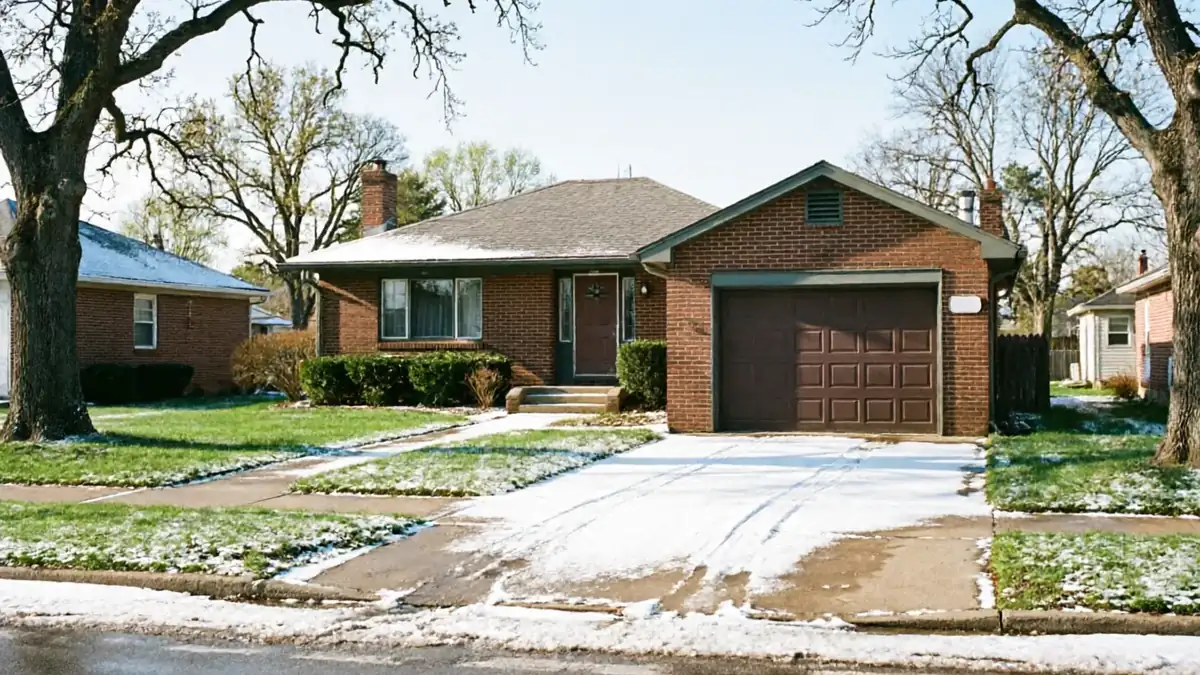
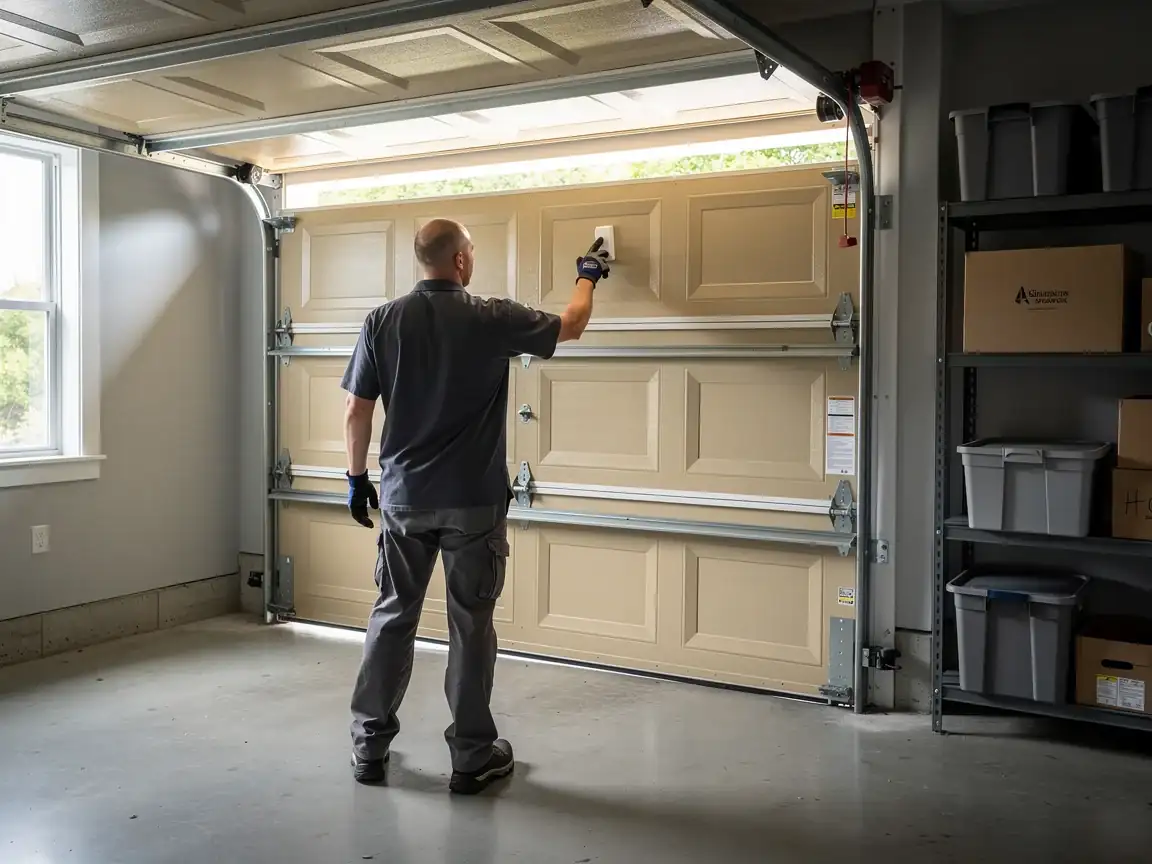
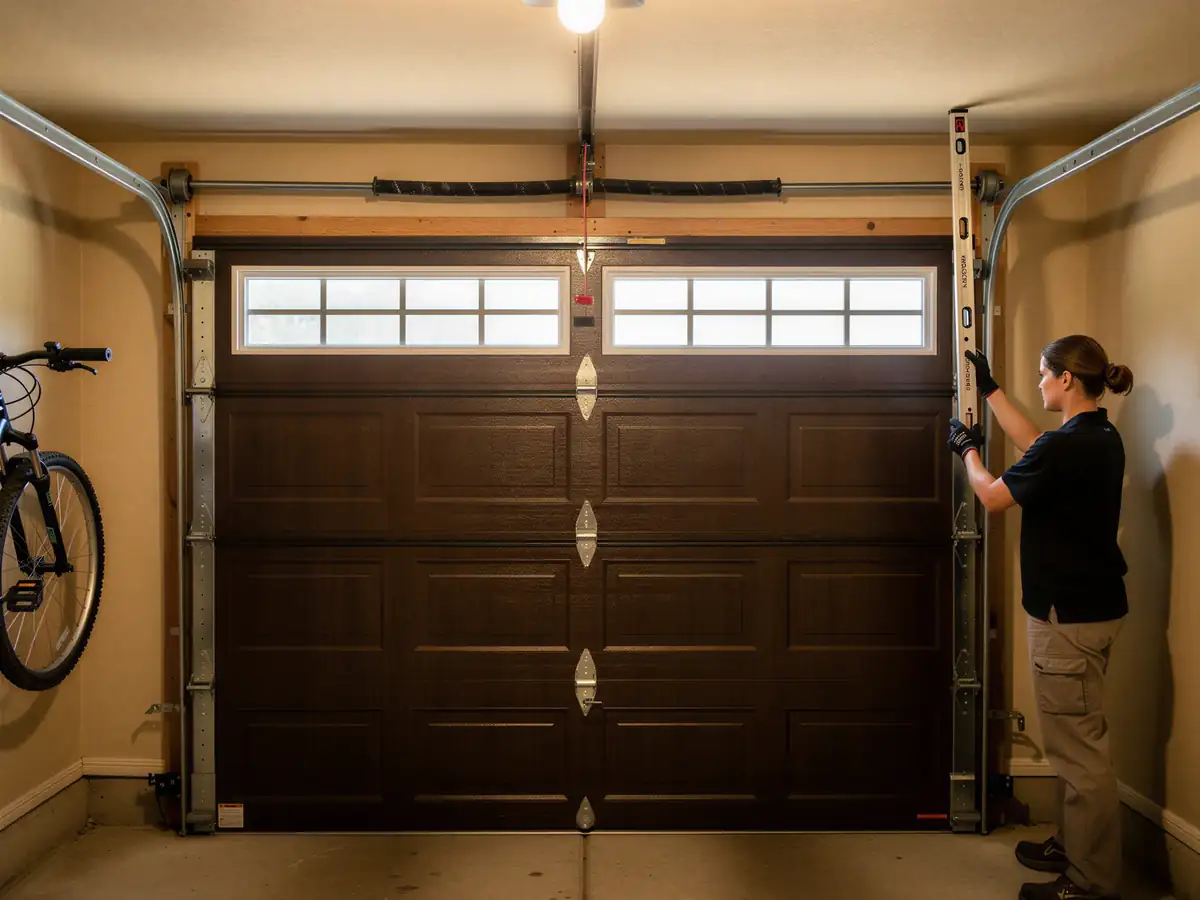
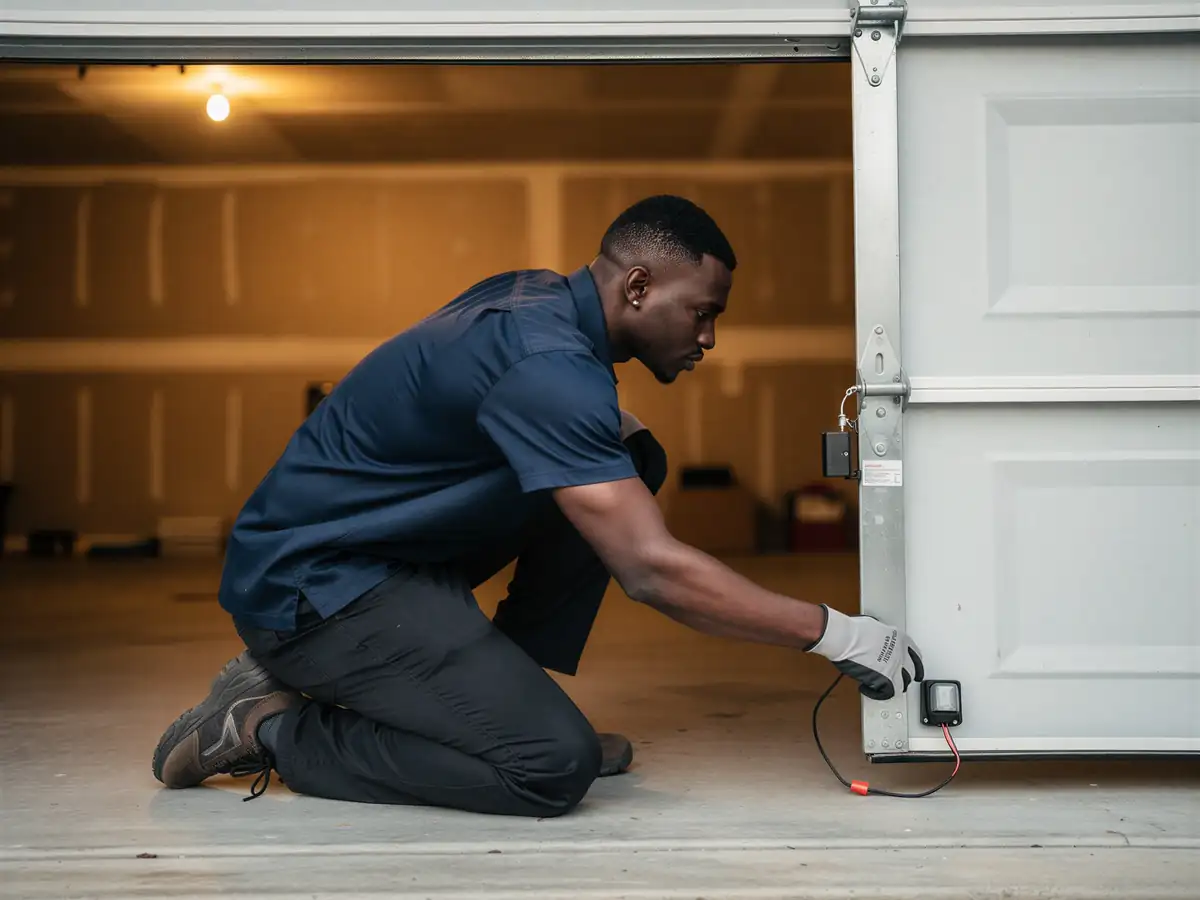
Savage sits in a cold-moderate climate band, and that matters more to a torsion spring than most homeowners realize. Steel contracts as the temperature drops, and a spring that's wound tight to begin with gets tighter still. Add the fact that most houses in this area were built between 1956 and 2005, with the bulk of that stock going up in the 1960s and '70s, and you've got a lot of original or first-replacement springs that have been cycling through decades of Minnesota winters. Metal fatigue doesn't care how well you maintained the opener. It cares about cycle count and temperature swing. A spring rated for a certain number of cycles at room temperature gives you fewer real-world cycles once it's doing that work at 10 degrees below zero. That's why so many service calls here cluster on the first hard cold snap of the season - not because people neglect their doors, but because the spring was already near the end of its life and the cold just finished the job. If your door is original to a house built in that mid-century to early-2000s window, the spring inside it has already seen more winters than most people realize.
The Problem
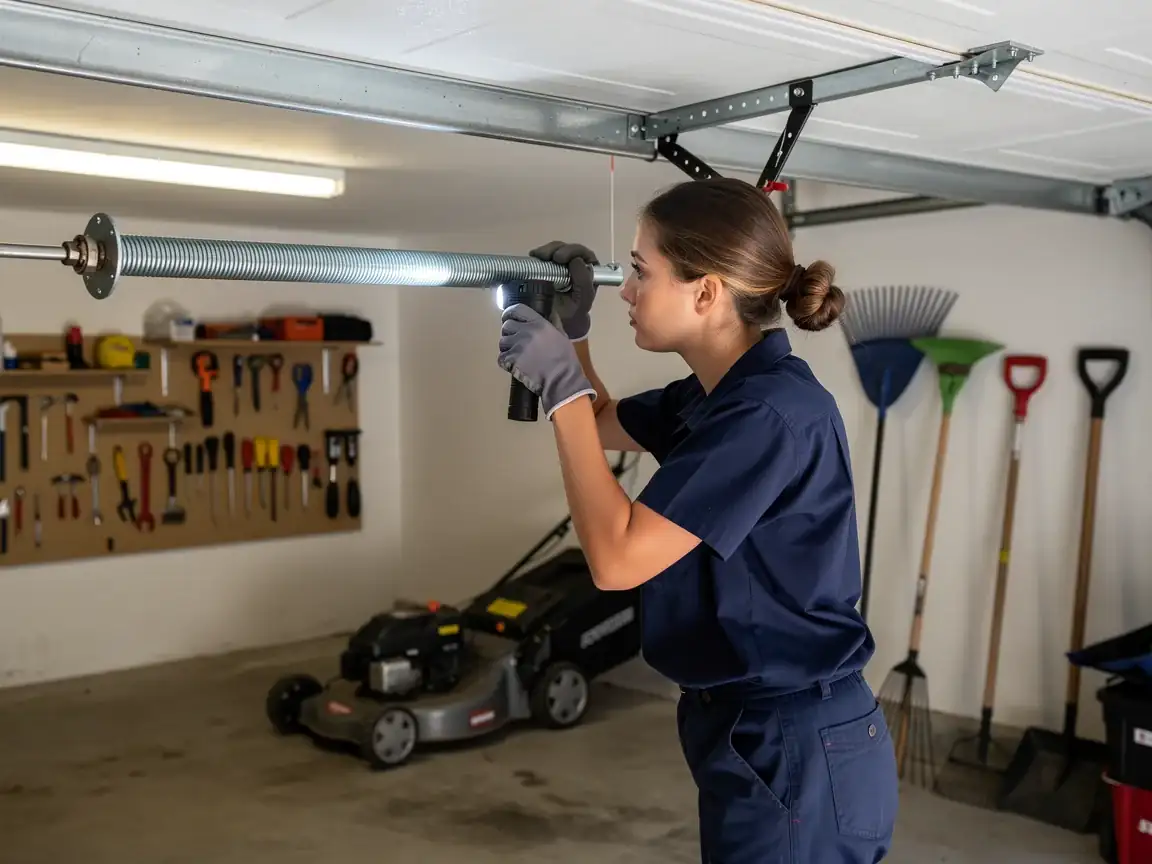
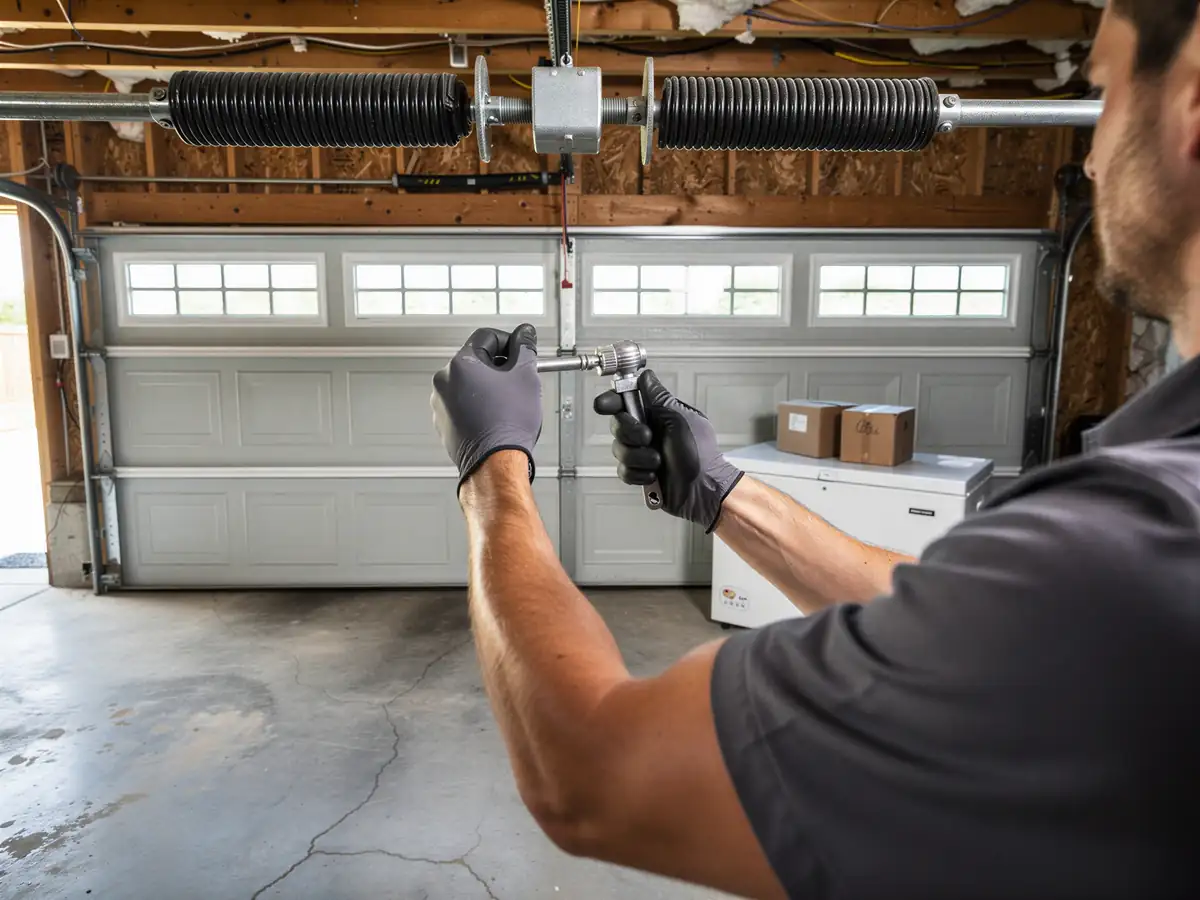
The failure itself is simple: a torsion spring holds enormous tension to counterbalance the weight of the door, and when it breaks, it breaks all at once. You'll usually hear a bang loud enough to bring you out of bed, followed by a door that either won't move or drops like deadweight when you try to lift it. In homes from the 1960s-70s stock that makes up most of this area, the springs and the hardware they sit on were often sized for lighter, single-layer doors. If a previous owner upgraded to a heavier insulated door without upsizing the spring, that spring has been overworked since day one - and cold weather is what finally finds the weak point. We see this pattern often enough in houses of that era that it's worth checking your door's install date against your house's build year if you know it.
When to Get Help
Stop using the door the moment you hear a bang, see a gap in the coiled spring above the door, or notice the door won't stay up on its own. A broken spring with the door still attached to the opener is a job for a call, not a DIY fix - the stored tension in a wound spring can cause real injury, and that risk doesn't go down just because it's cold outside. If the door is merely stiff or slow to open in freezing temperatures but the spring itself looks intact, that's a different, smaller problem, often just grease that's gone thick in the cold. Don't wait on a visibly sagging or gapped spring hoping it holds through the week - springs don't heal, and a second cold night rarely helps.
What Changes With the Season
As temperatures swing through a Minnesota winter, the clearance between panels, track, and rollers tightens and loosens with the cold. On older doors - and with housing in this area running from 1956 up through 2005, there's a wide range of hardware out there - that movement is enough to turn a slightly misaligned track into a binding one. This is also the season when lubricant matters most: the wrong grease thickens in the cold and does the opposite of its job, while the right one keeps rollers and hinges moving without extra strain on a spring that's already working harder than it does in July. None of this fixes a spring that's already compromised. Seasonal upkeep buys you time on a door that's otherwise sound; it won't rescue one that's already past its cycle life.
Why do garage door springs break more in winter in Savage?
Cold steel loses flexibility, and a torsion spring is already under heavy tension. In a cold-moderate climate like ours, the first real cold snap often exposes a spring that was already near the end of its cycle life from years of use - the cold doesn't cause the wear, it just reveals it.
My house was built in the 1970s - should I worry about the original spring?
A lot of homes in this area date to that decade, and if the spring hasn't been replaced since, it's had a long run through many Minnesota winters. We can't tell you its exact condition without looking at it, but age alone is a reason to have it checked before it fails on its own.
Is it safe to try replacing a broken spring myself?
No. A wound torsion spring holds enough stored force to cause serious injury if it releases wrong, and that risk is the same whether it's July or January. This is one job worth leaving to a call rather than a weekend project.
My door is just slow and stiff in the cold, not broken - is that the spring?
Not necessarily. Stiffness without a bang or visible gap in the spring is often thickened grease or a track slightly out of alignment from the cold. Worth a look either way, but it's a smaller fix than a snapped spring.
Ready to get your garage door sorted?
Tell us what it’s doing and where you are in Savage - we’ll take it from there.