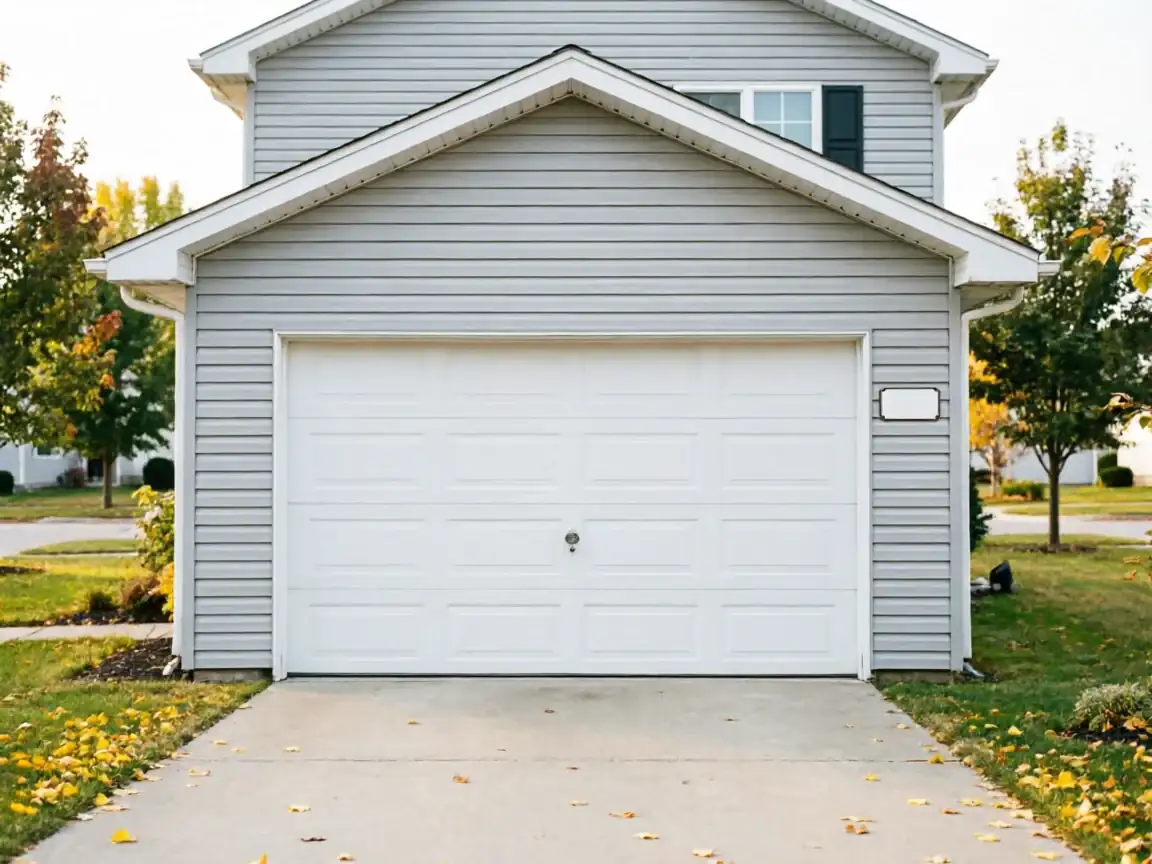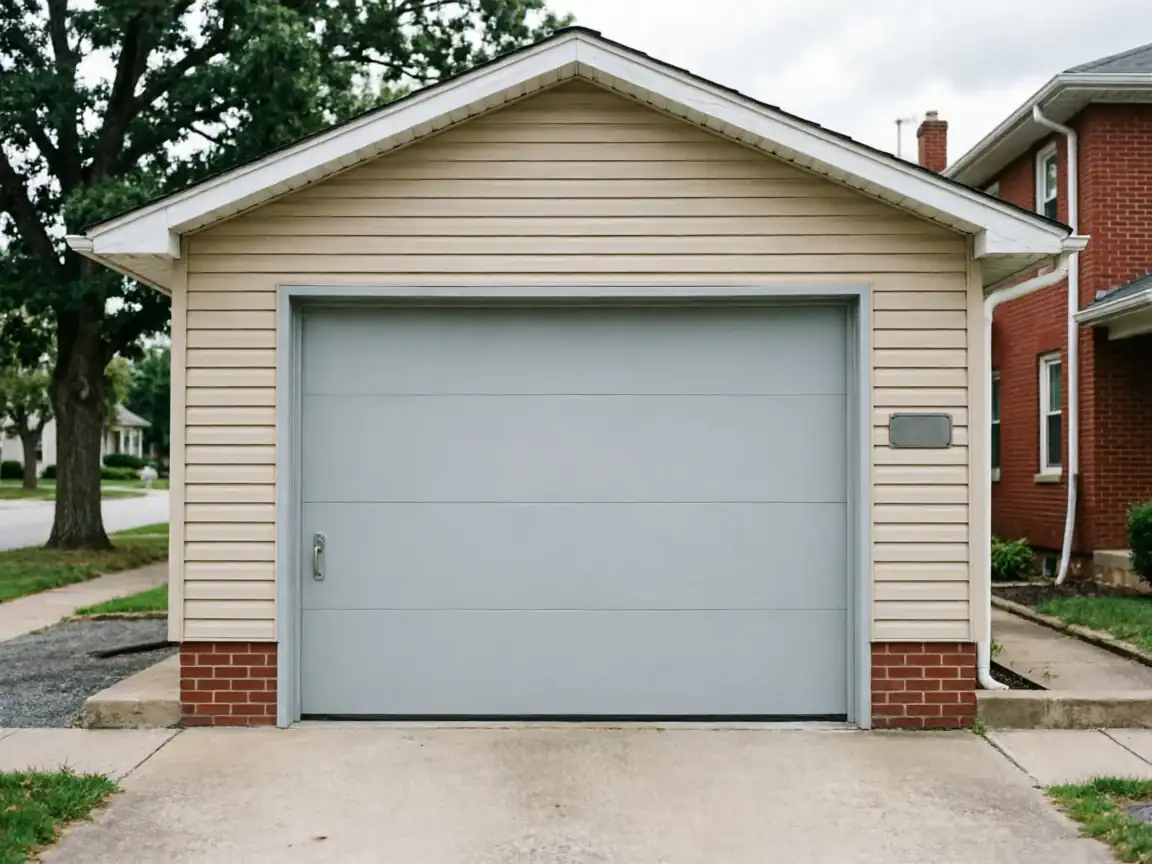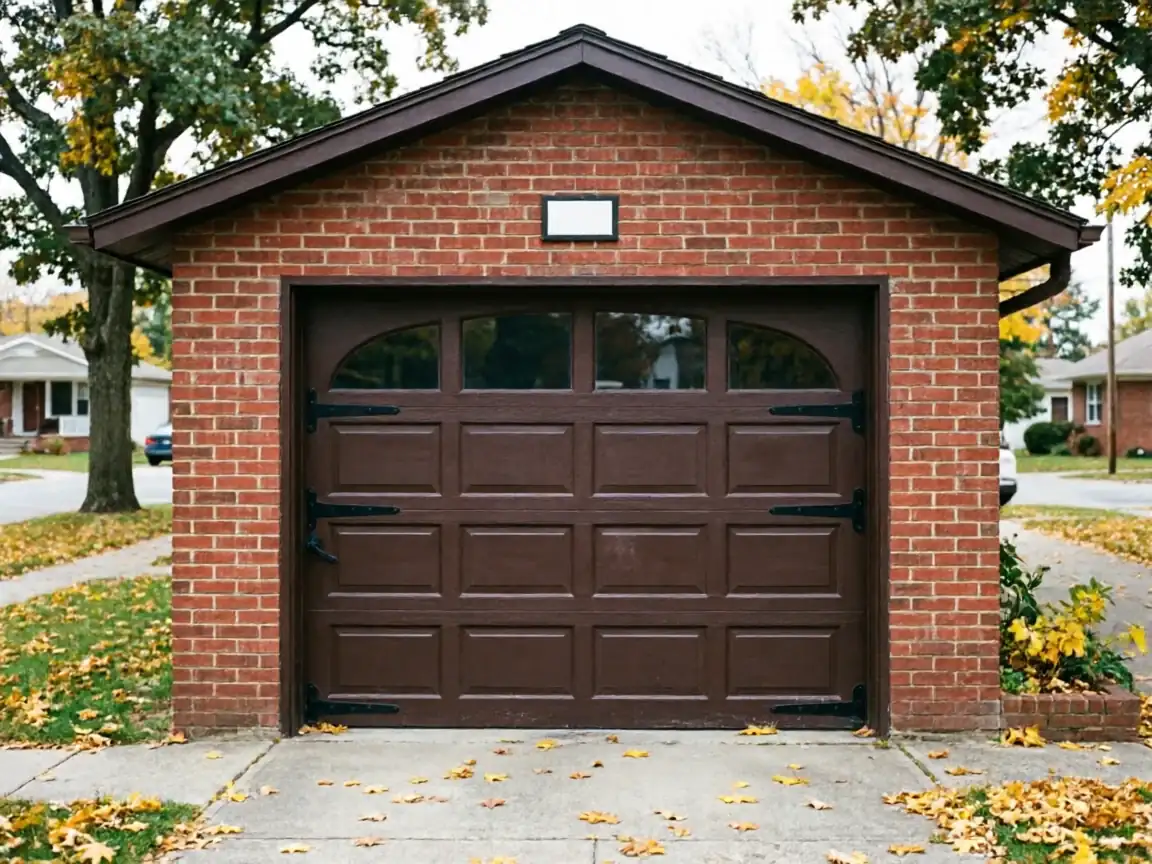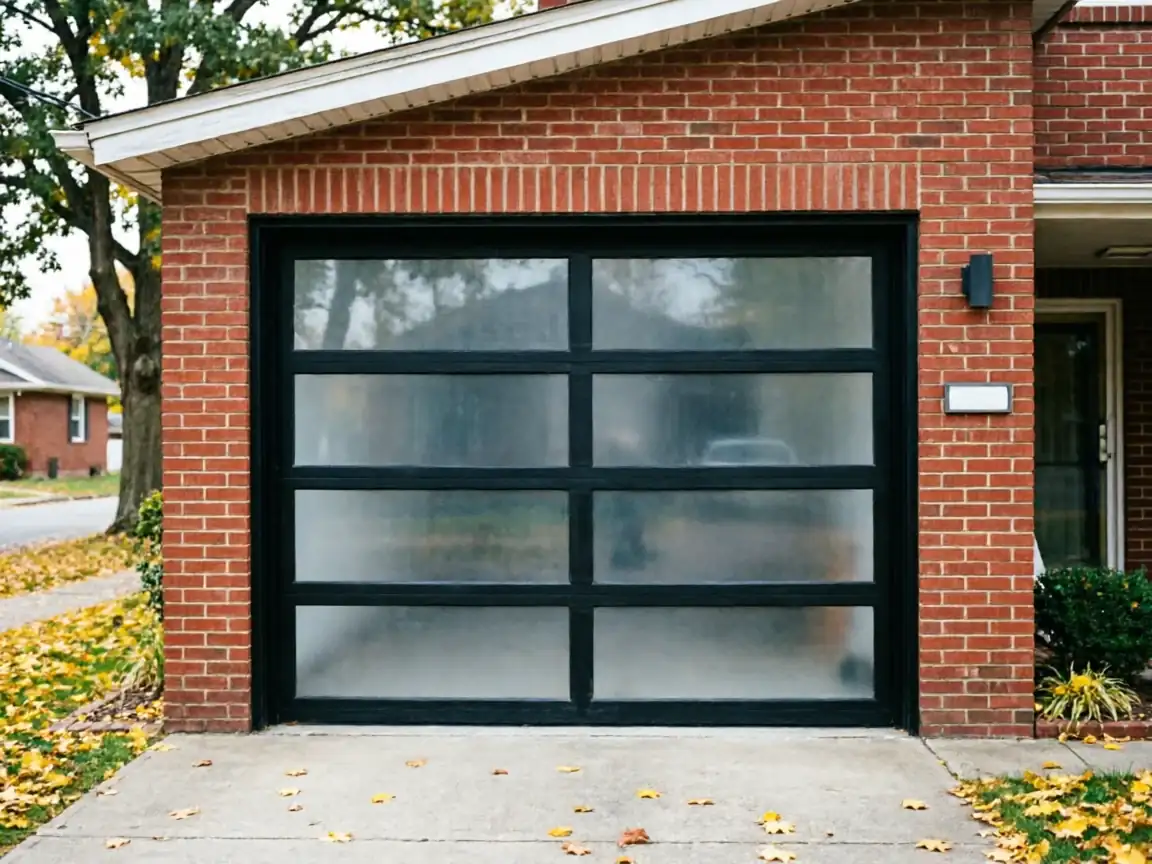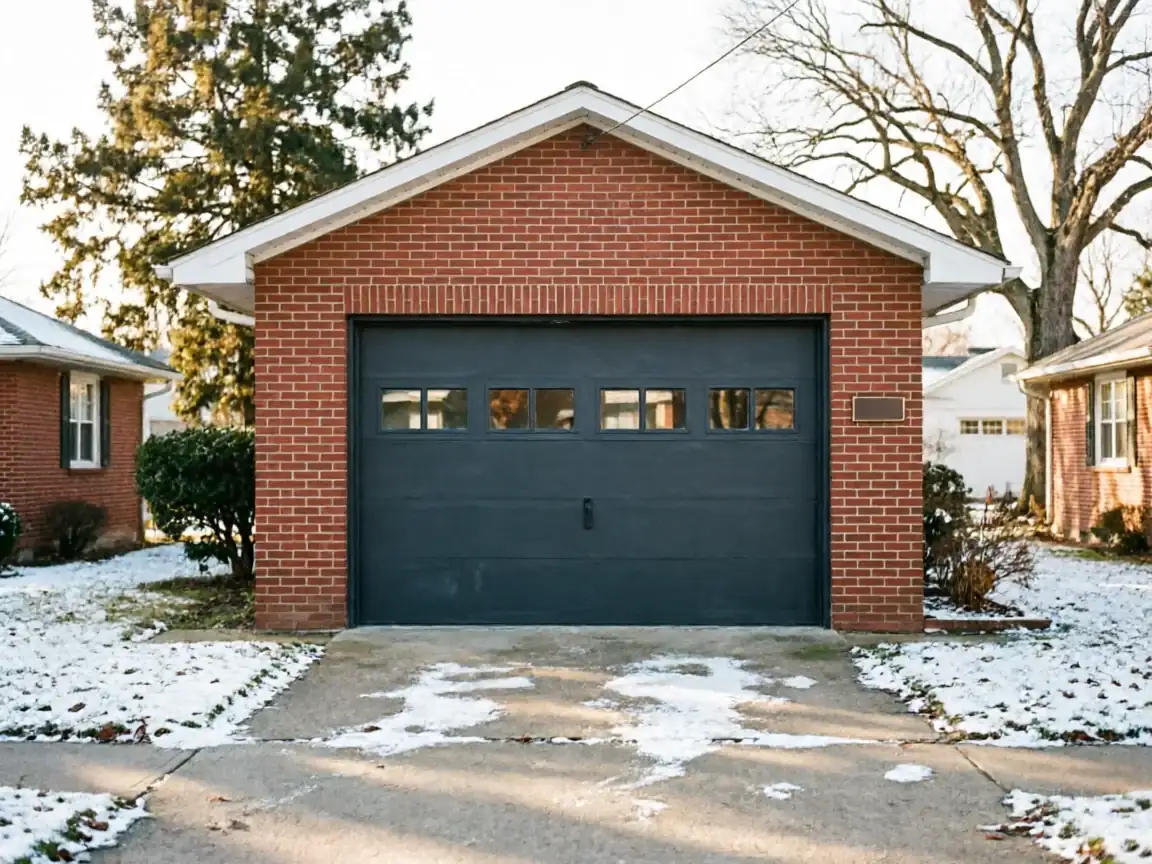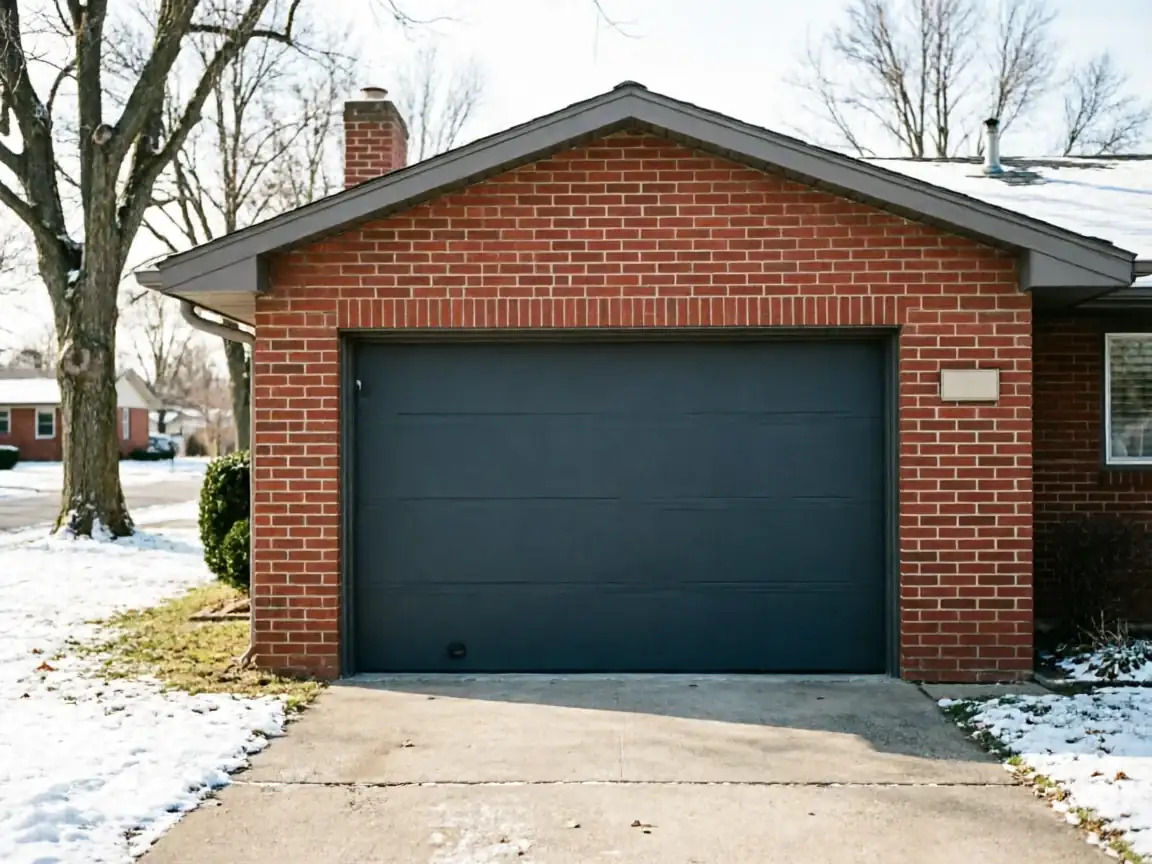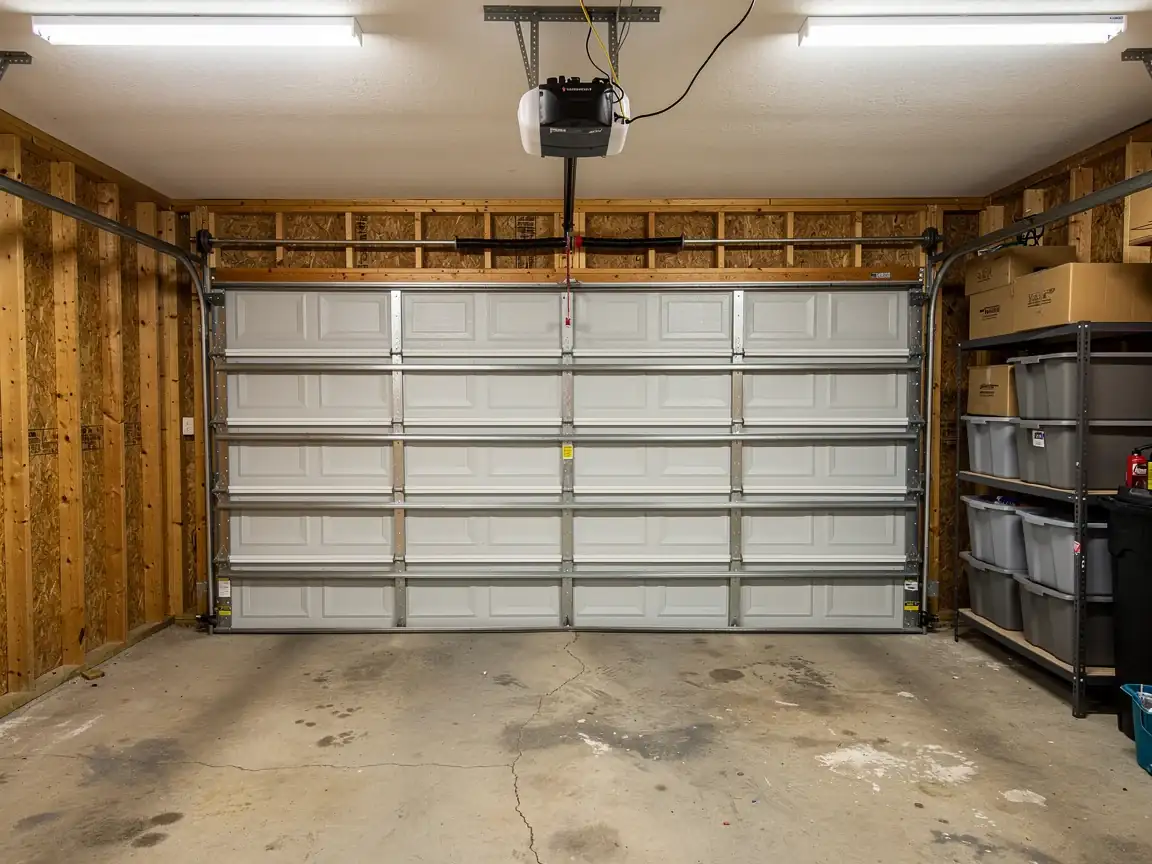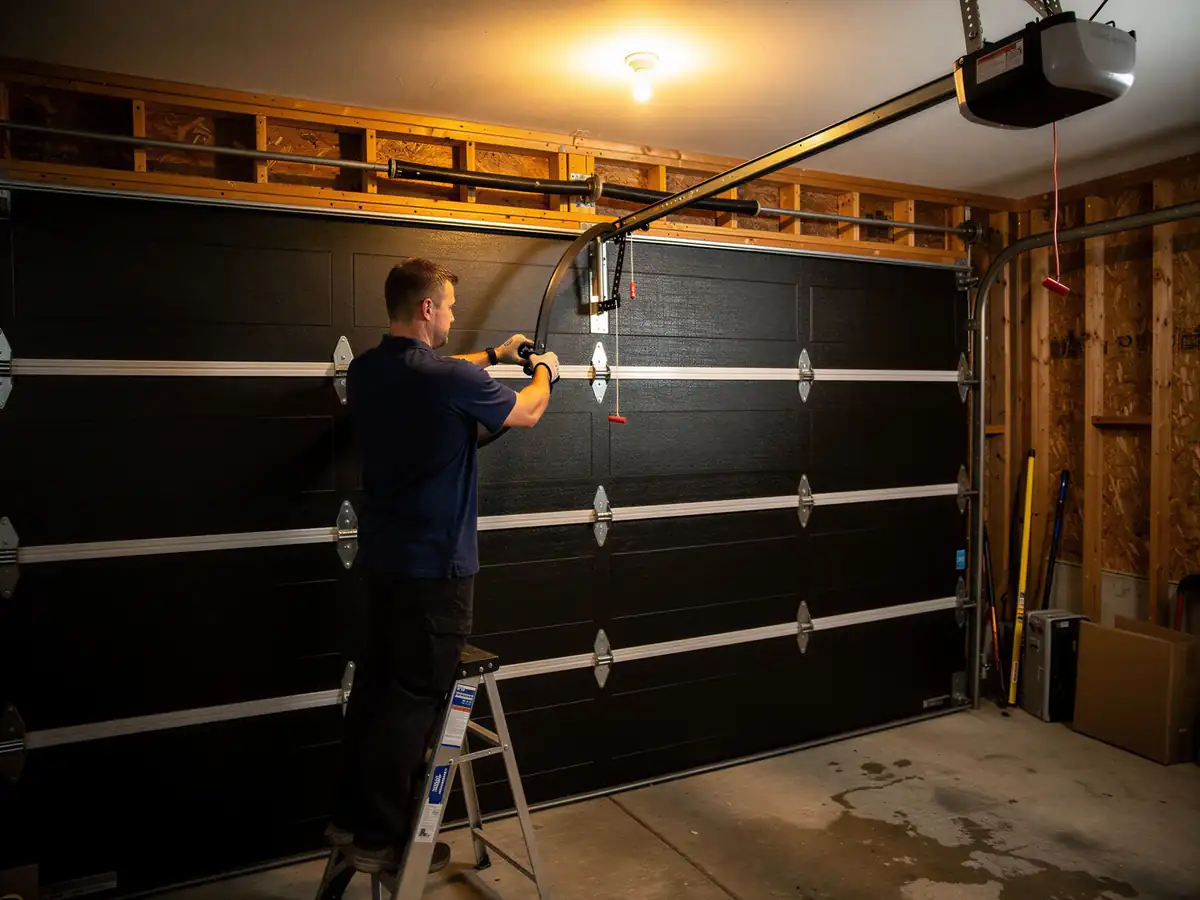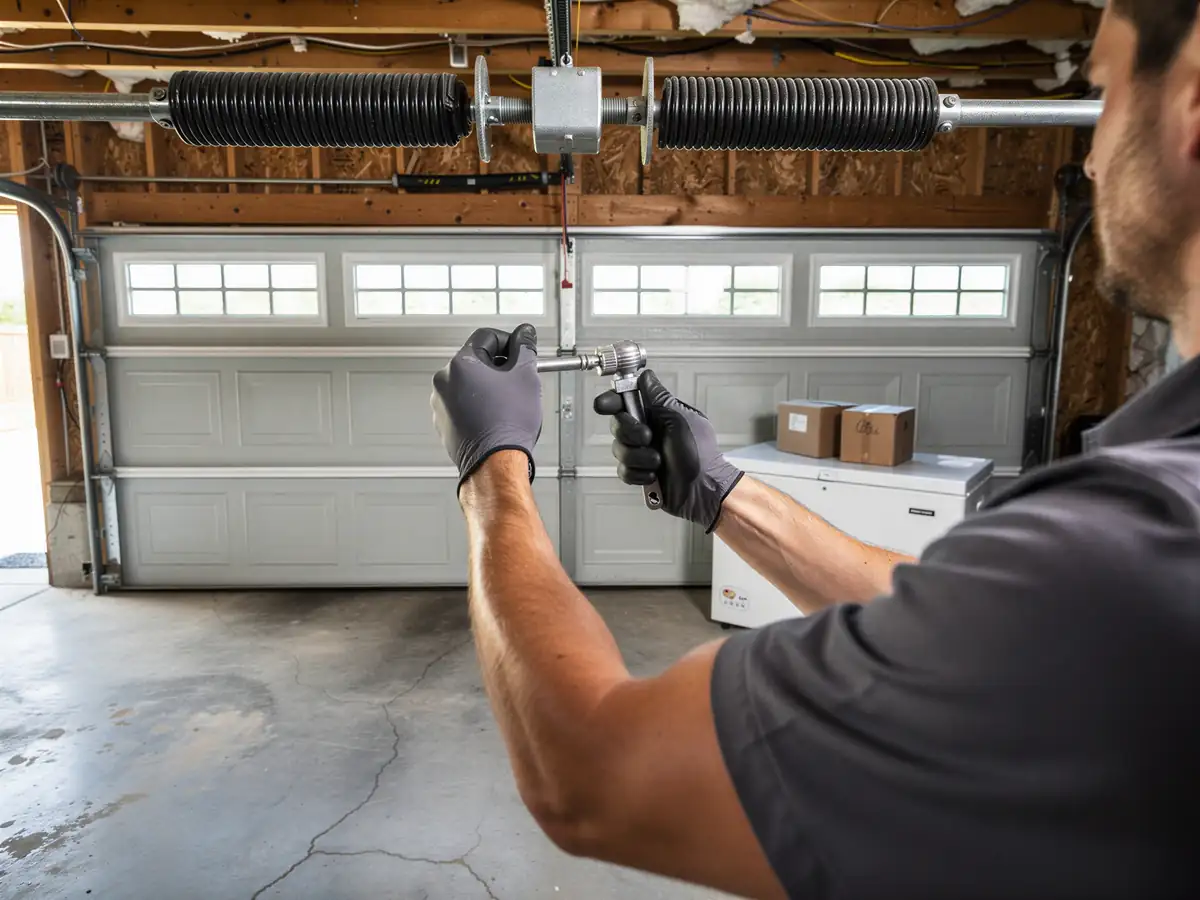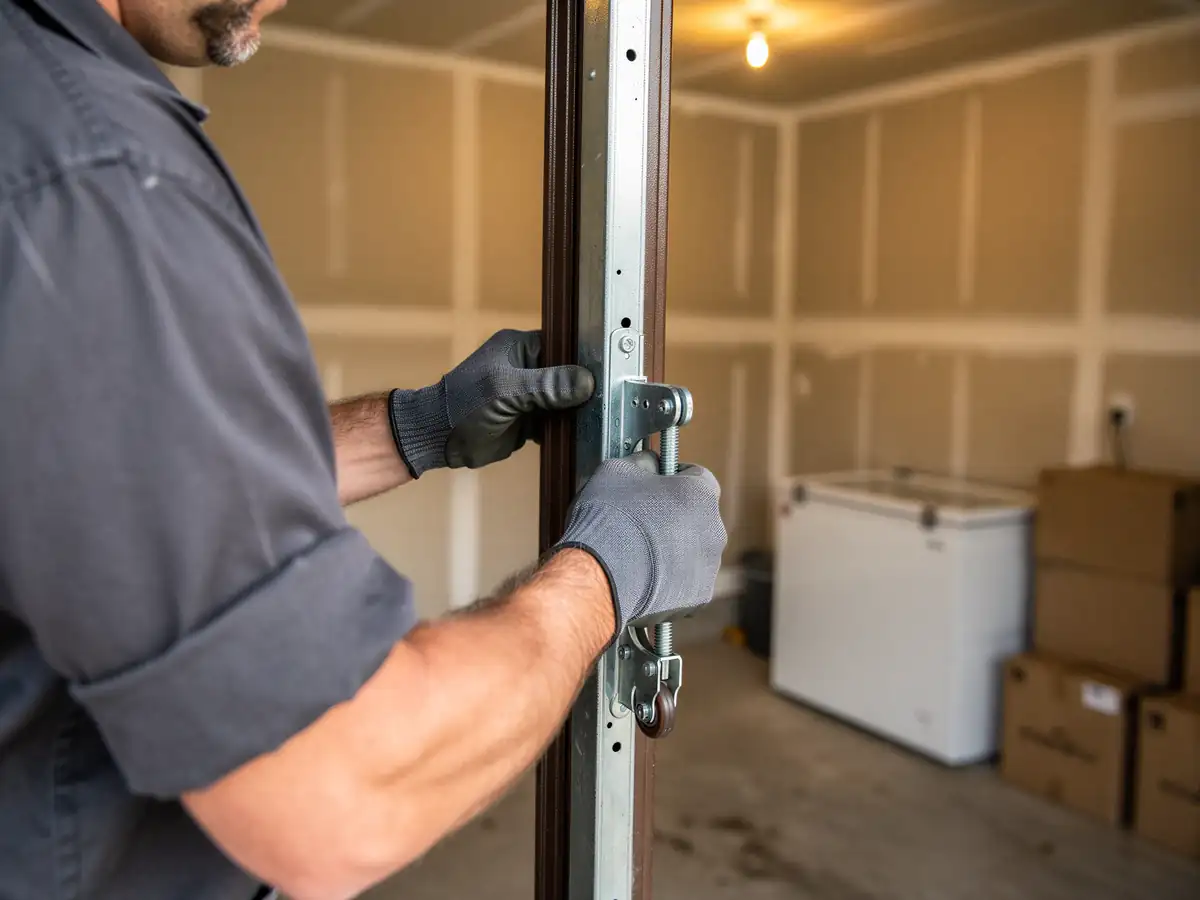
What You Are Seeing
A dented, bowed, or cracked panel on a sectional garage door usually starts as one bad section
A backed-into bottom panel, a hailed-up top one, or a seam that's split from years of freeze-thaw. On the steel sectional doors that went up across most of this area's housing (built mostly in the 1960s and 70s, with the broader stock running 1956 through 2005), the panel sits in a track system that was never designed to flex. Once one section bows, the rollers on either side of it start binding, and the door starts fighting the opener instead of riding smooth.
You'll notice it before it gets bad if you're paying attention
A scrape where there wasn't one, a gap at the bottom corner that lets daylight through, or a door that shudders at the same spot every time it closes. That shudder is the tell. It means the panel is no longer flat enough to ride the track cleanly, and leaving it means the next thing to go is a hinge or a roller bracket - parts that cost more to fix once they're pulled loose.
Not every dent needs a new panel
A shallow dent in a thick steel skin can sometimes be worked out or left alone if it's cosmetic. We'll tell you straight if a panel doesn't need replacing - we don't swap parts that are still doing their job.
How Long You Are Without the Door
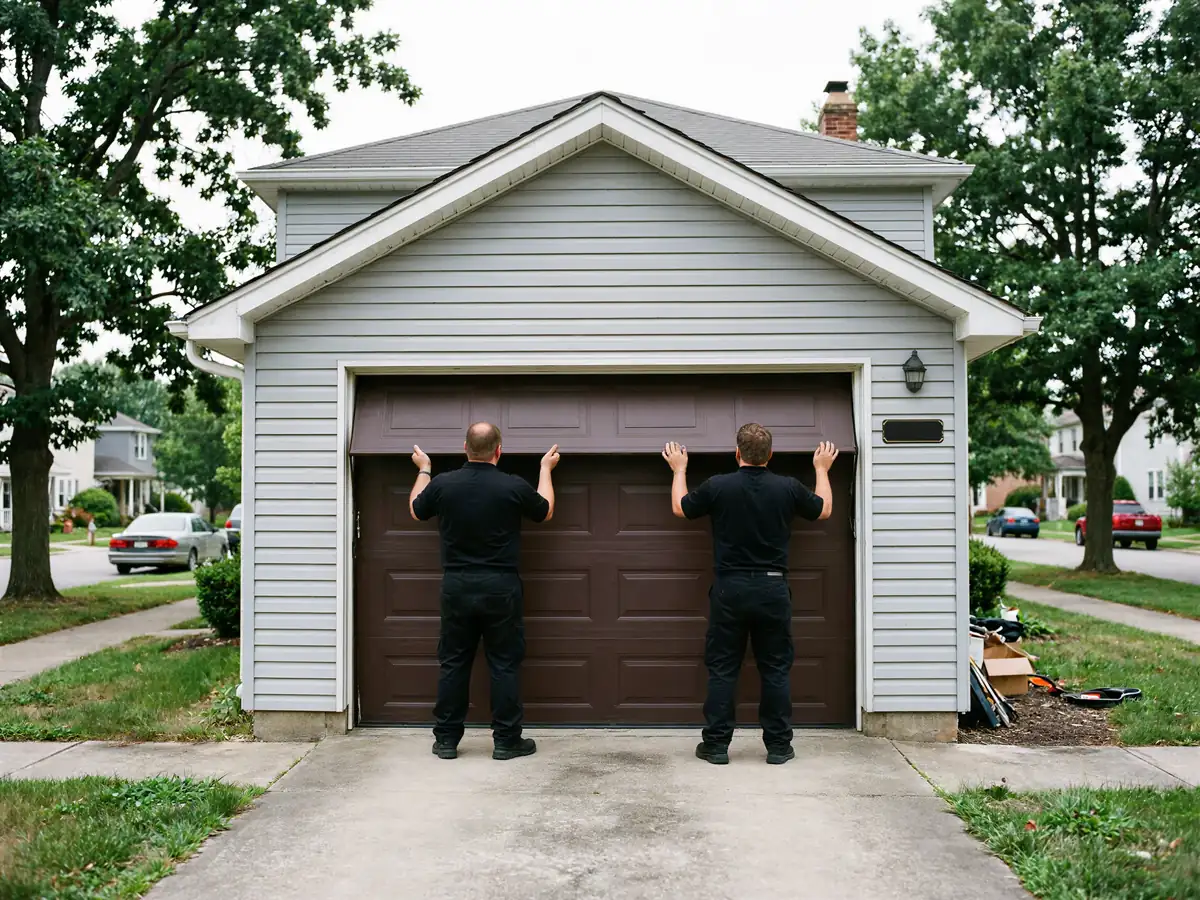
A single-panel swap on a steel sectional door is a same-visit job once the right panel is on the truck, because the section bolts into the existing track and hardware without touching the rest of the door. The variable isn't the labor - it's the panel itself. Doors built to older color and profile runs, which is common on houses from the earlier end of this area's 1956-2005 build range, sometimes need a panel ordered to match, and that's a wait we can't shorten by rushing the install.
If your door is a newer, more common profile, we usually have the match on hand or can get it fast. If it's an older or discontinued style, we'll tell you that up front before any work starts, not after we've pulled the broken section and left your garage open to the weather. That's the one thing we won't do - start a panel job on a cold day without confirming the replacement is actually available, because a half-finished door in January is worse than the dent you started with.
What the Repair Takes
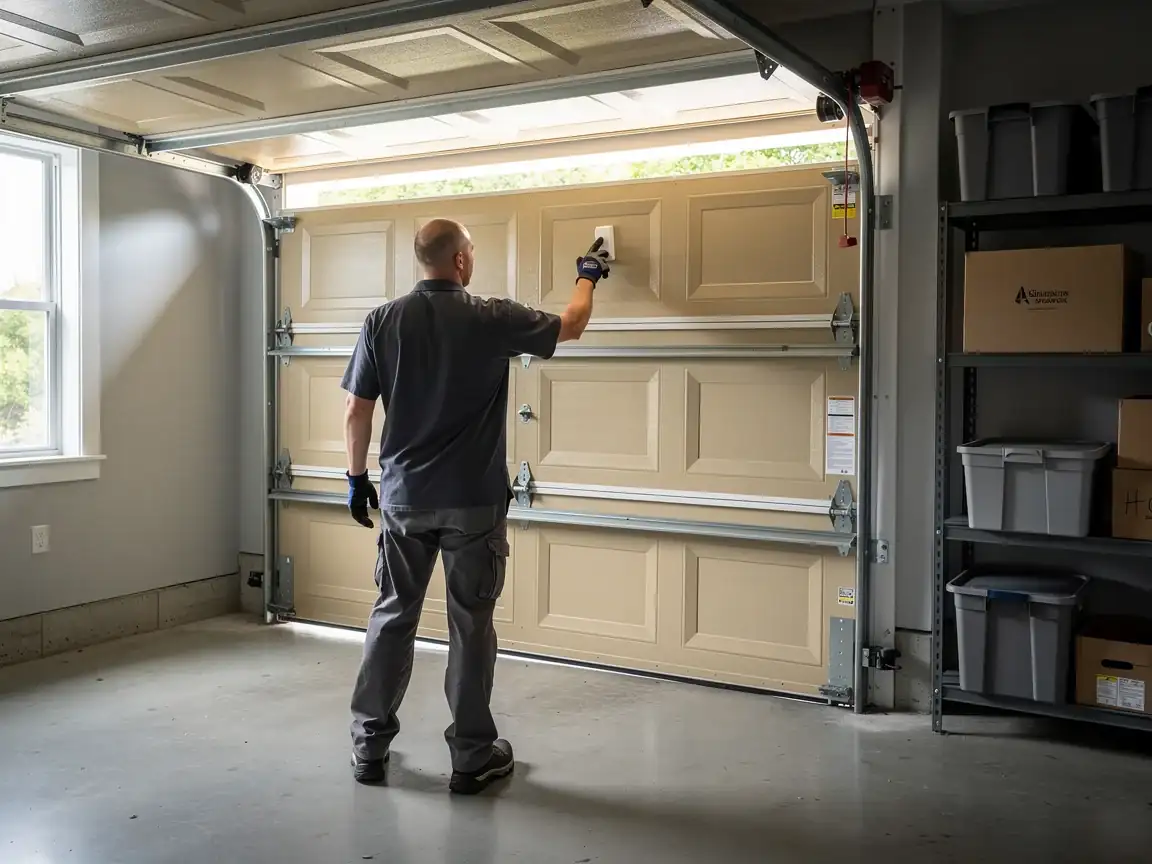
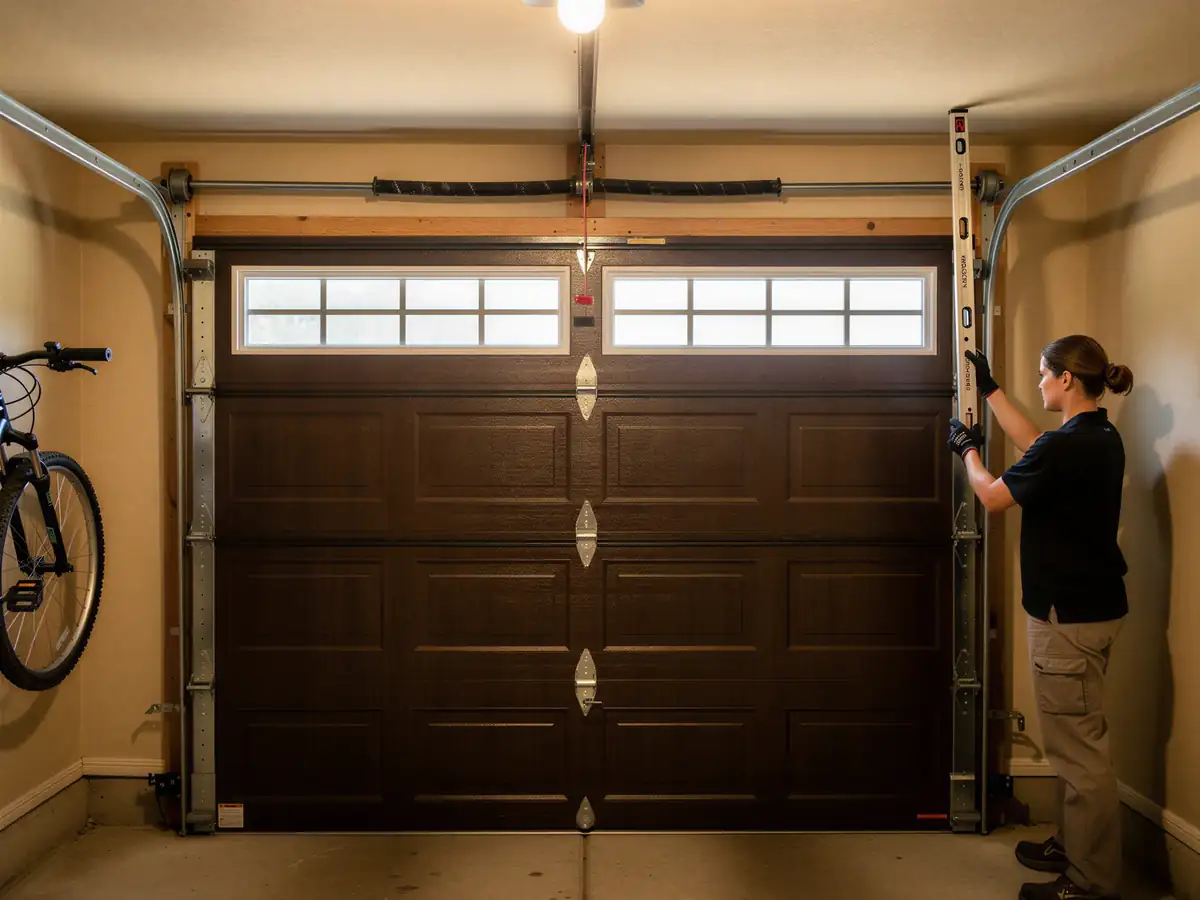
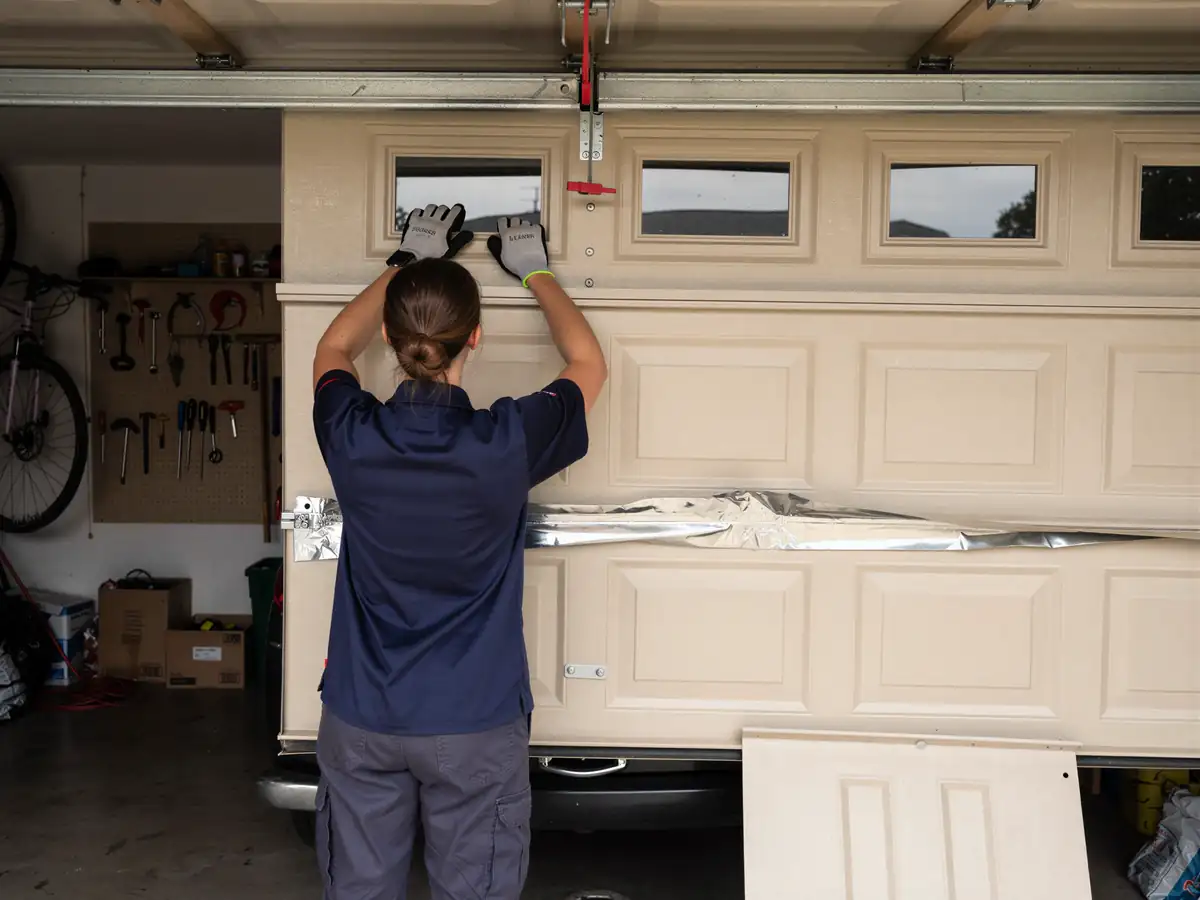
Panel replacement means matching the section - width, height, color, and whether it's a raised-panel or flush design - then unbolting the damaged section from the hinges and stiles on either side, swapping it in, and re-securing the hinges so the door hangs square again. On a double-wide door, we check the opposite panel too, since a hit hard enough to bow one section can stress the seam on the next one over without showing it yet.
After the swap, the door gets balanced and the track alignment gets checked. A new panel that's slightly thicker or thinner than the original run (common when matching an older design) can throw the door out of true by a few degrees, which shows up later as a roller that wears faster on one side. We check for that before we call the job done.
We don't repaint mismatched panels to blend them in - that's a cosmetic call that's yours to make, not ours to charge you for. If the color run is discontinued and the new section doesn't match exactly, we'll say so before we order it.
Why It Happens Here
Two things drive panel damage across this area more than anything else
The age of the door stock and the winters. Most houses here were built in the 1960s and 70s, with the wider range running 1956 to 2005, which means a lot of original or first-replacement steel sectional doors that are now decades into a cold-climate duty cycle they weren't built to run forever. Steel contracts in cold and expands in heat, and a panel that's already got a hairline seam crack from an old impact will open that crack wider every winter until it fails outright.
This area sits in a cold, moderate climate band
Which means repeated freeze-thaw cycling on anything metal mounted outdoors - door panels included. Combine that with driveways and garages built for an earlier generation of vehicles, often narrower than what people park in them now, and you get more mirror clips, bumper corners, and trailer hitches catching the bottom panel on the way in. That's the single most common cause we see: not weather damage from the door's own wear, but a hard contact dent that cracks a panel that was already brittle from age and cold.