What You Are Seeing
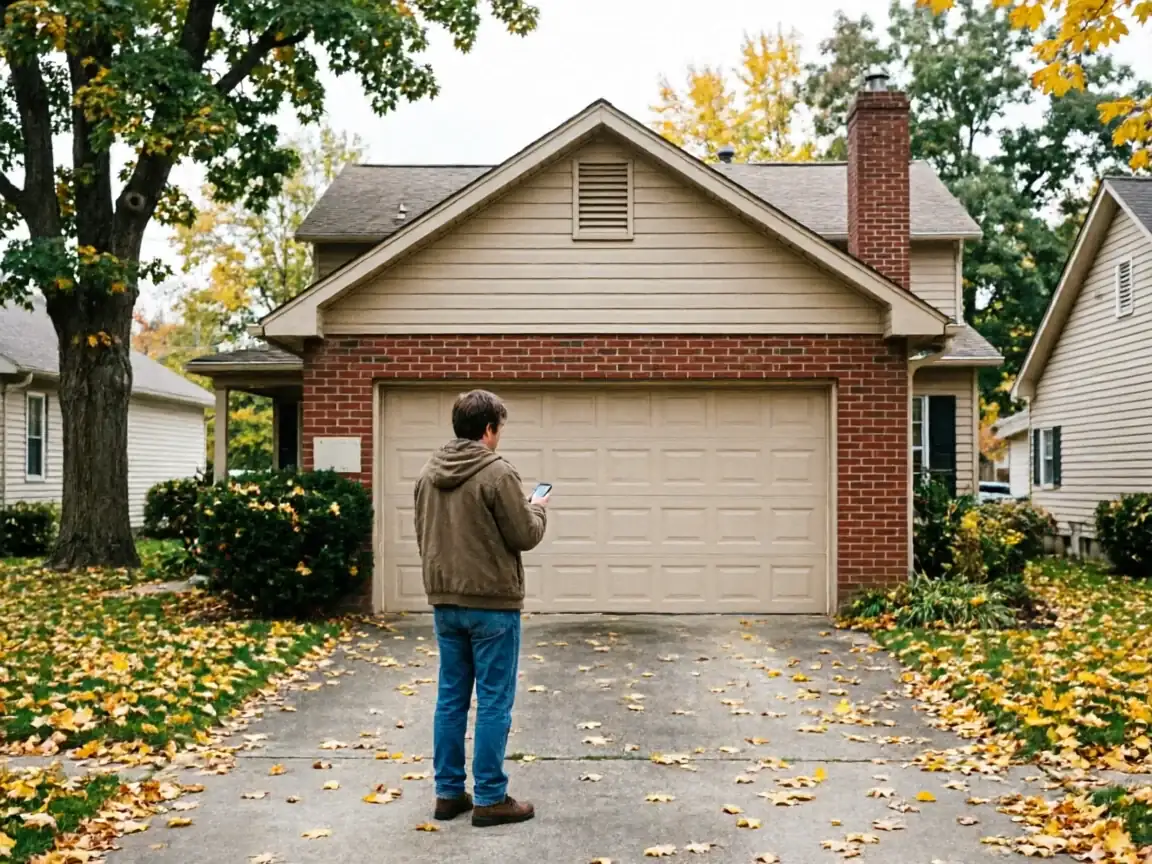
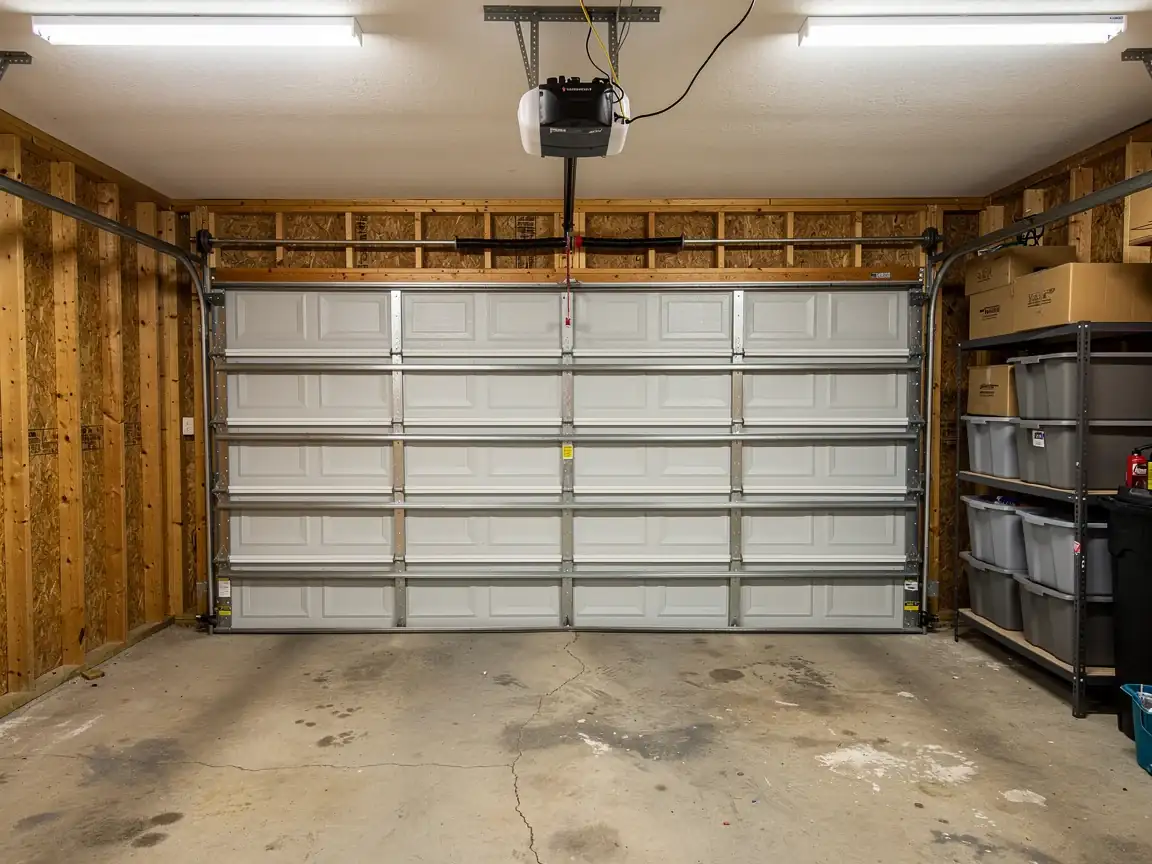
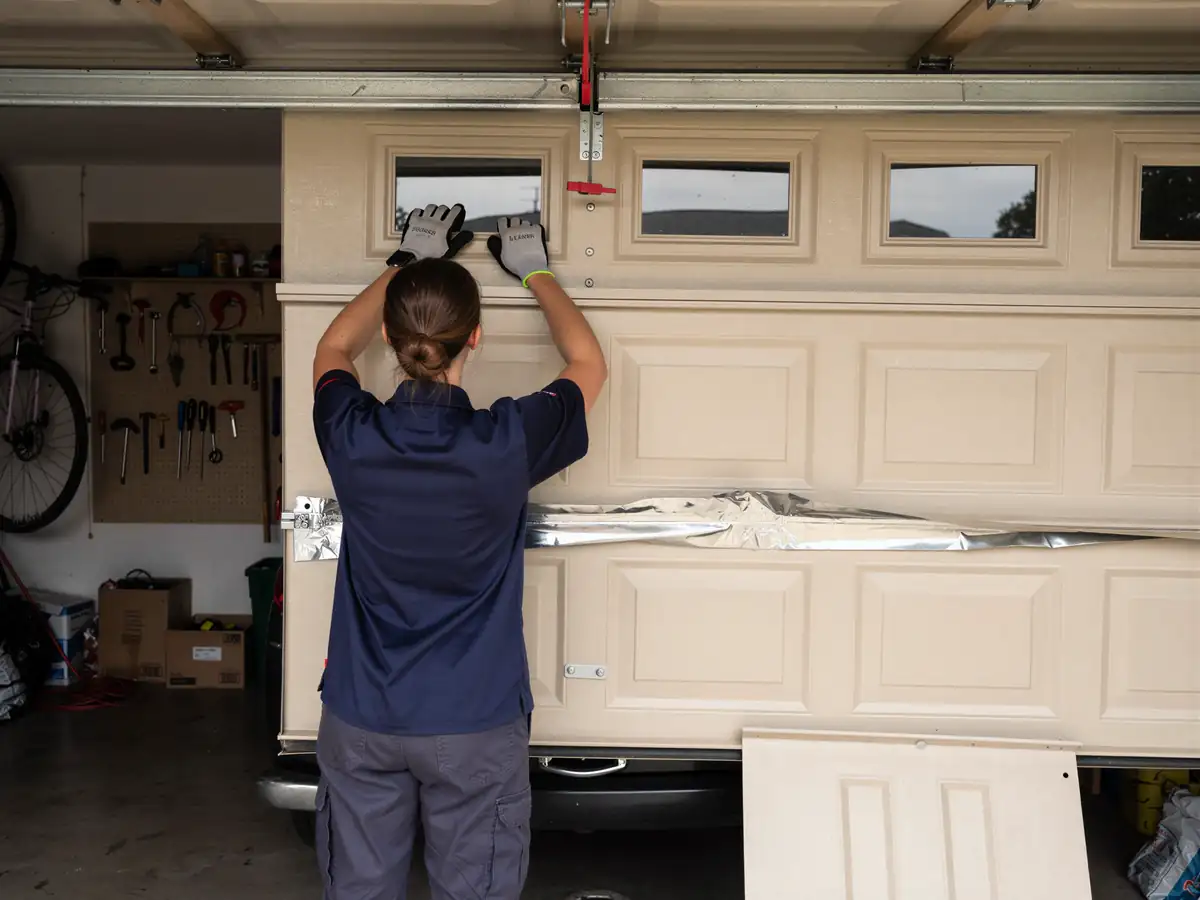
A door that's off track usually shows itself one of three ways
It's hanging at an angle with one side higher than the other, it's stopped moving partway up or down with a grinding or popping sound, or a roller has jumped clean out of the track and the panel is sitting against the frame instead of inside the rail.
None of these are cosmetic
Once a roller leaves the track, the cables and springs are no longer carrying the door the way they were built to. The door can drop, the track can bend further every time someone tries the opener, and a bent vertical track is a different job than a dislodged roller.
Don't force it
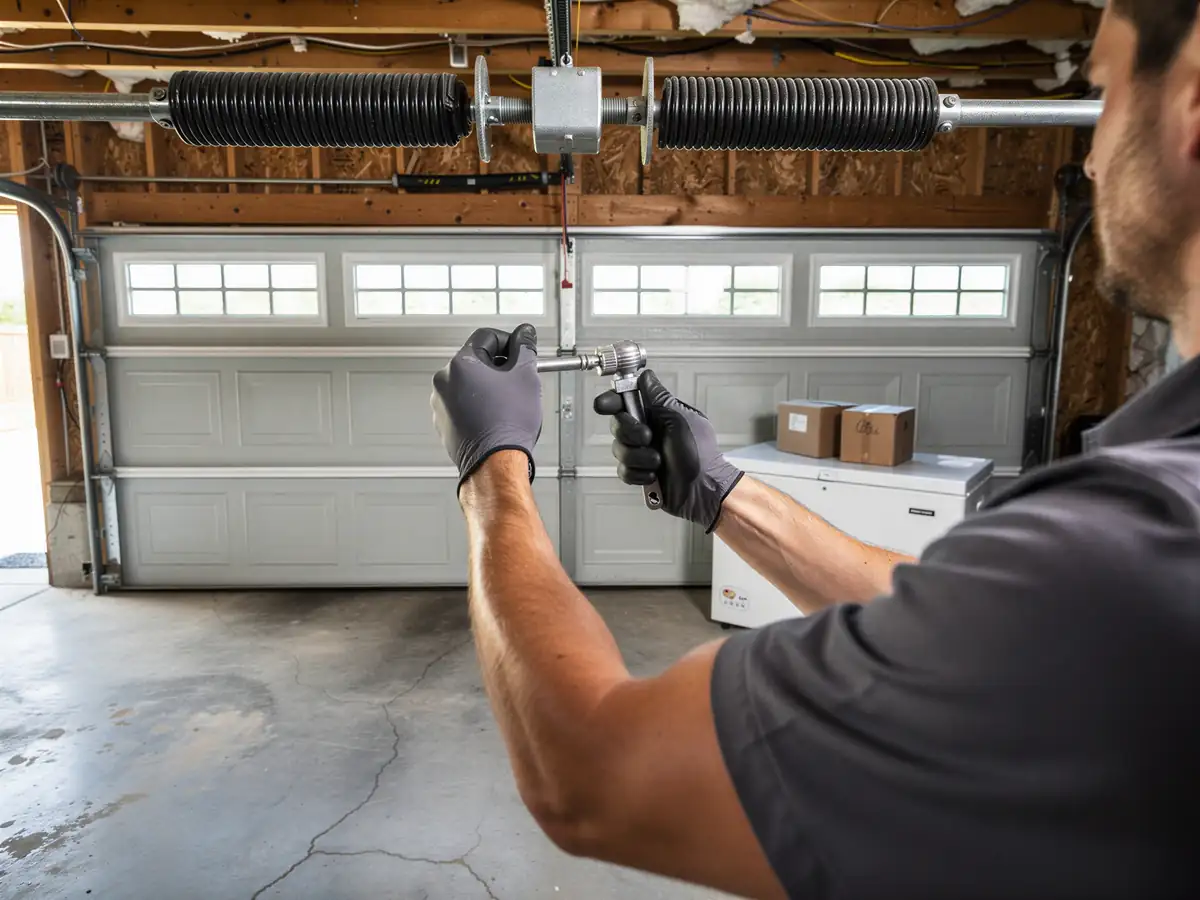
If the door is stuck, leave the opener alone and don't yank on the door by hand - that's how a bent track turns into a track that has to be replaced instead of straightened. If you can see a cable has come off the drum or a spring looks unwound, stop entirely and call. That's not a DIY afternoon, and trying to muscle a loaded door back onto a track is one of the more common ways people get hurt in a garage.
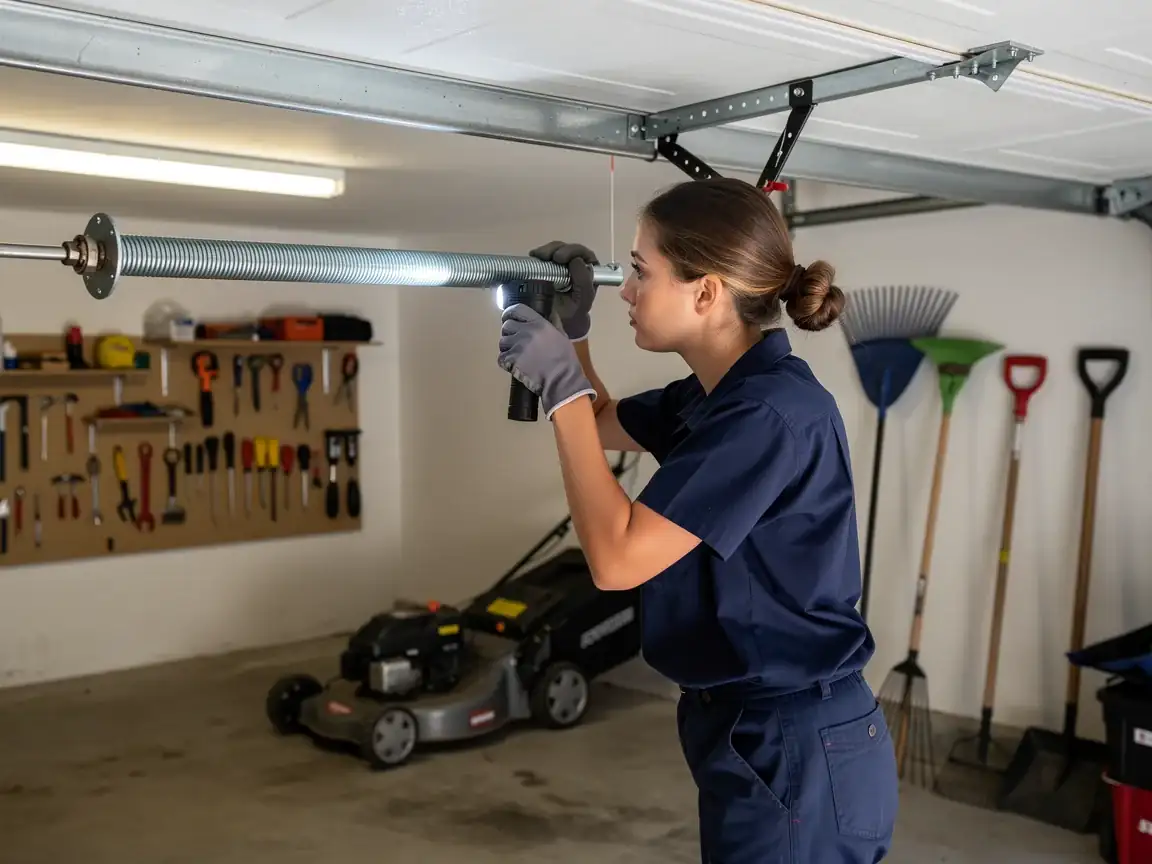
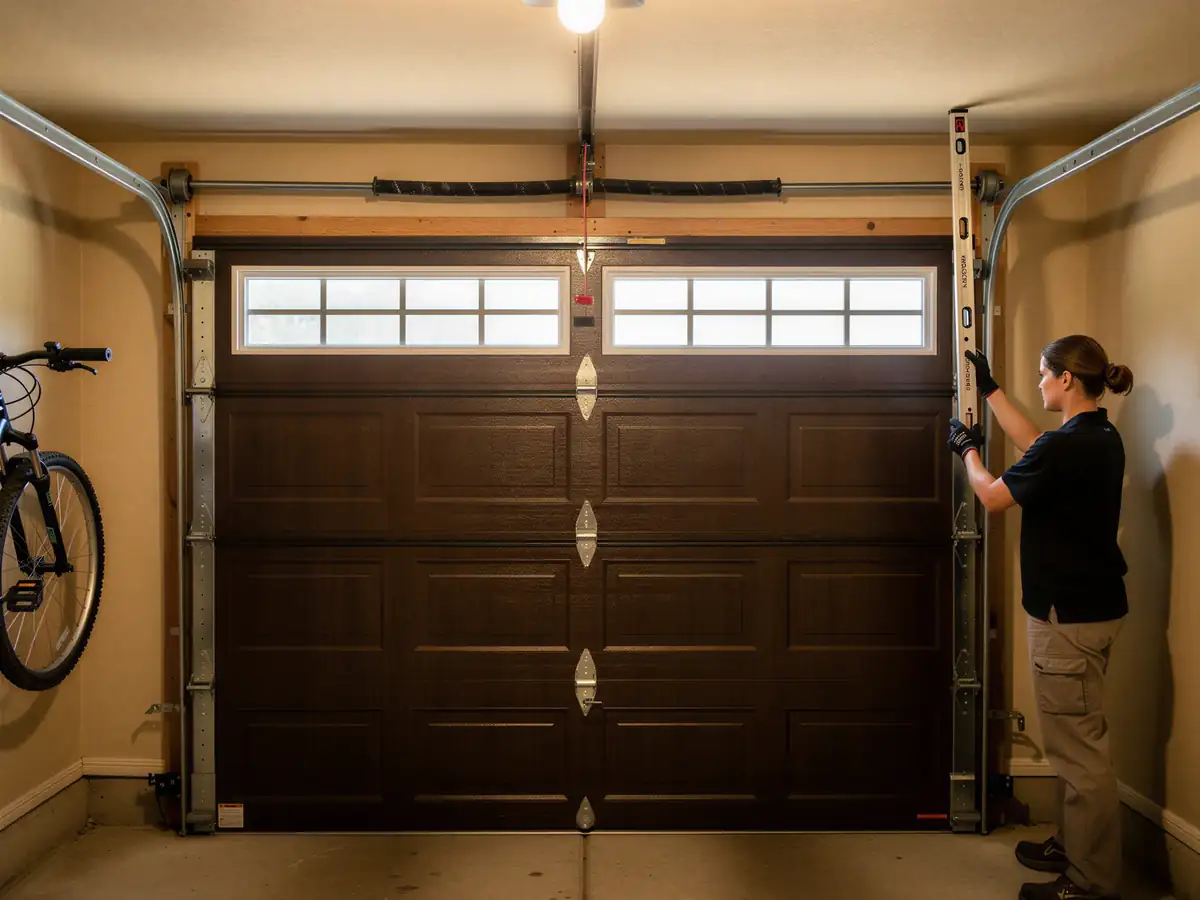
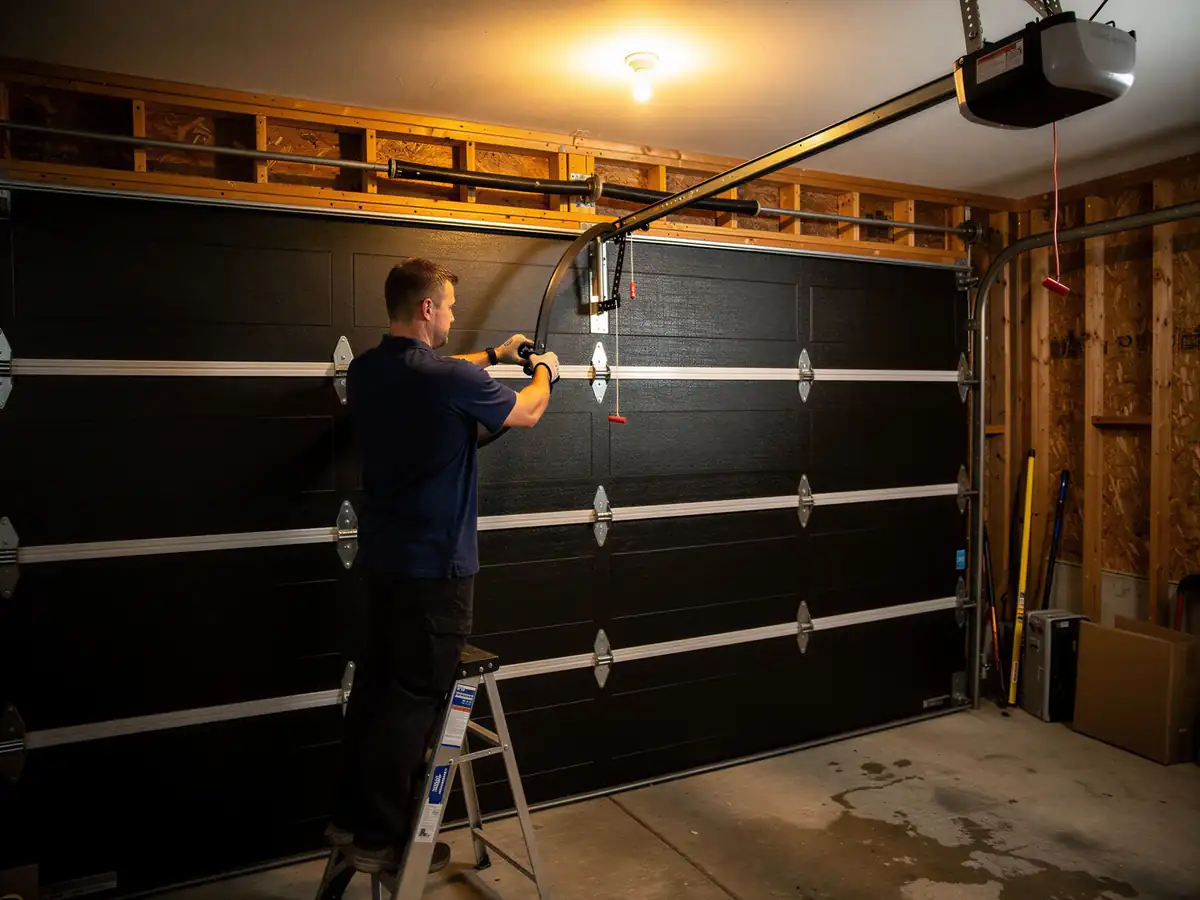
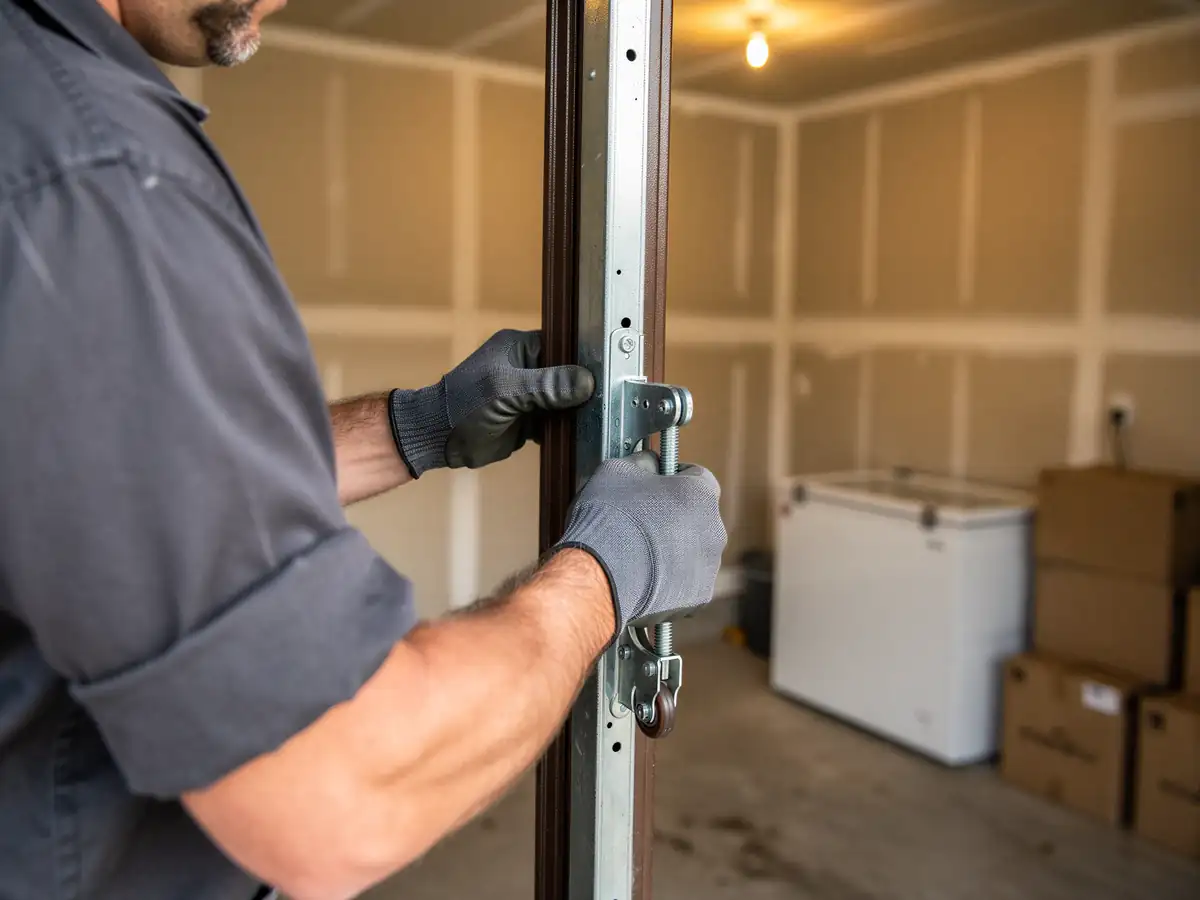
We look at the rollers, the horizontal and vertical track alignment, the bracket mounting into the framing
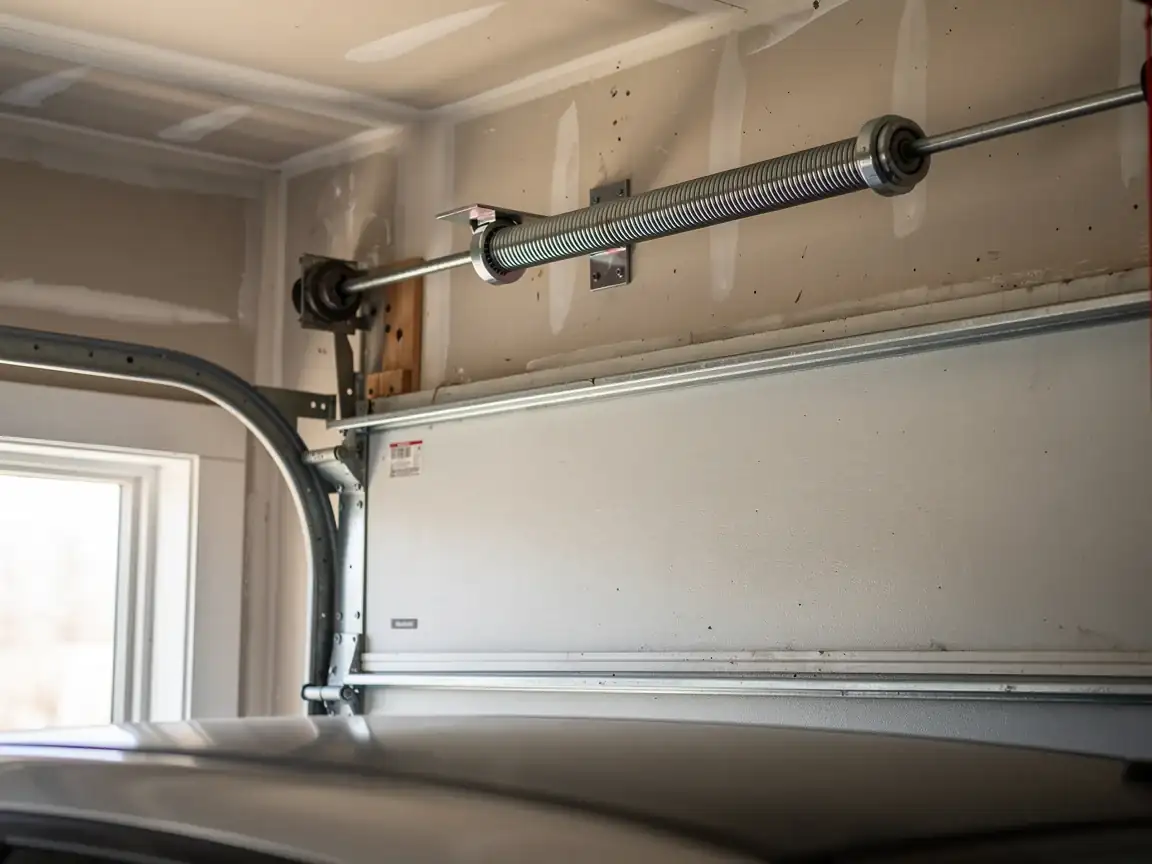
And whether the springs are still carrying their share of the weight before we touch anything.
How Long You Are Without the Door
How long you're stuck without a working door depends on what's actually wrong, not just that something's off track. A roller that's jumped out with the track otherwise straight is often a same-visit fix - we reseat it, check the bracket, and test the balance. A bent vertical track is a different story: if the bend is sharp, the track usually needs to be swapped rather than hammered back into shape, and that means we're working with whatever lengths we have on the truck or ordering the section.
The bigger time cost is usually the door itself being unusable in the meantime, especially if it won't close and seal. We'll tell you straight whether the door can be secured and left overnight or whether it needs to be dealt with the same day - that call depends on what's behind the garage (attached living space, tools, a vehicle) and whether the opening can be closed off at all.
We don't guess at this over the phone. The honest answer comes from seeing the track, the rollers, and the bend in person, and we'll give you a real estimate of how long the fix takes once we're looking at it, not before.
What the Repair Takes
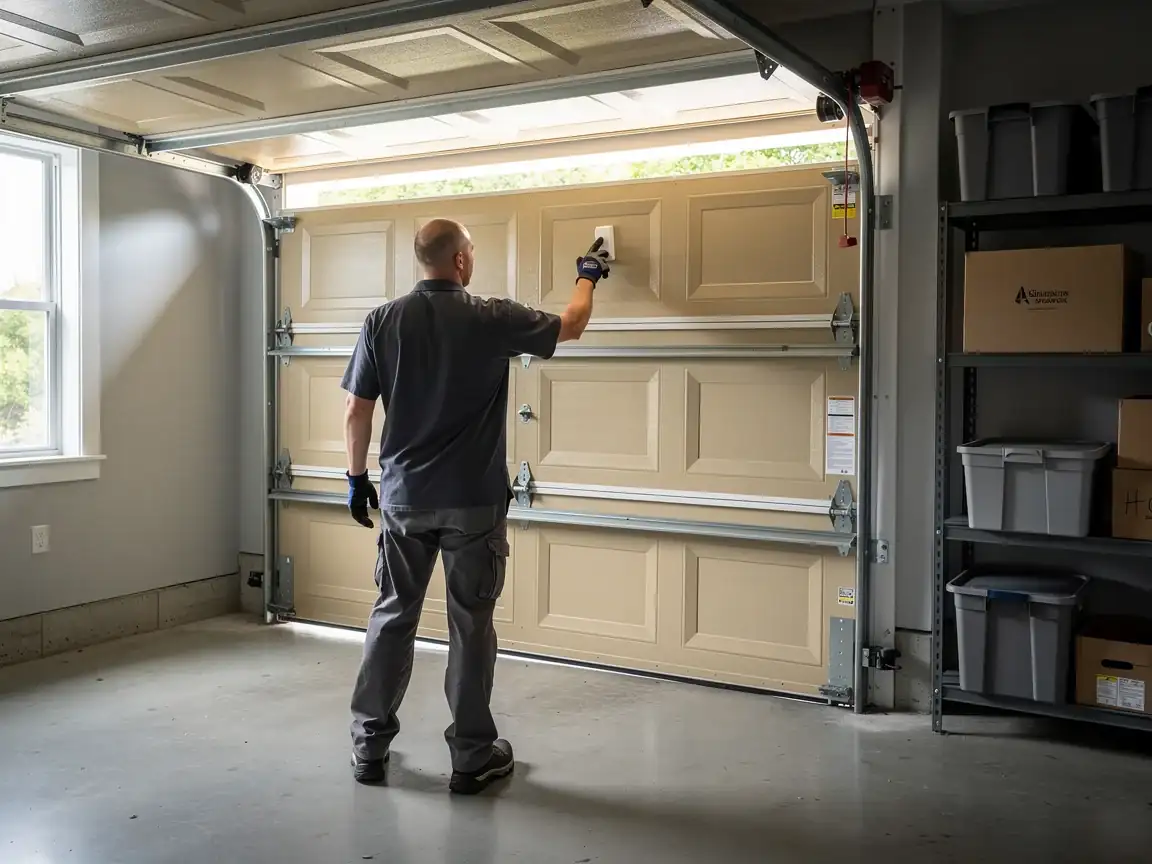
Fixing an off-track door comes down to three checks, in order: are the rollers still round and seated correctly, is the track still straight and plumb against the framing, and are the cables and springs still carrying the weight they're supposed to carry. Skip any of those and the door comes off track again within weeks.
If it's just a jumped roller on an otherwise straight track, the fix is mechanical - release tension carefully, guide the roller back into the rail, check the bracket screws haven't pulled loose from the framing, and run the door through a full cycle to confirm it tracks true. If the vertical or horizontal track is bent, that section gets replaced rather than bent back, because a track that's been straightened once tends to fail again at the same point.
We also check what pulled it off track in the first place - a bracket working loose from the wall, a cable that's frayed and skipping on the drum, or a roller worn down enough that it's riding loose in the rail. Fixing the symptom without fixing the cause means another call in a few months.
One honest limit here: if the track is bent in more than one place or the door itself is warped from the stress, replacing the whole door section is usually cheaper and more reliable long-term than patching a track that's already failed once.
Why It Happens Here
This is a housing-age problem as much as a hardware problem
Across this service area, most homes were built between 1956 and 2005, with the bulk of the stock dating to the 1960s and 70s and a median build year of 1975. Garages from that era were framed and hung with track systems and bracket spacing that predate current roller and door-weight standards, so the margin for a bracket working loose or a track drifting out of plumb over decades is smaller than it is on newer construction.
Cold-climate seasons compound it
Repeated freeze-thaw cycles move concrete slabs and shift the framing the track is bolted to, just enough over 40-plus years that a bracket that was square when the house was built is no longer square today. That slow drift is what eventually lets a roller walk out of the rail or lets a track bow at the point where it's weakest.
It isn't limited to one neighborhood
Homeowners as far out as Credit River, six miles from the center of this service area, deal with the same frost-heave and aging-bracket pattern, because the housing stock and winters are shared across the region, not unique to one block. Across the roughly 109,890 households and 58,530 owner-occupied houses in this area, this is one of the most common calls we get, and the age of the stock is the reason.
- 109,890 households
- 58,530 owner-occupied