What the Repair Takes
Chanhassen's housing stock skews newer than a lot of what we see closer to Savage
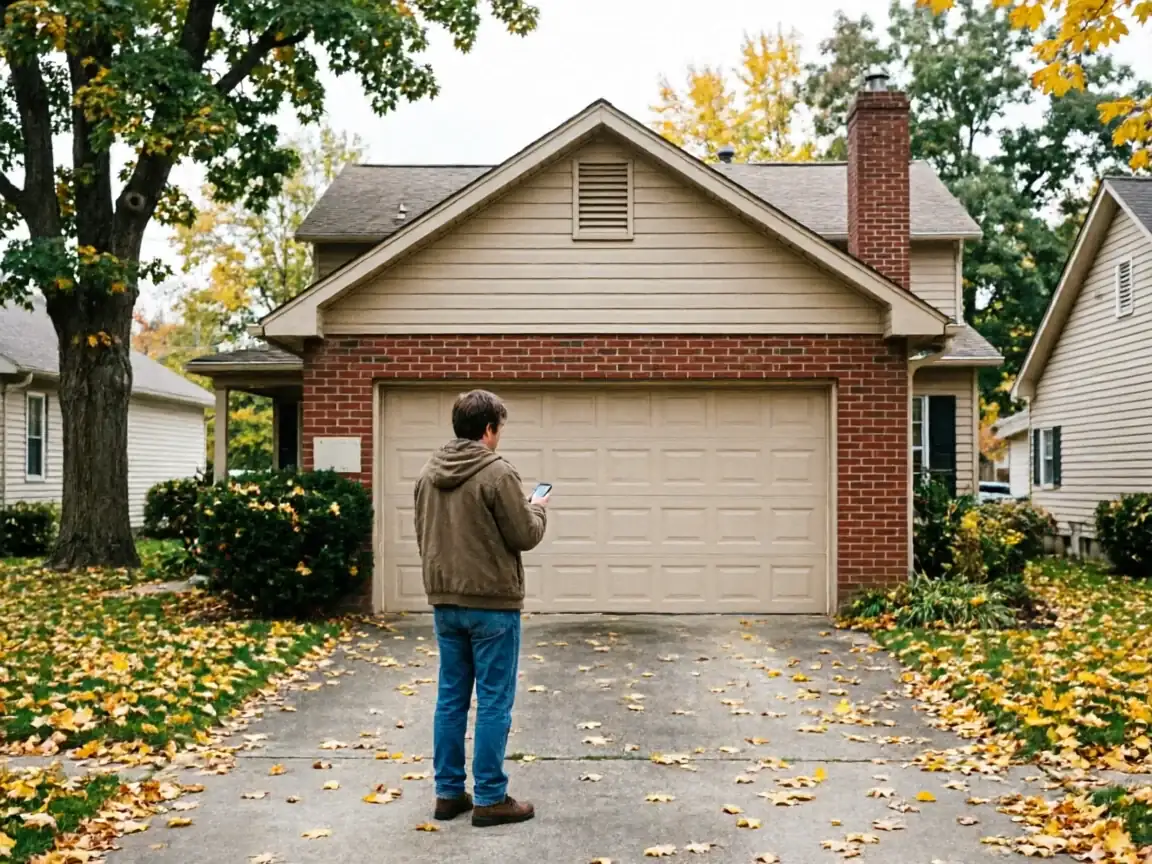
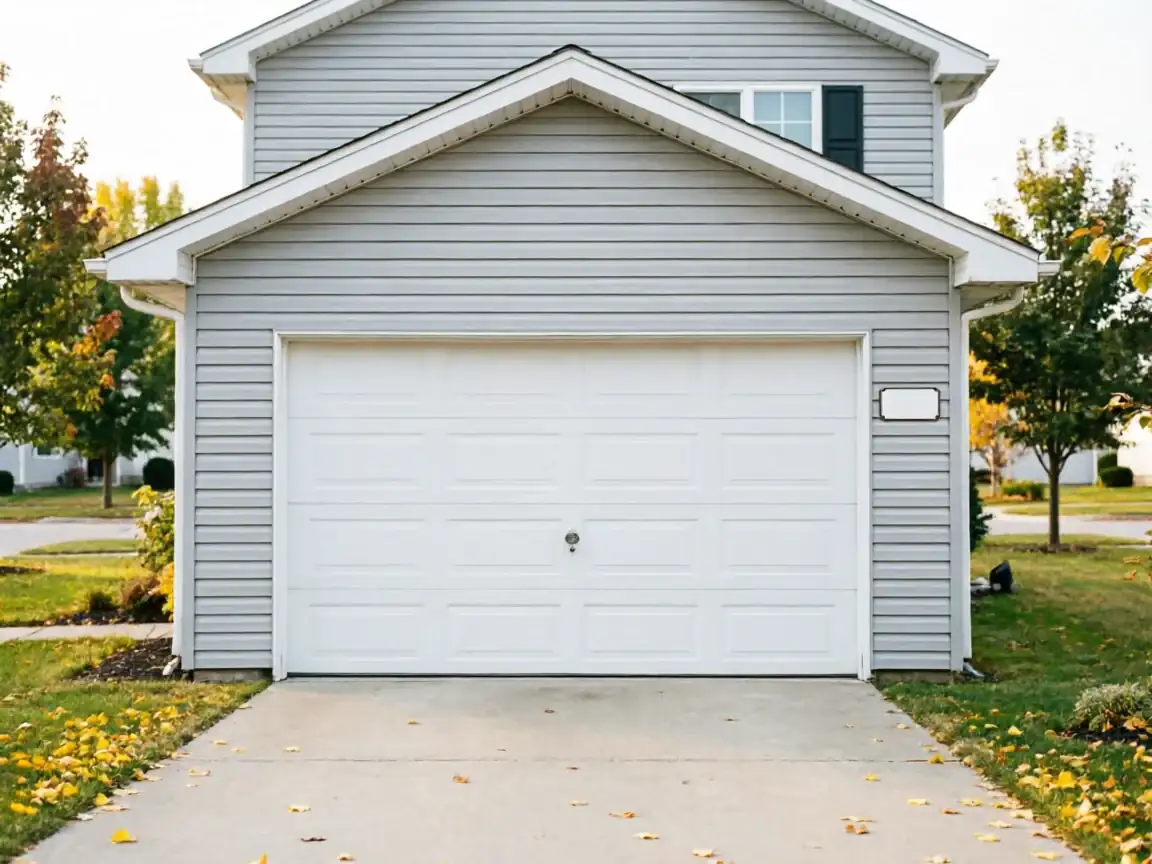
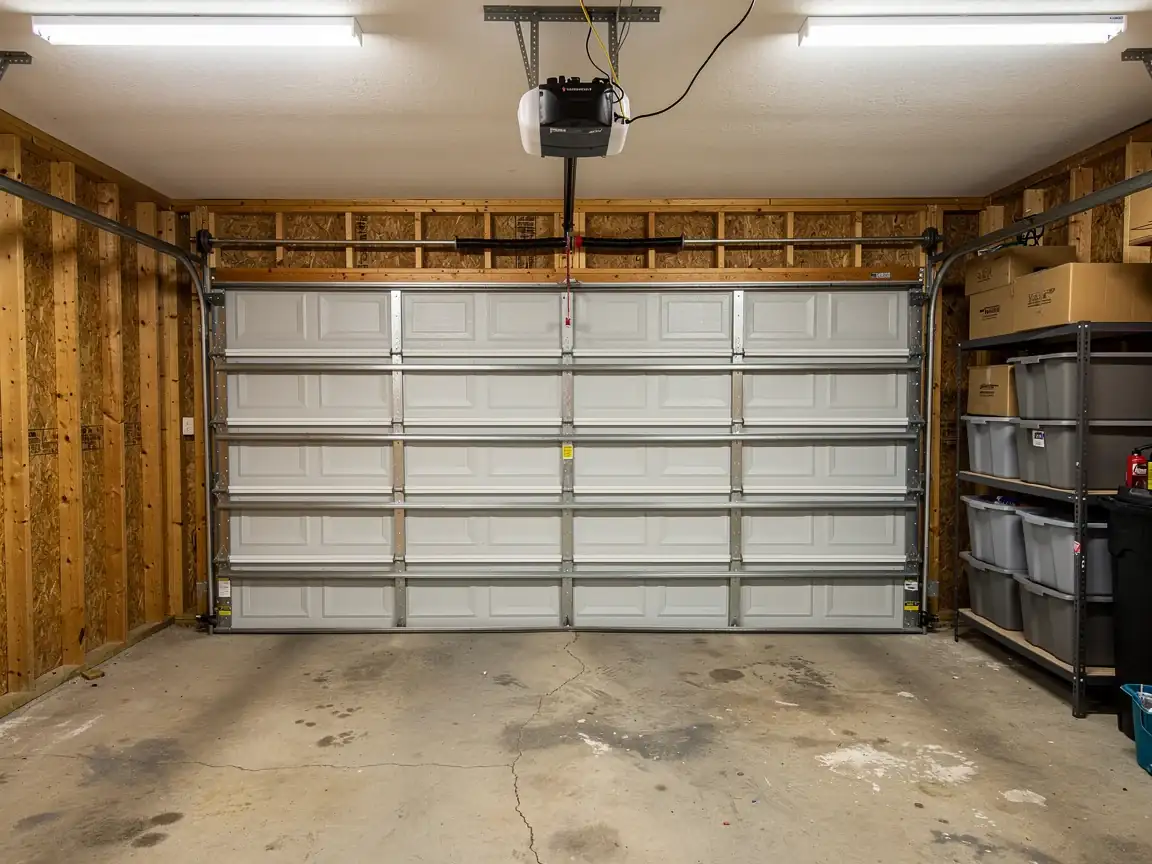
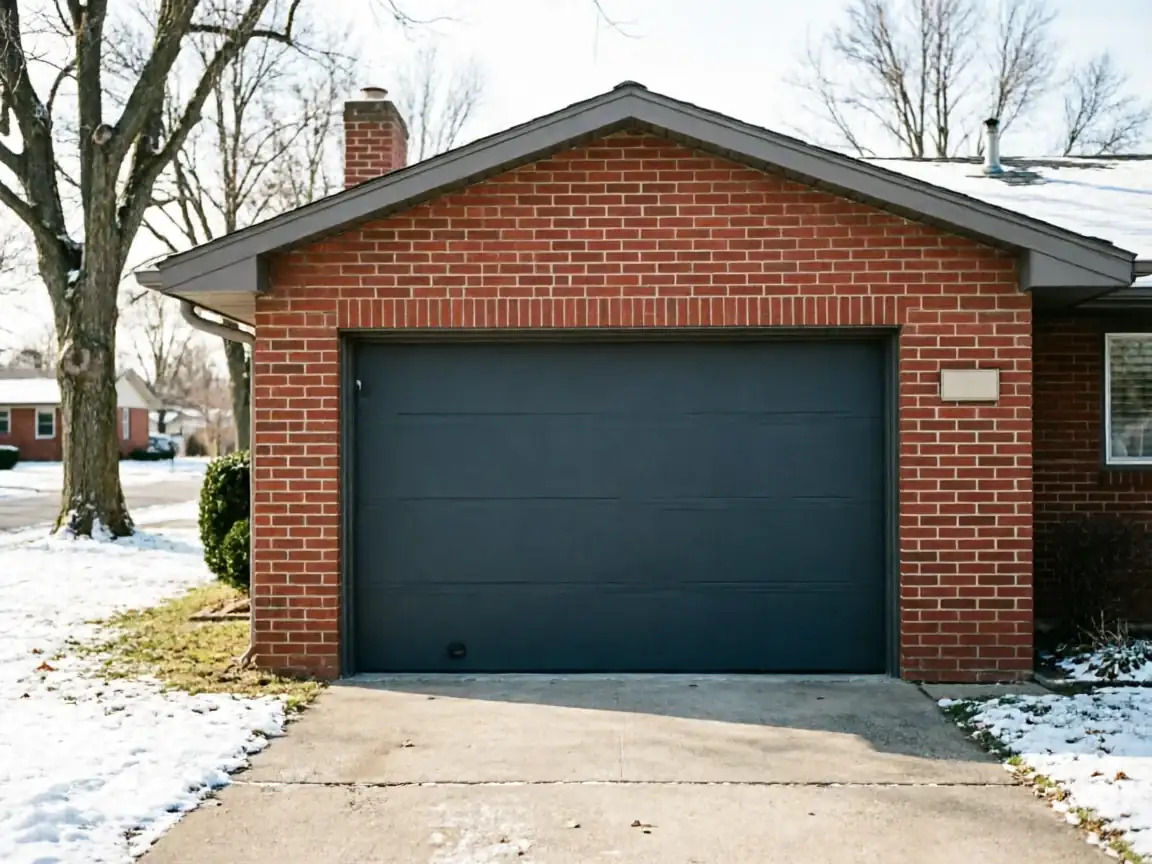
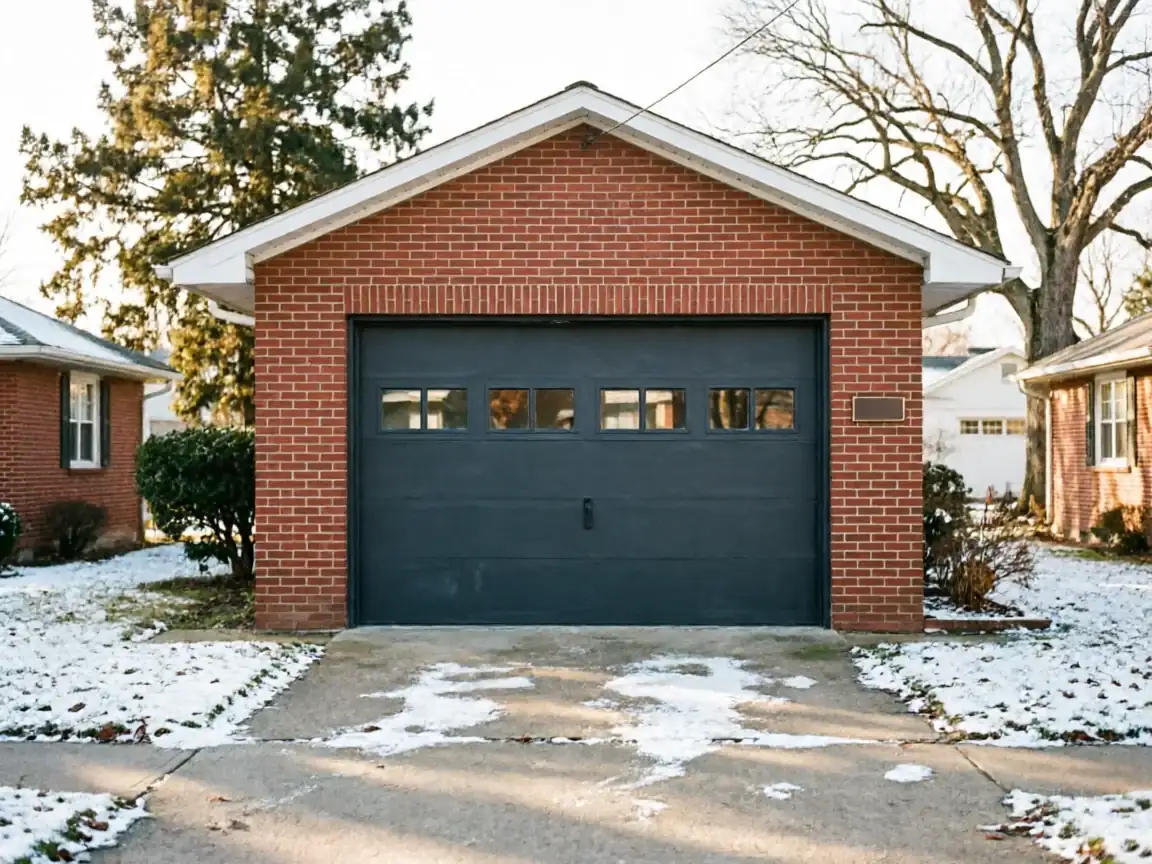
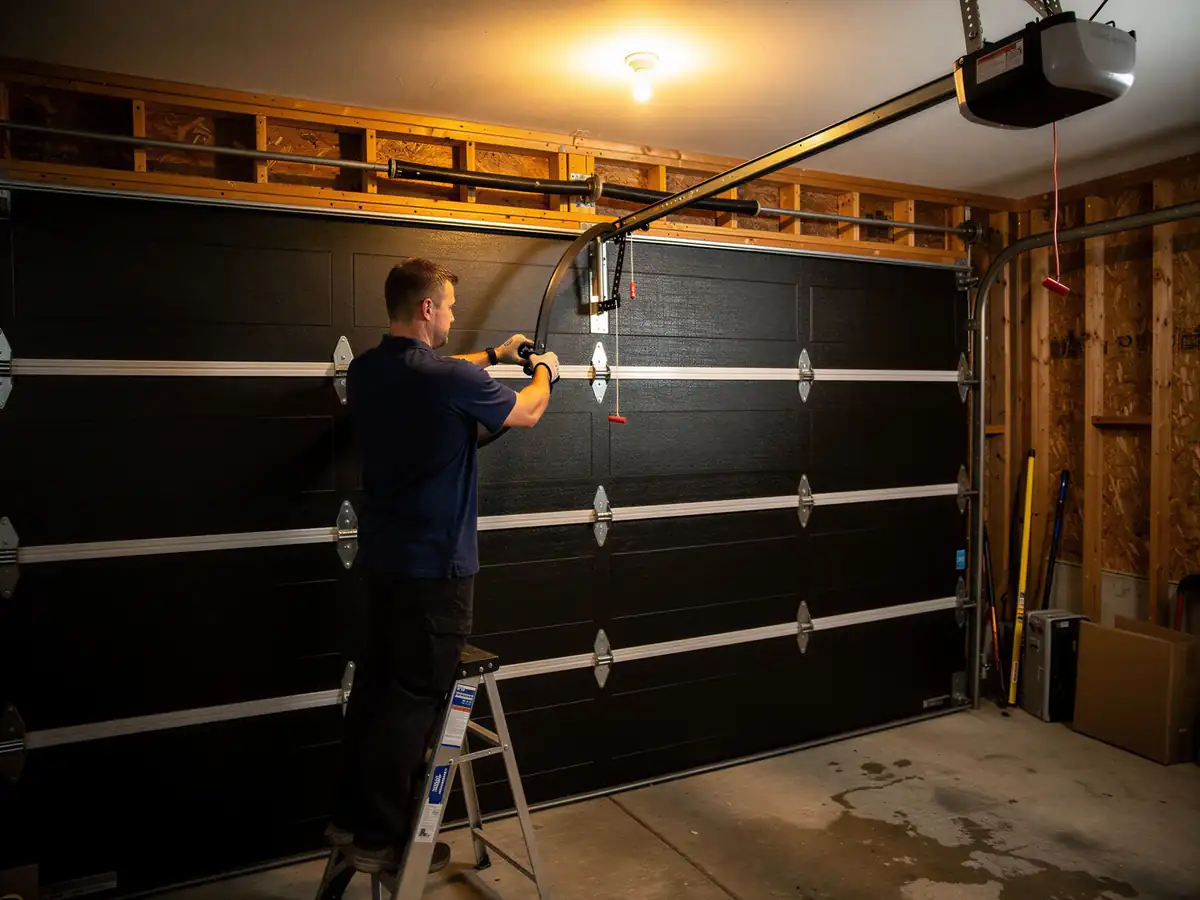
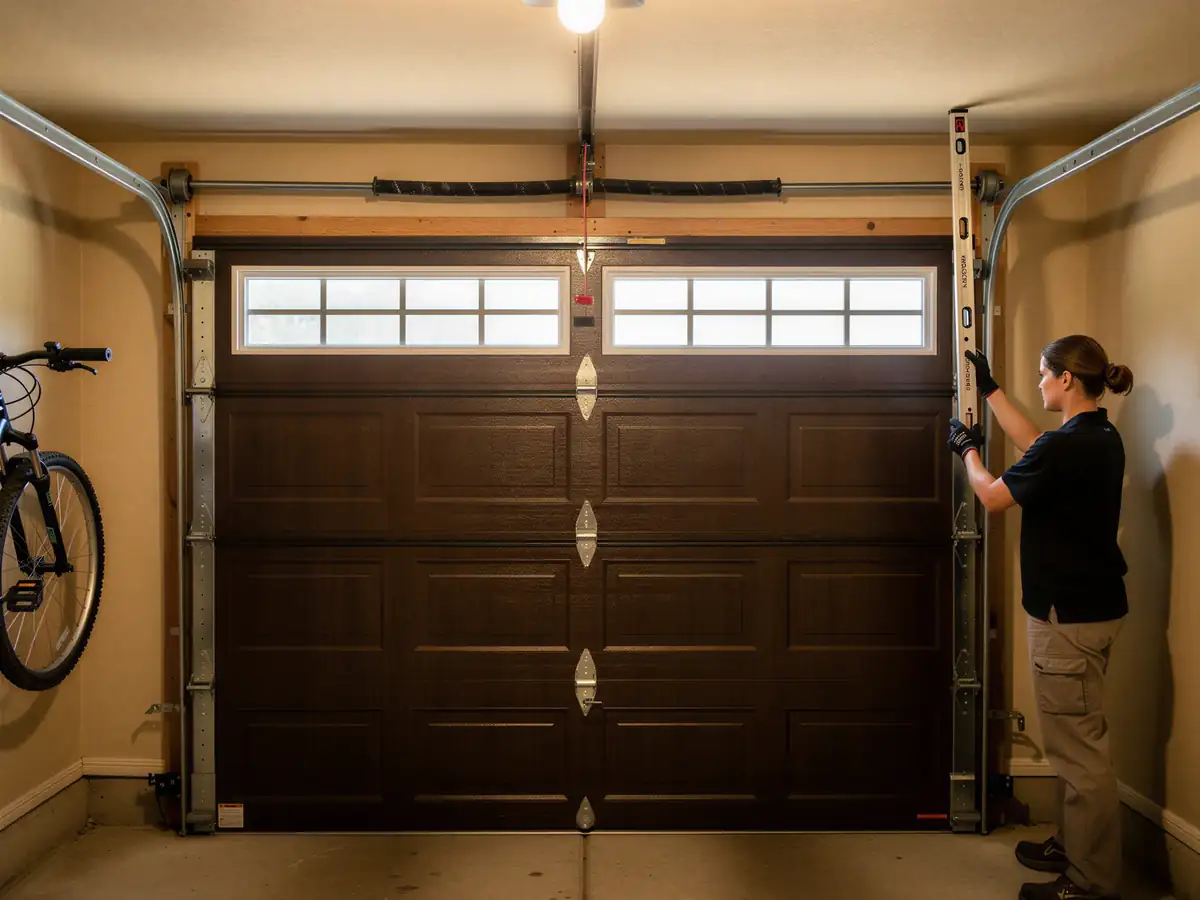
The median home here went up around 1993, a good fifteen to twenty years past the 1960s and 70s stock that still dominates much of the rest of the territory. That matters because the doors are different. You're mostly looking at steel sectional doors from the early-to-mid 90s, paired with chain-drive openers that used nylon drive gears - parts that strip out after enough winters of cold-stiffened grease and a door that's gotten heavier with age as insulation sags or gets added.
The common calls from this stretch
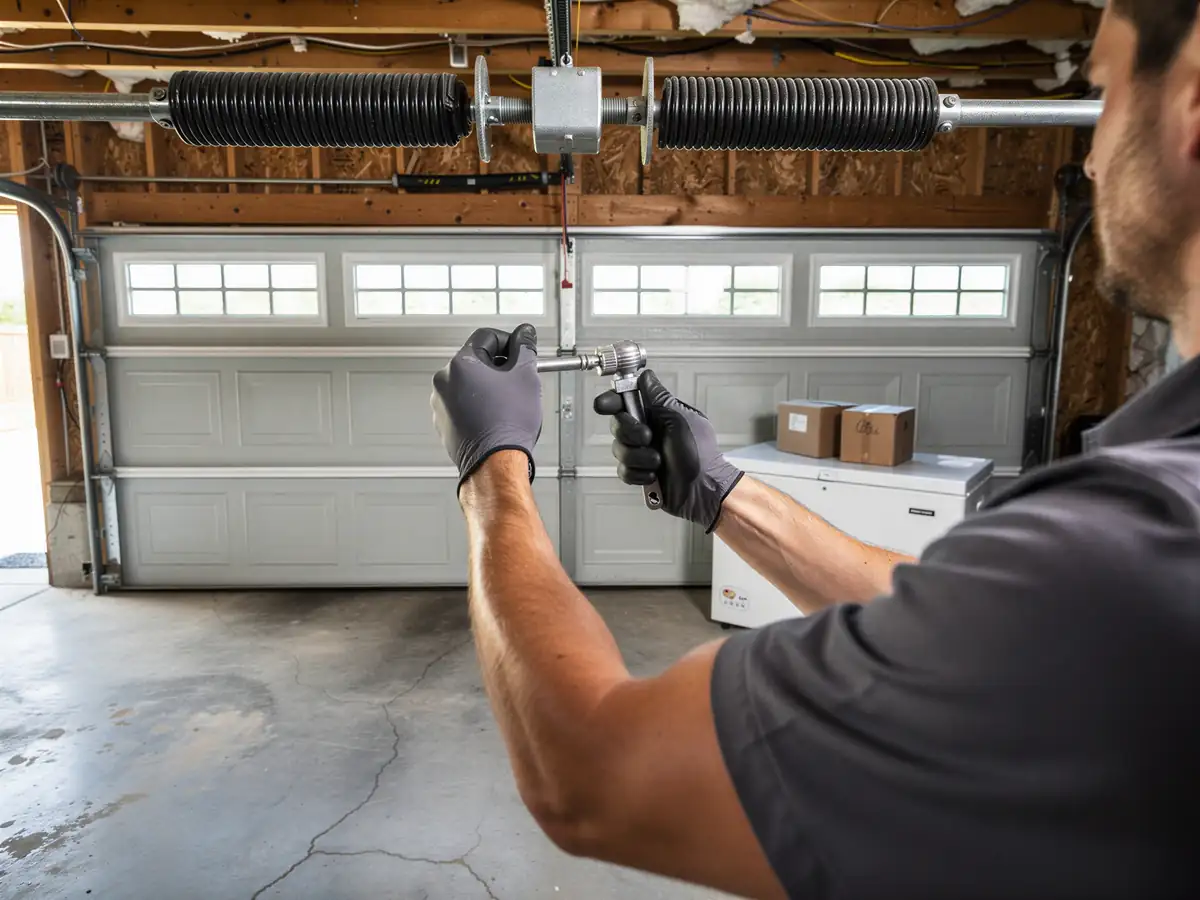
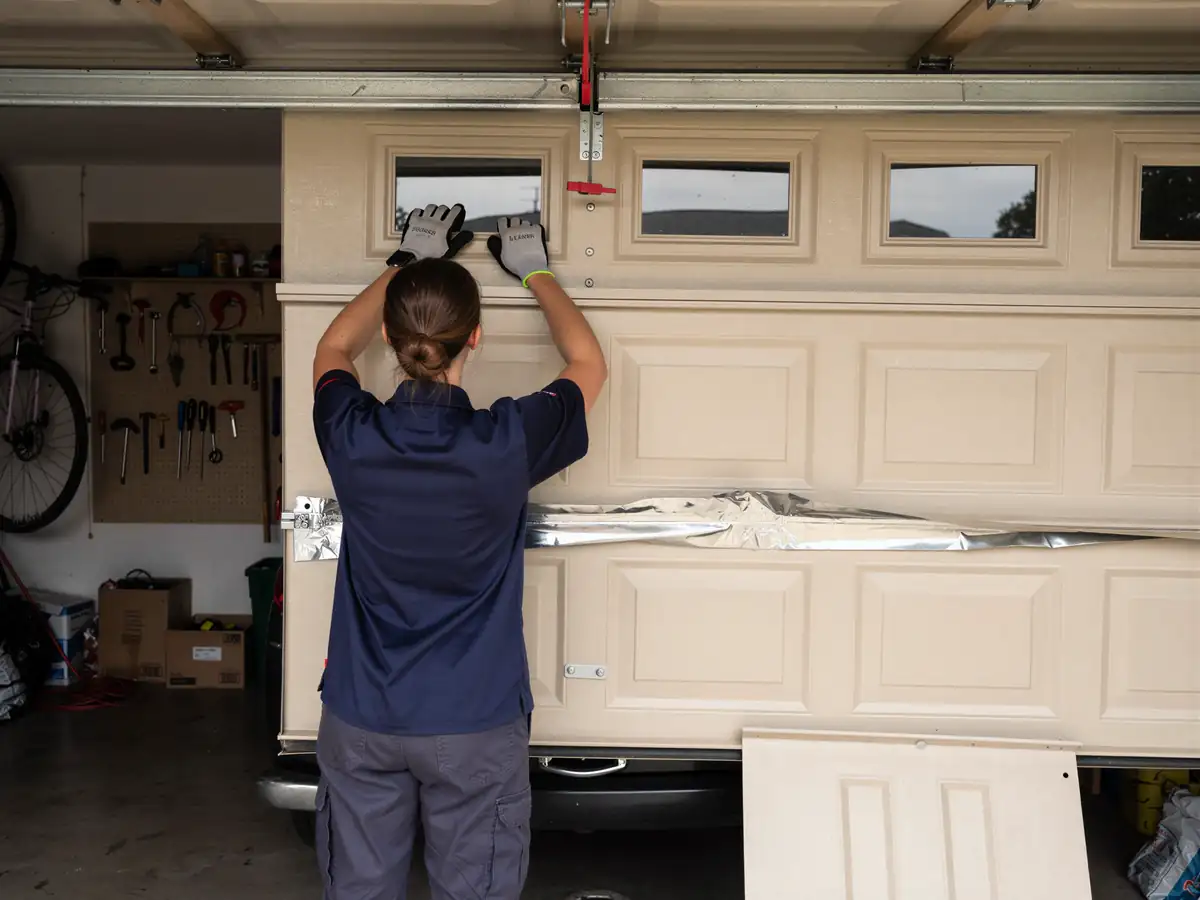
Extension springs original to the house finally giving out (they weren't built for forever), rollers that have worn oval instead of round, and openers whose circuit boards just quit after 25-plus years of duty. With household income here running well above the wider service area average, we also see more double-wide doors and heavier insulated panels than the single-layer doors common in the older 60s-era stock nearby - heavier doors put more strain on hardware that was never oversized to begin with.
Doing It Yourself
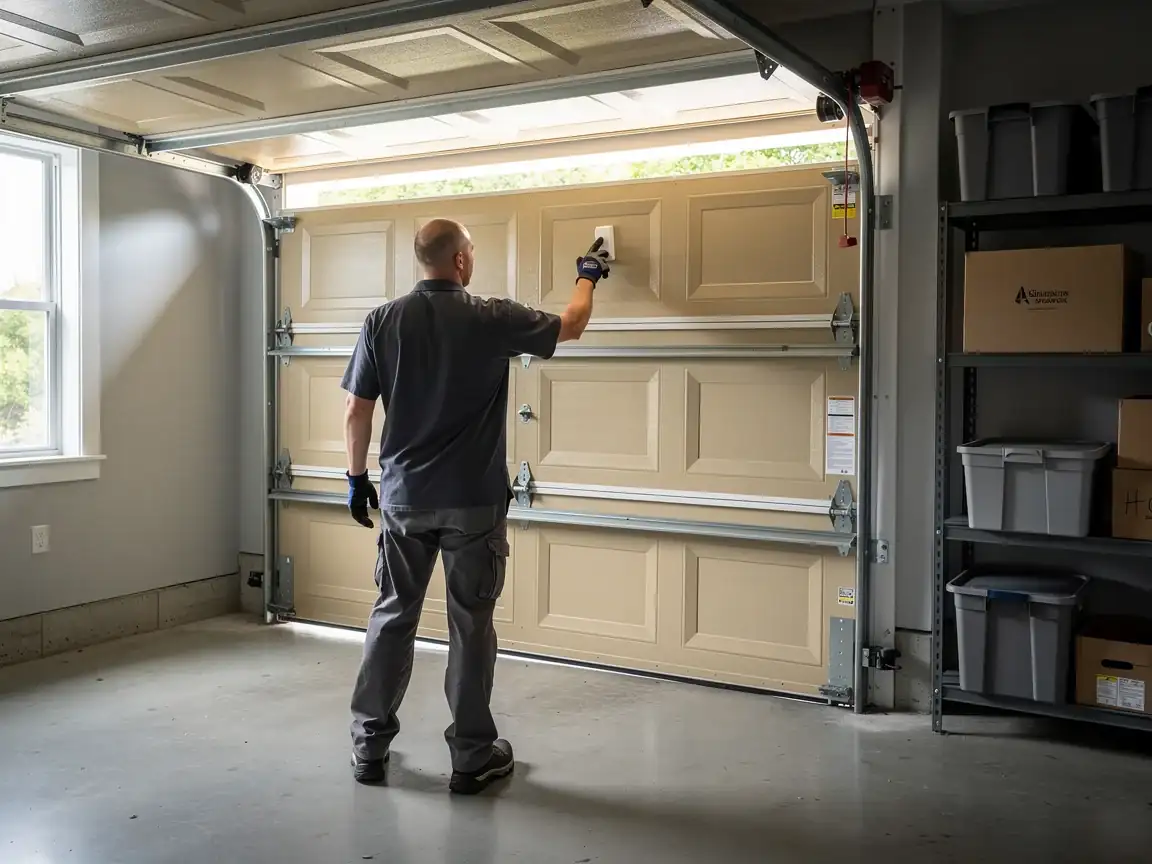
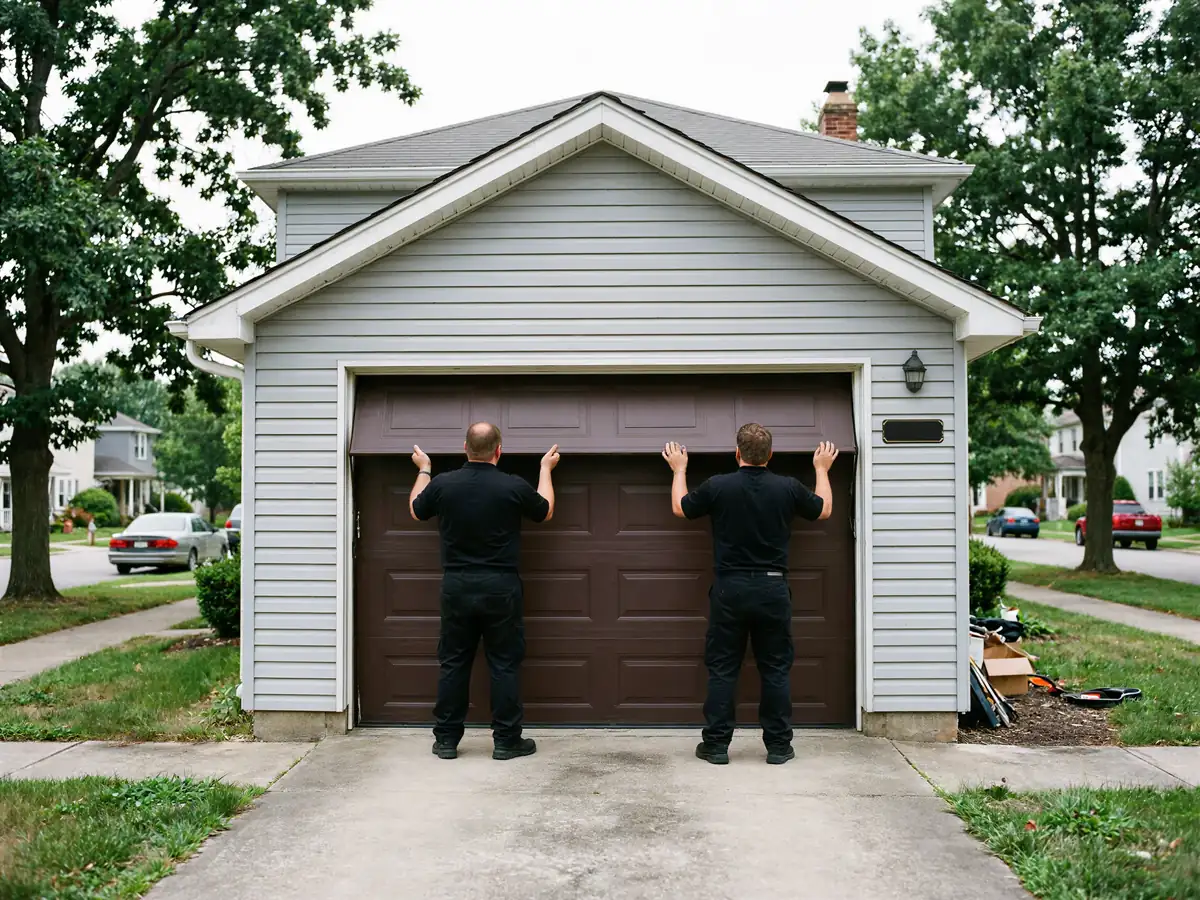
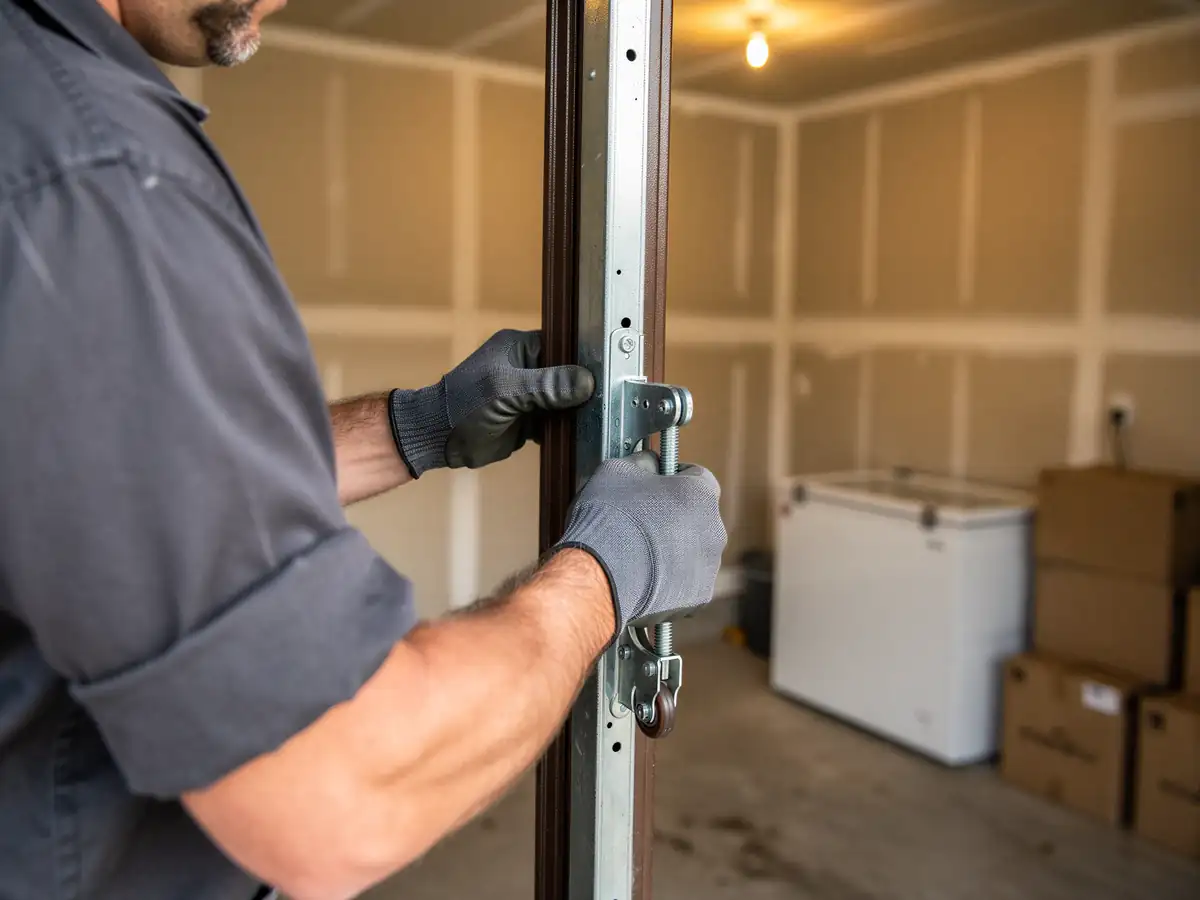
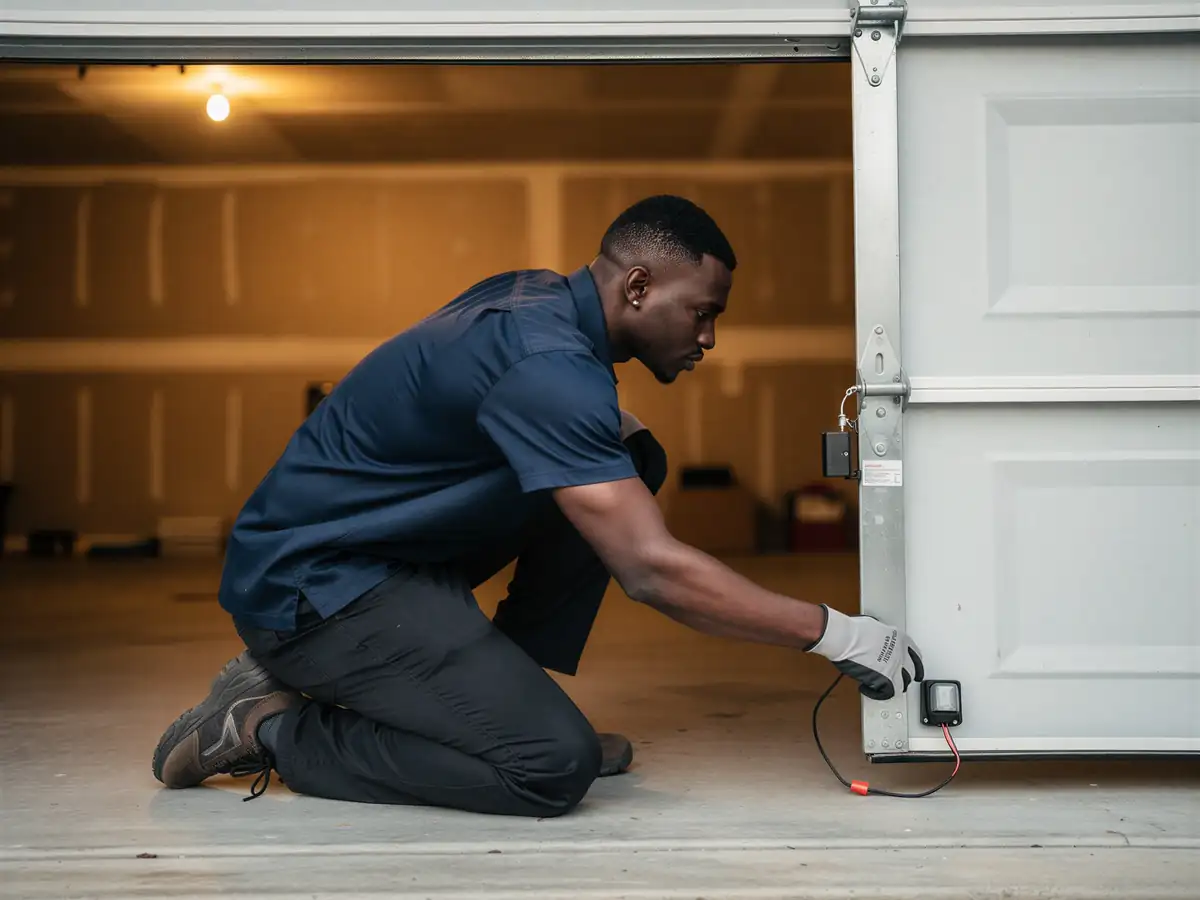
Some of this you can handle. Sensor alignment, lubricating hinges and rollers, clearing track debris, tightening loose bracket bolts - all fair game with basic tools and an afternoon. A door that reverses randomly or won't close is often just a sensor knocked out of alignment, and that's a five-minute fix with no truck required.
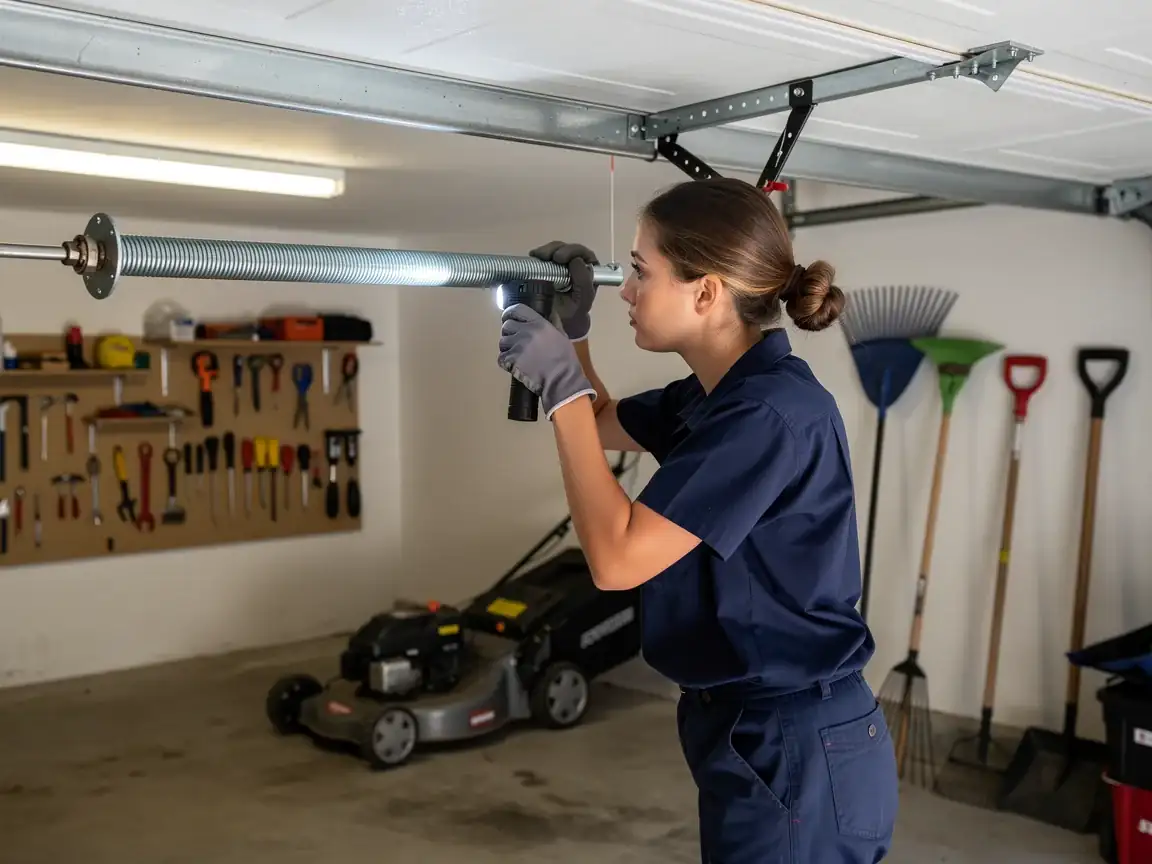
What you shouldn't touch: torsion or extension springs, period. A spring under tension lets go with enough force to break bones, and on a 90s-era door you often can't tell how much life is left in the original spring just by looking at it. Cable work is the same story - one slipped cable under load and you've got a door that can fall off its track entirely. If the opener's drive gear has stripped or the logic board is dead, replacing those parts without the right torque settings and safety checks usually turns a one-visit job into two. Know the line between maintenance and repair, and don't cross it to save a service call.
What It Costs
We're not going to throw a number at you here that doesn't match what we'd actually quote on your door, because it depends on what's failed and what's underneath the panel once we open it up. A 90s-era opener board swap is a different job than a spring replacement on a heavier insulated double door, and Chanhassen's housing stock gives us more of the latter than the lighter single-layer doors we see on older homes elsewhere in the territory.
What we can tell you: we price the job after we've looked at the actual hardware, not off a phone estimate of symptoms. Rust, stripped gears, and worn rollers all look similar from the driveway and cost differently to fix. If a repair is going to run close to what a new door costs - which happens more often on doors pushing past their expected service life - we'll say so rather than patch something that's going to fail again in a year.
How to Book
We run this call from Savage, about 12 miles out
So get in touch and we'll get a time on the books rather than you waiting on a guess. Tell us the age of the door if you know it and what it's doing - won't open, reverses, grinding noise, dead opener - and we'll come prepared with the right parts for a door from this build era instead of guessing on-site.
- 12 miles
See more on how we cover the area at Chanhassen service details
Or check the full rundown of what we handle out of Savage at garage door repair in Savage.