Why It Happens Here
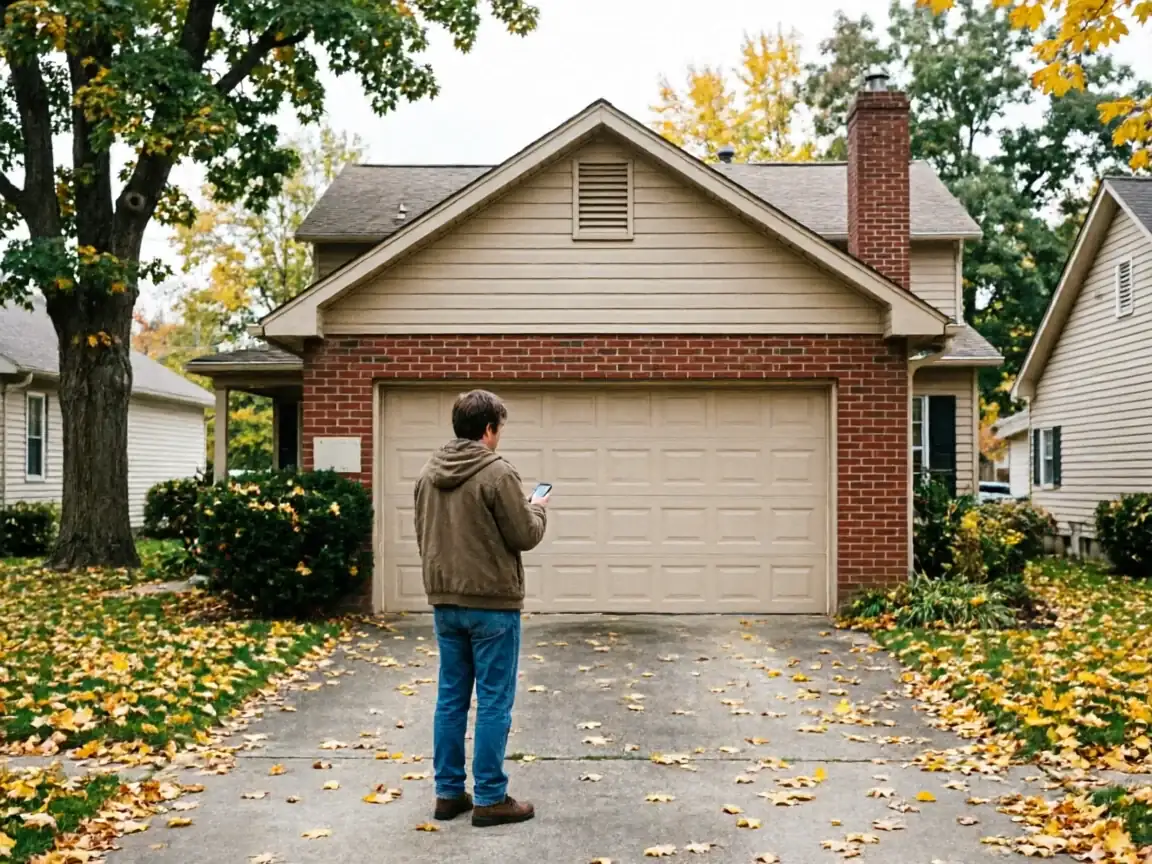
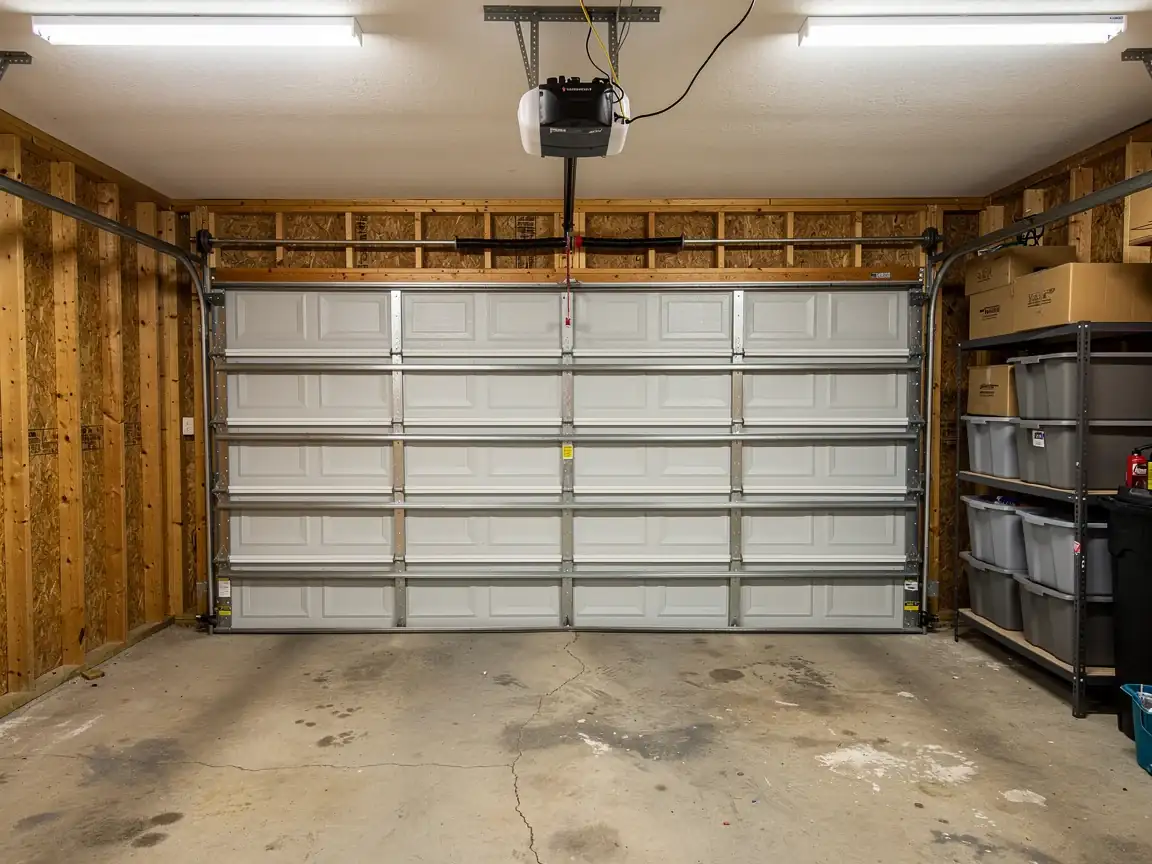
A spring on a 1982 door has already been replaced at least once, probably twice, just from cycle count - torsion springs are rated in open-close cycles, not years, and a door used twice a day burns through that rating well before the house needs a new roof. So the fault isn't that the spring is original. It's that the rest of the hardware around it - the end bearings, the center bracket, sometimes the drum - is old enough to have worn unevenly, which makes a spring replacement by itself a short-term fix if nobody checks the rest of the assembly. Orono sits in a cold-moderate climate band, same as the rest of this area, and steel springs lose tensile give in cold weather. A spring that's been running tired all summer is the one that snaps on a January morning when the metal contracts and the extra resistance finds the weak coil. That's a cold-climate failure pattern, not a hot one, and it's worth knowing before you assume a snapped spring means you need a whole new door.
What the Repair Takes
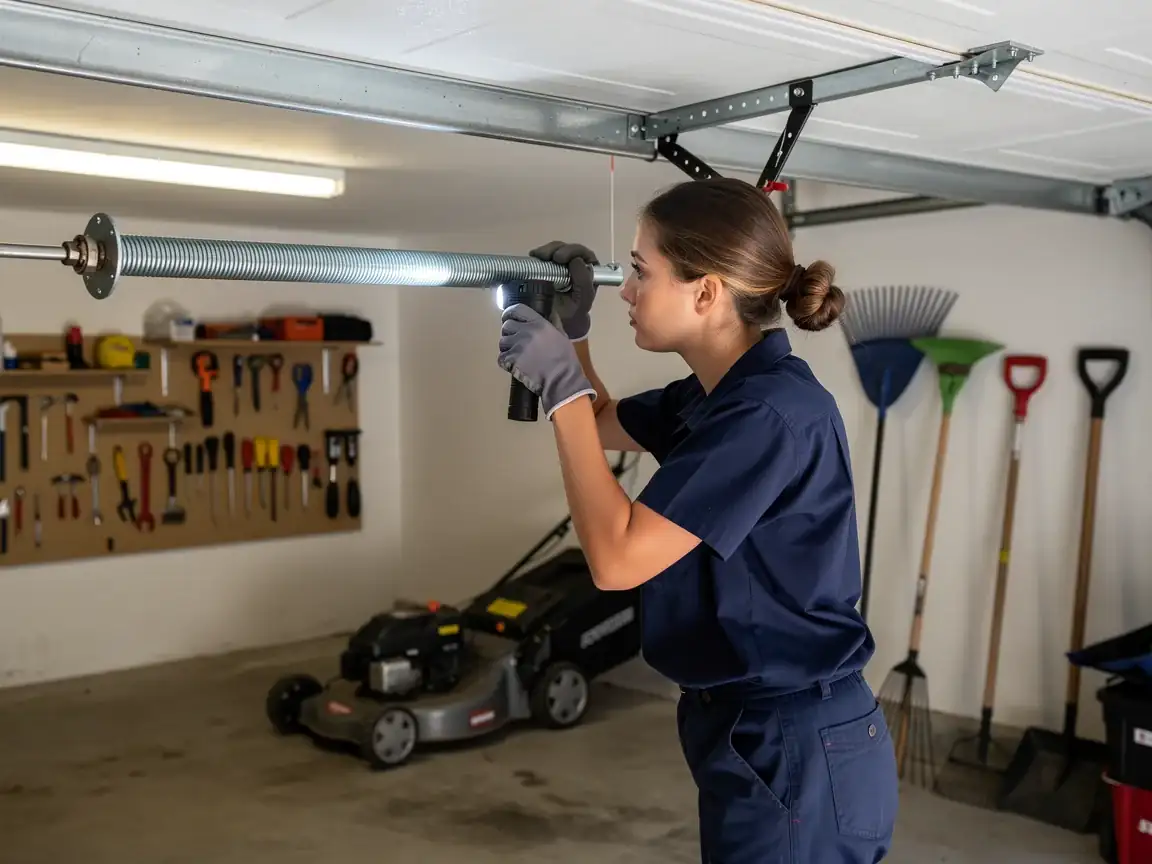
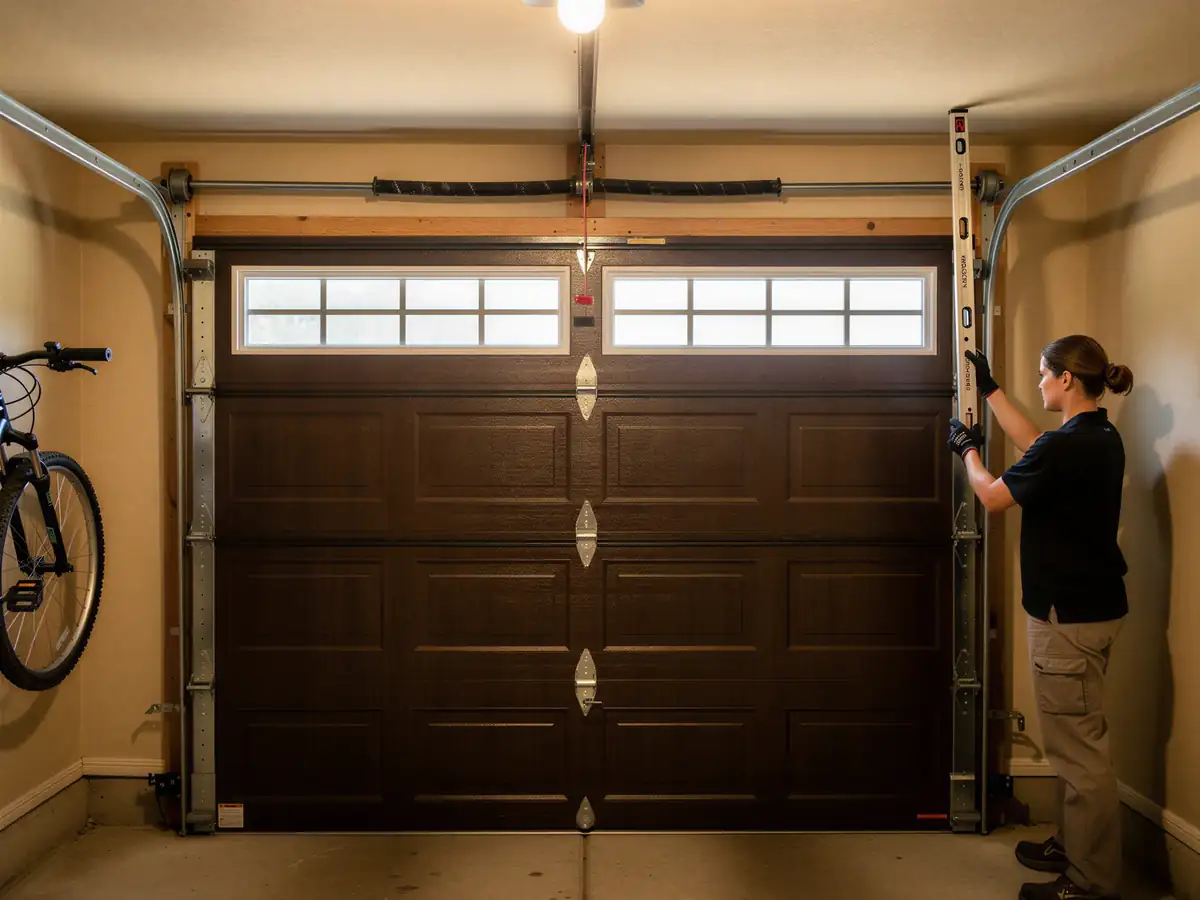
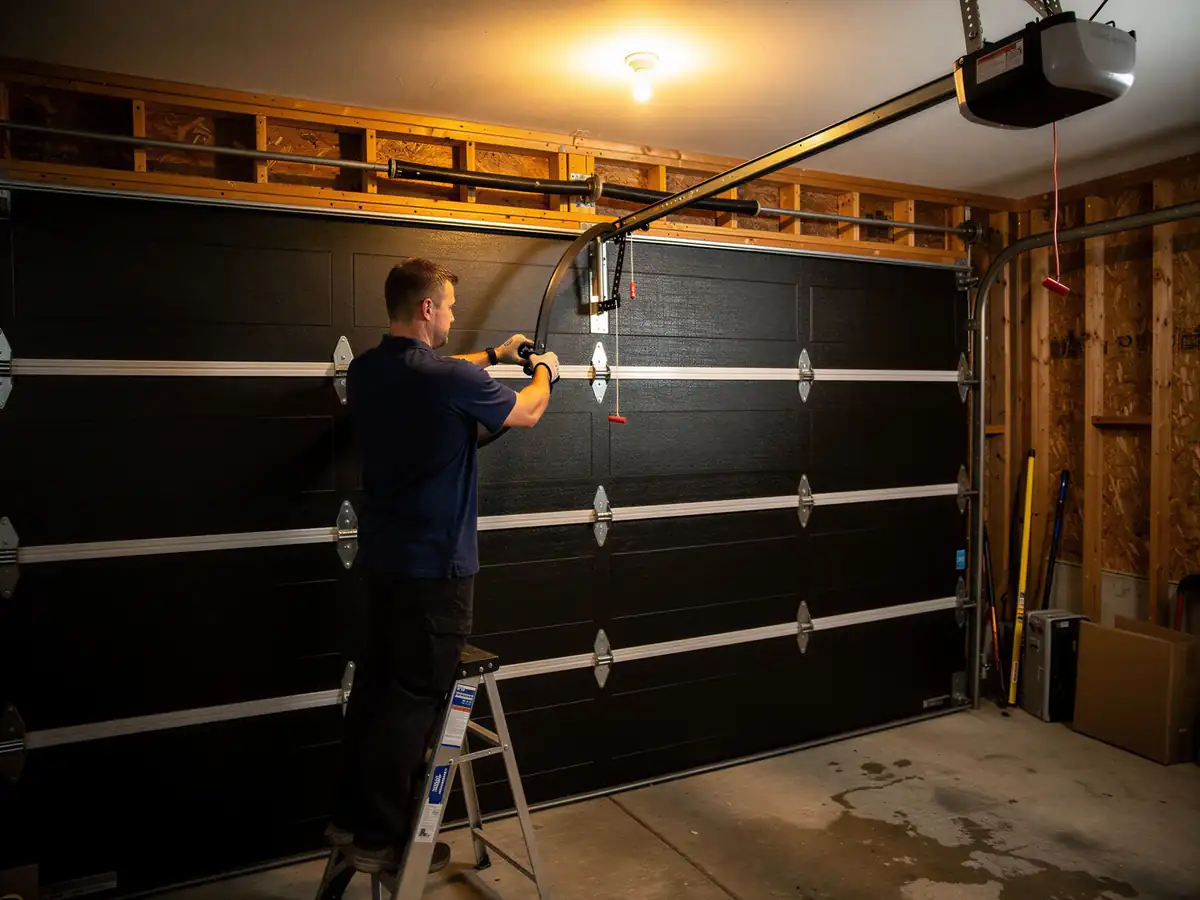
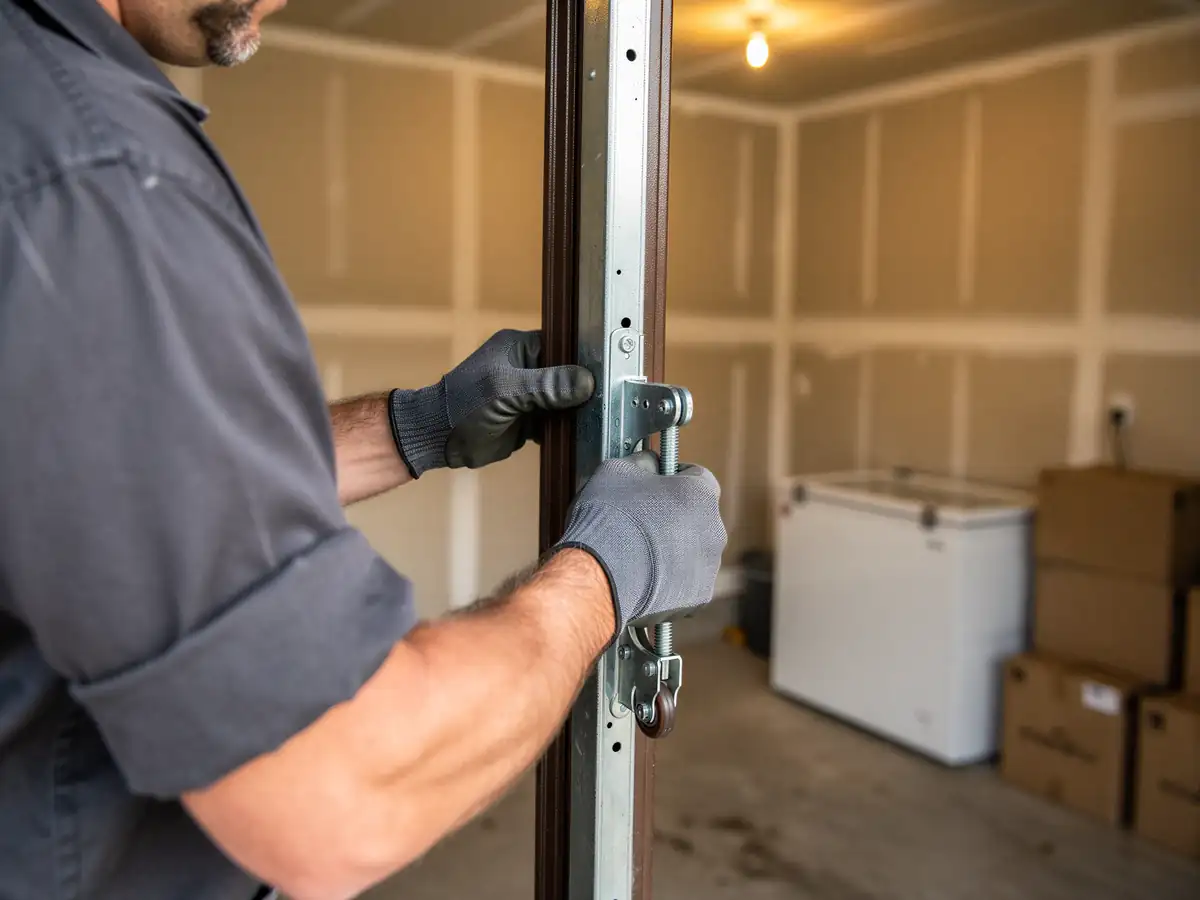
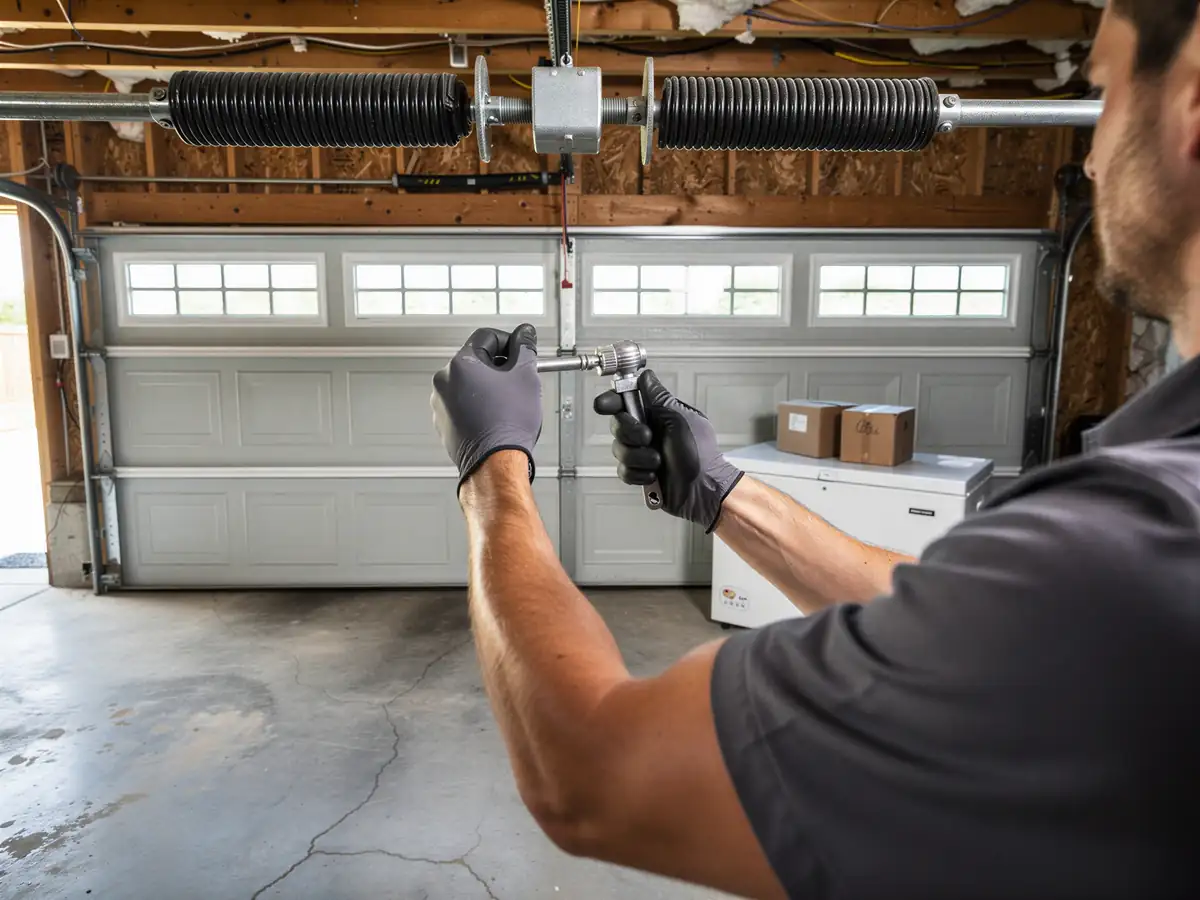
A straightforward torsion spring swap on a single door runs under two hours once the truck is on site - clamp the door, unwind the old spring under control, measure wire diameter and wind direction, set the new one, and cycle the door a dozen times checking balance. Double doors with two springs take longer because both have to match in wind and tension or the door racks sideways over time. On a 1982-era door we also check the center bearing plate while we're in there, since that bracket typically hasn't been touched since the spring before last, and a worn bearing will chew through a brand-new spring faster than it should. If the drums or cable are grooved from age, we'll flag it rather than just swap the spring and leave a second failure waiting.
What You Are Seeing
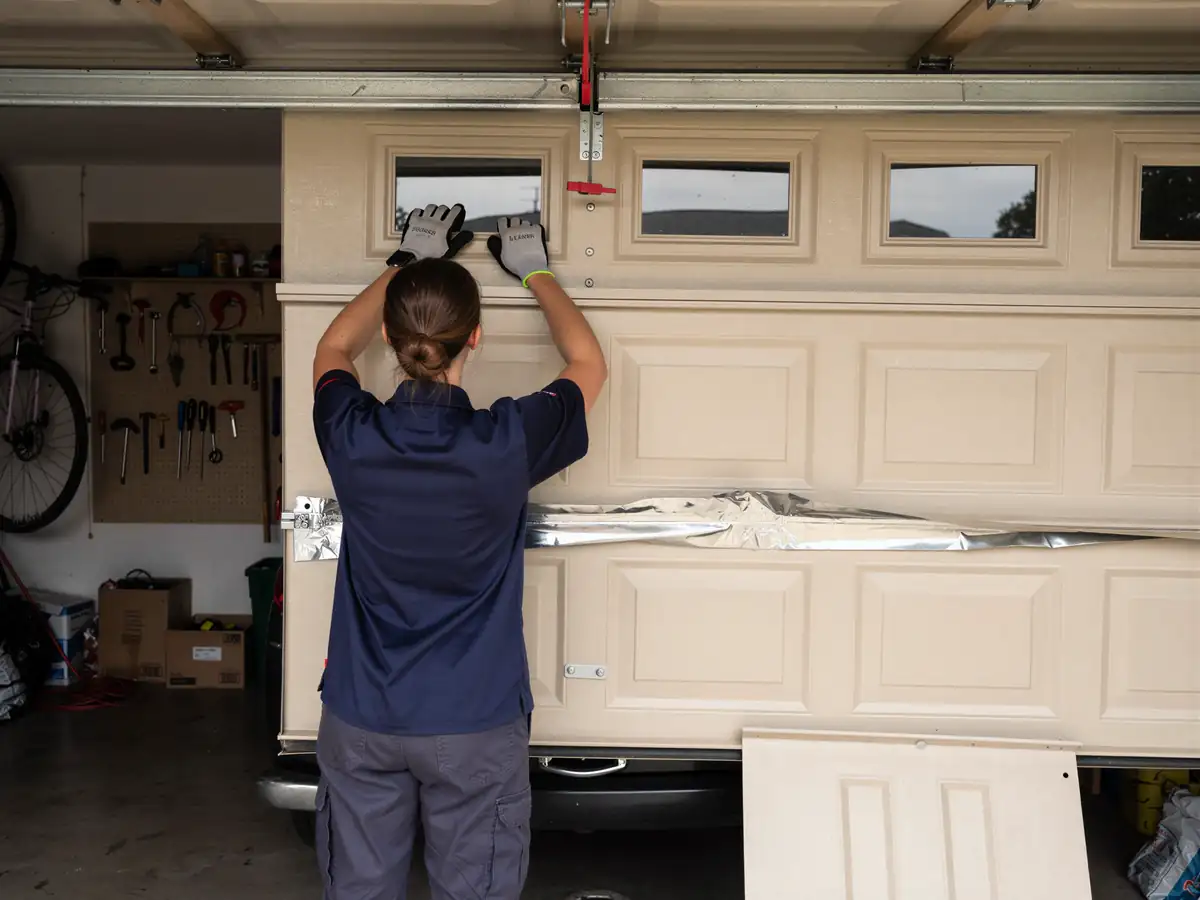
The clearest sign is the door that won't lift, or lifts an inch and stops - that's a snapped torsion spring, full stop, and trying to force the opener through it burns out the motor gears fast. A loud bang from the garage earlier in the day, usually in cold weather, is often the spring letting go on its own under tension even with the door closed. If the door lifts unevenly, one side higher than the other, that's usually not the spring itself but a bearing or cable problem on one side throwing off the balance - worth a separate look rather than assuming a spring swap fixes it. A door that's gotten noticeably heavier to lift by hand over a period of weeks, not suddenly, is a spring losing tension gradually rather than snapping outright, and it's worth calling before it does.
Doing It Yourself
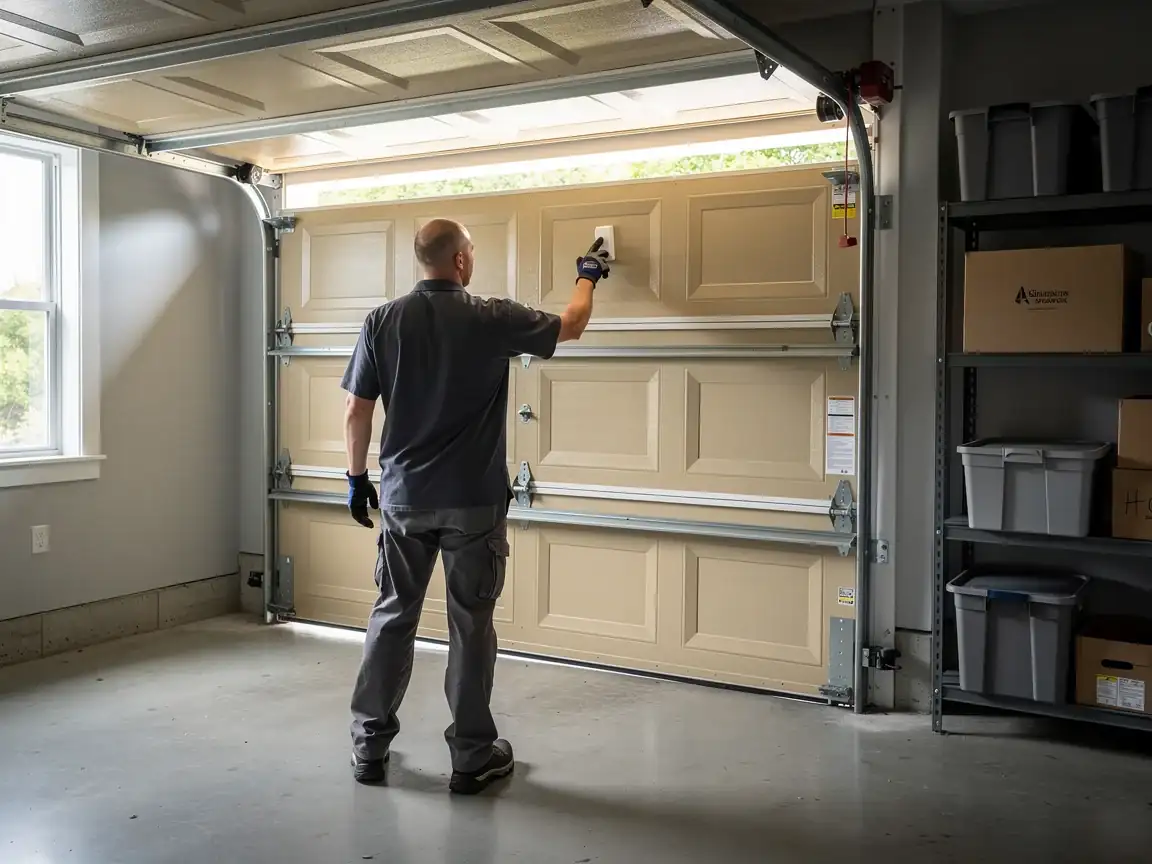
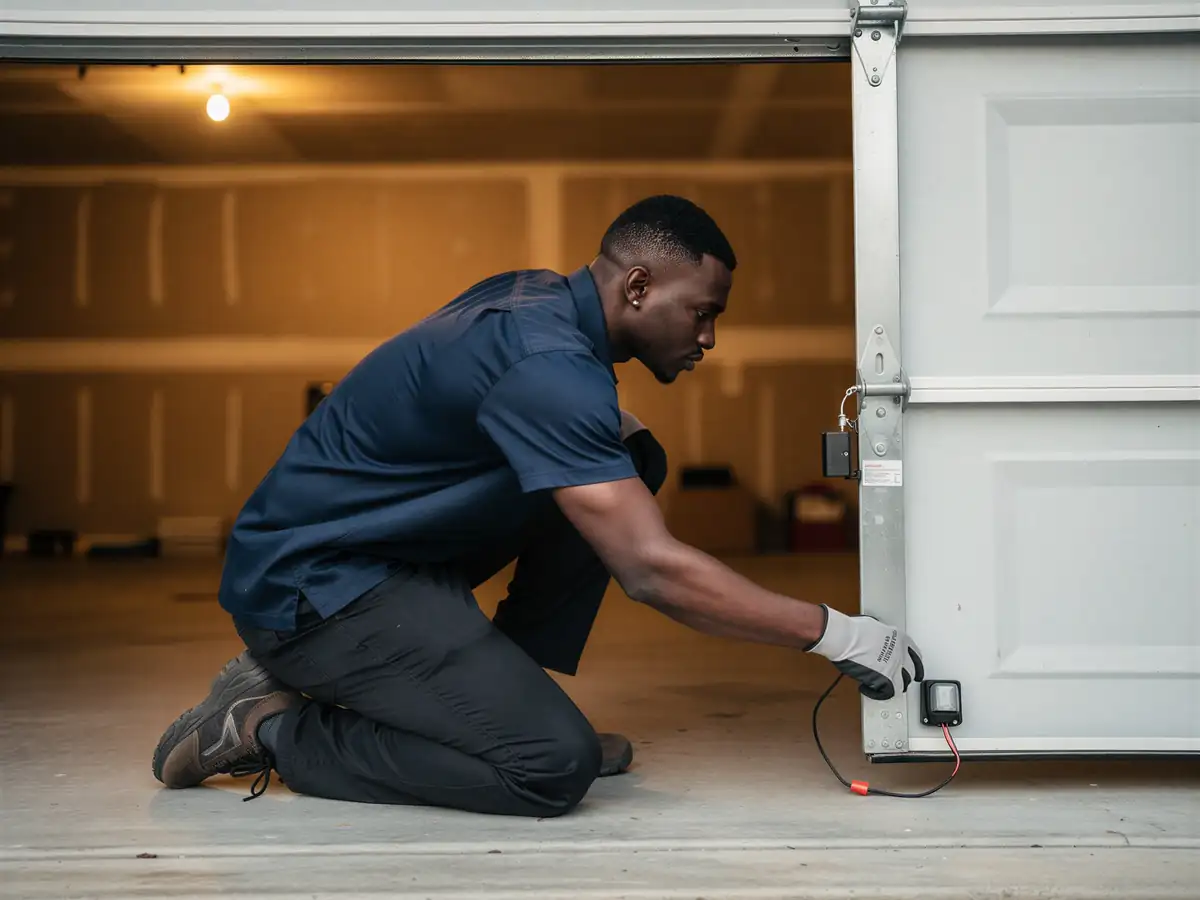
We'll say this plainly: don't replace a torsion spring yourself. The spring is under enough stored tension to break a bone or worse if the winding bars slip, and that's true regardless of how handy you are. What you can safely check yourself is whether the door is actually a spring problem - pull the manual release, see if the door moves freely by hand when disconnected from the opener, and listen for grinding versus silence. You can also check that the photo-eye sensors near the floor are clean and aligned, since a door that won't close is sometimes a sensor issue, not a spring issue at all, and that one's a five-minute fix with no tools beyond a rag. Past that, the winding bars and the clamp stay off-limits.