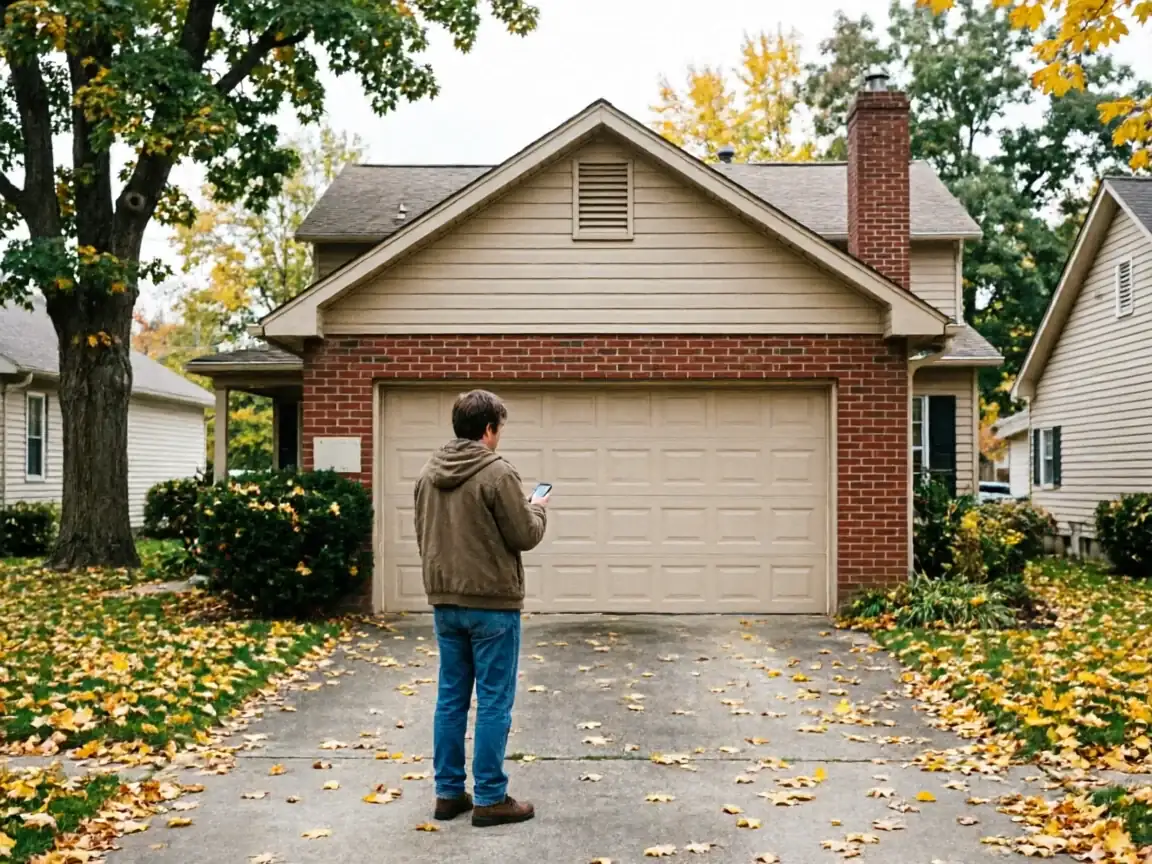
Doing It Yourself
There's a short list of things worth checking before you call anyone
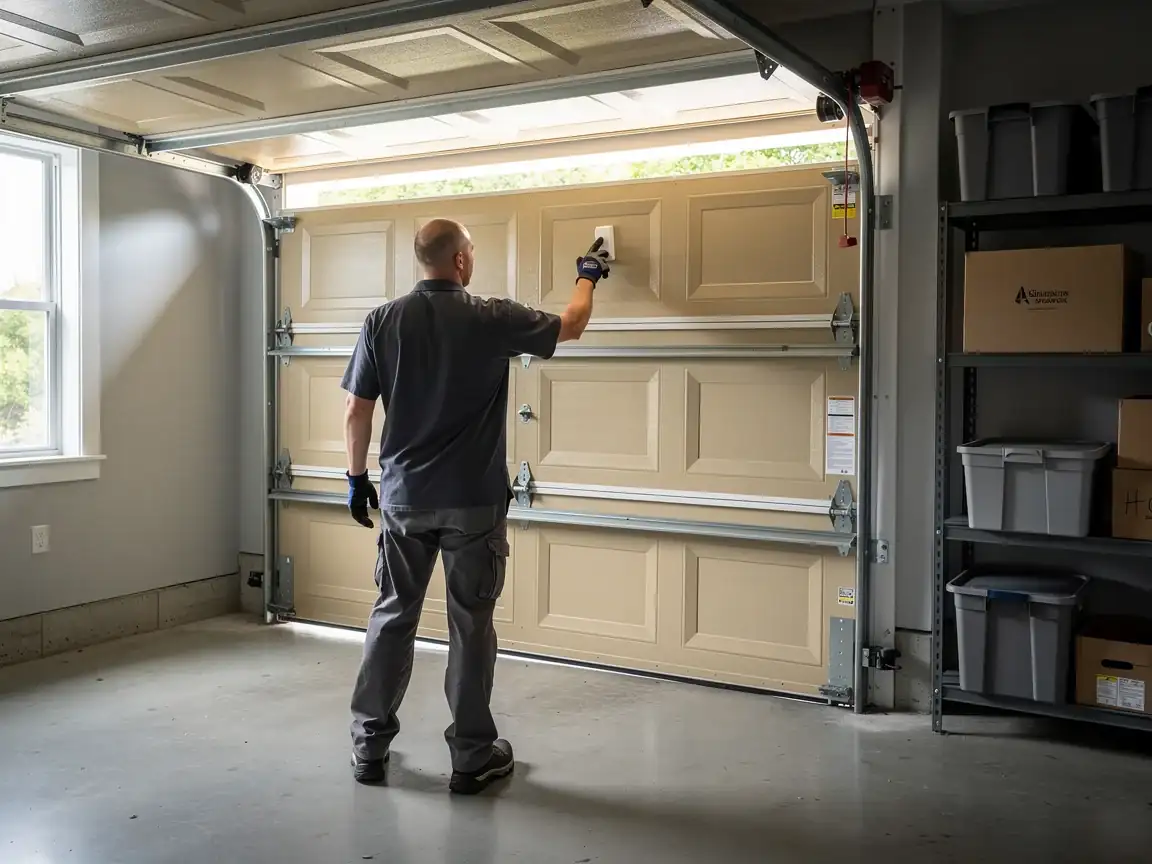
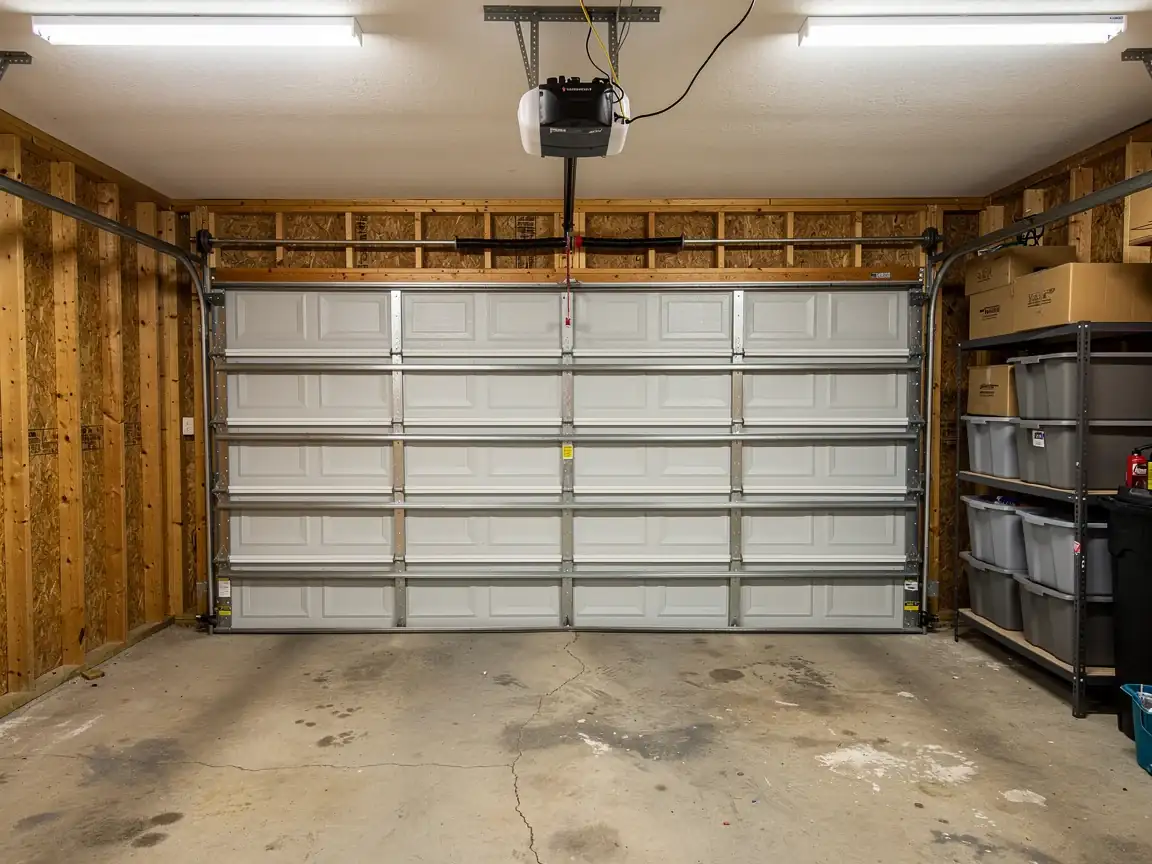
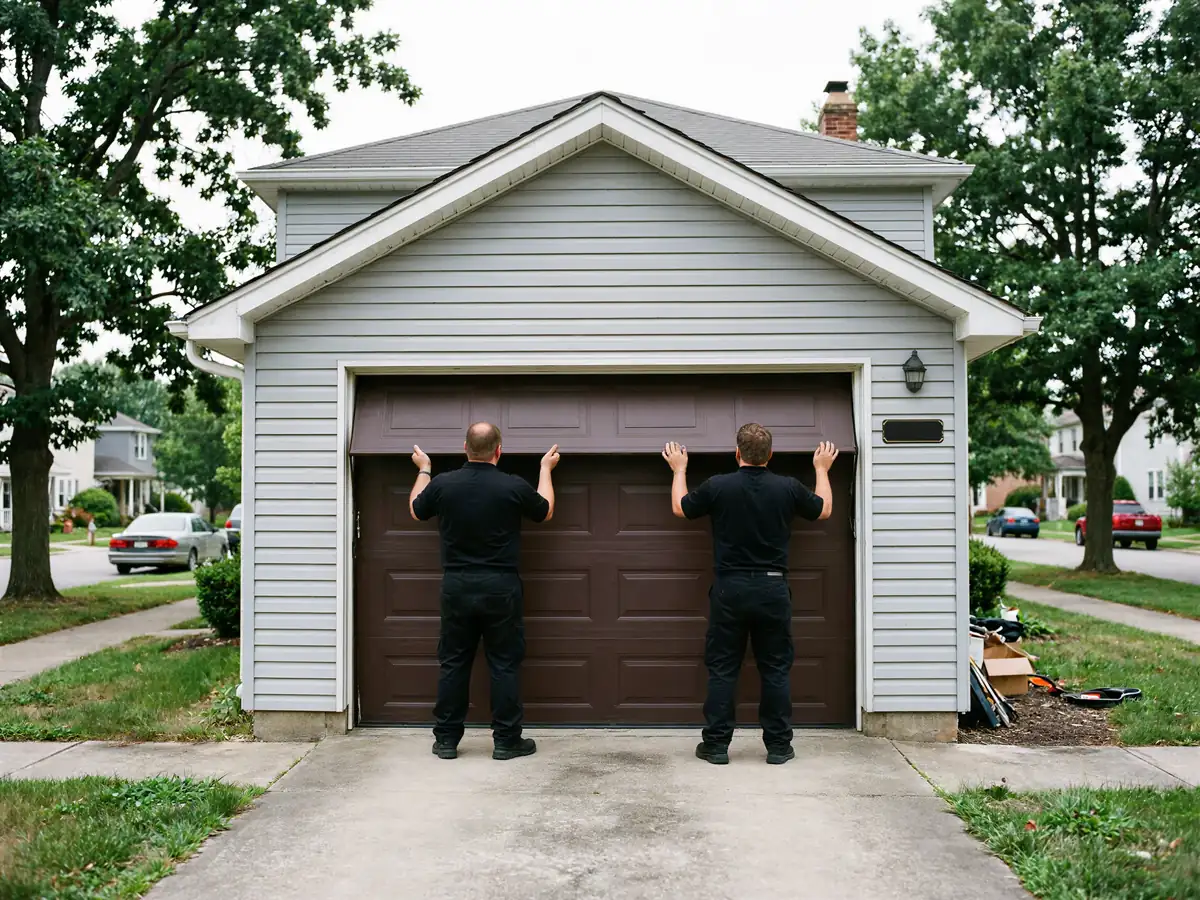
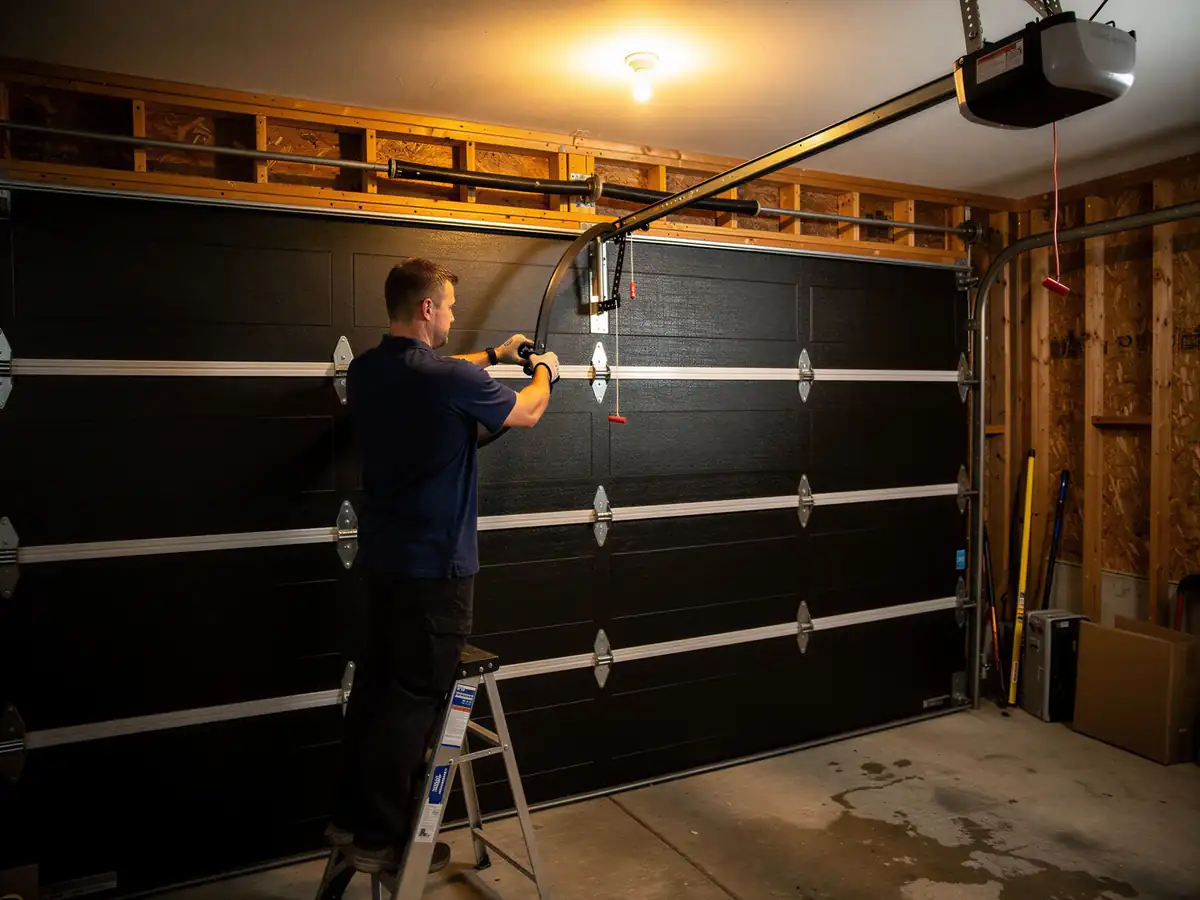
Pull the release cord and move the door by hand - it should swing with one hand and hold position wherever you stop it. If it drops or flies up, the spring is carrying the wrong tension and that's not a DIY fix. Wipe down the tracks, check that the rollers aren't cracked, and put a few drops of garage-door-specific lubricant on the hinges once or twice a year. That's about the ceiling of what's safe without the right bars and clamps.
What you should not touch
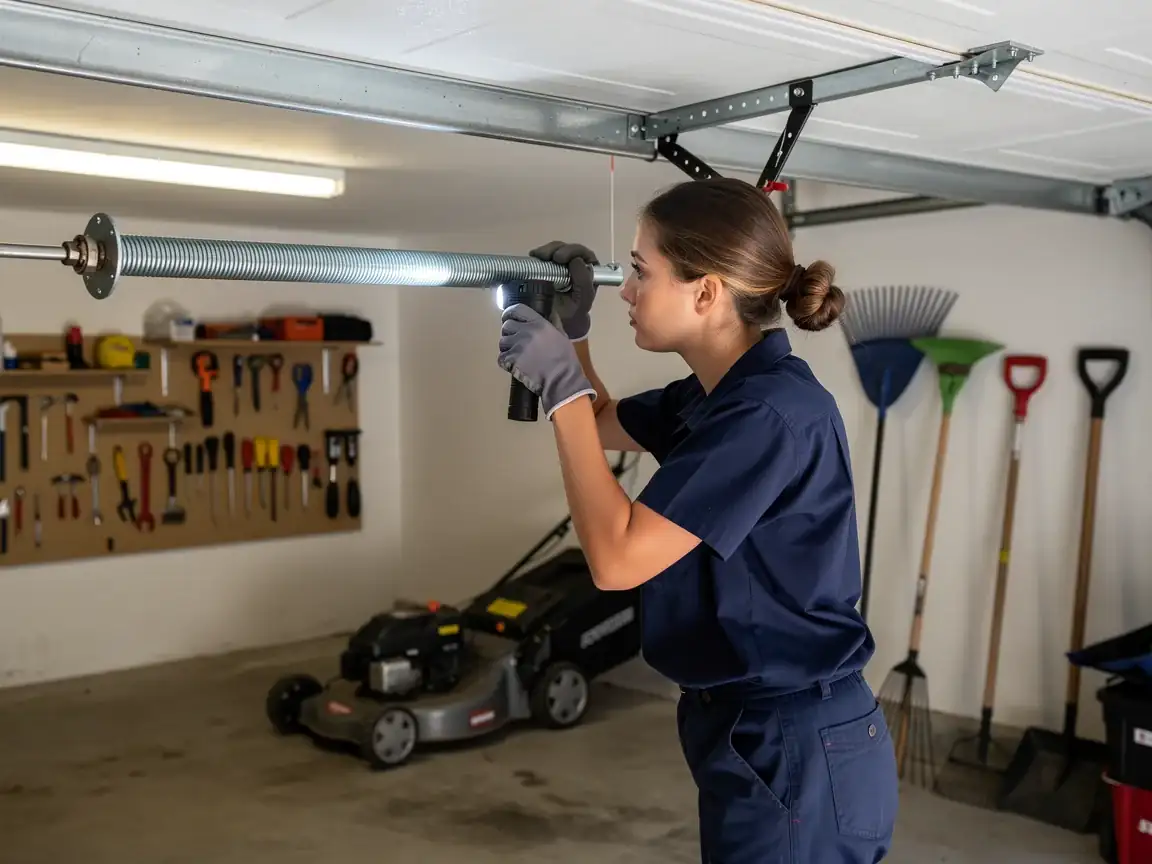
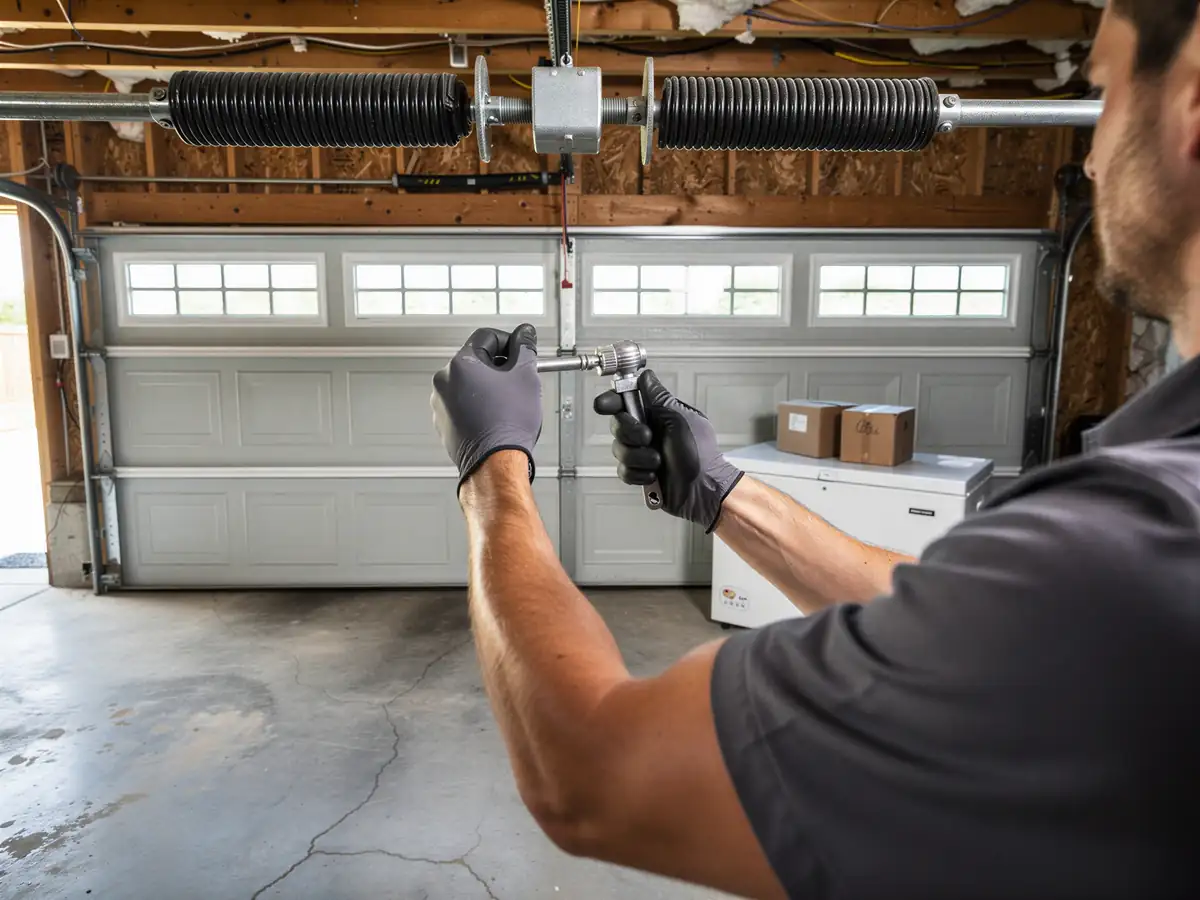
The torsion spring itself, and anything on a door that's binding or crooked in the track. Torsion springs store enough force to break a wrist or worse, and on a 1986-era door, the spring may be an older style that doesn't match hardware sold today. If the door is more than a few inches off level, or the opener strains and reverses, stop opening it and get someone out to look rather than keep forcing it through its cycle. We'd rather get a call for something minor than get one after a cable has already let go.
What the Repair Takes
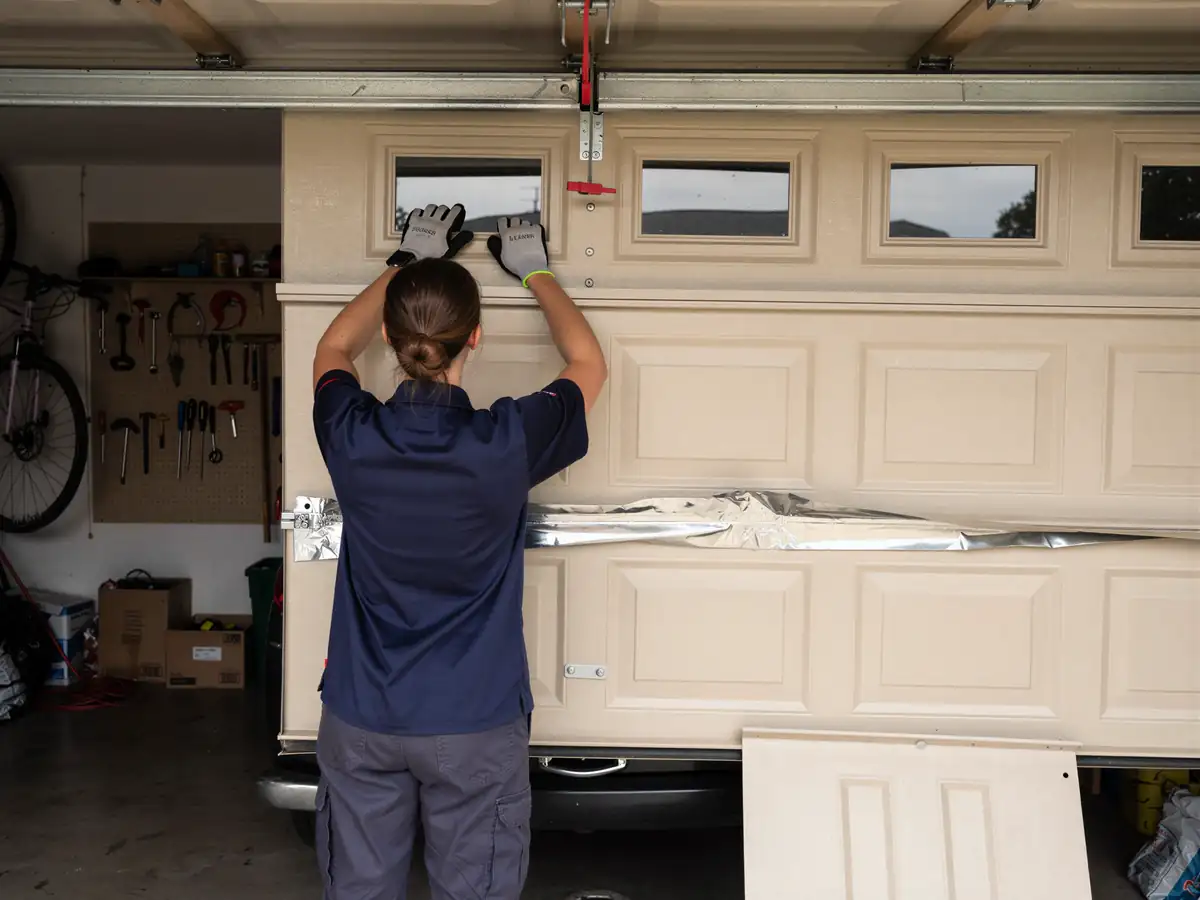
Most calls land in one of two buckets: a worn part that needs swapping, or a door that's out of adjustment and needs reset. Springs, cables, rollers, and hinges are straightforward once we're on site with the right stock on the truck. Opener boards and gear sets take longer to source if the unit is old enough that the manufacturer has moved to a different platform.
Winters here run cold enough that steel springs and nylon rollers both get stiffer and more brittle, so cold-weather calls often turn out to be a part that was already near the end of its life and finally gave out on a hard morning. We account for that when we're diagnosing - a spring that snapped in January isn't always a January problem, it's a part that was due. One limit worth saying up front: if the opener itself needs a full replacement and the model is long discontinued, we're not going to spend hours hunting down obsolete parts when a new opener costs less than the labor would.
Why It Happens Here
Shorewood's housing stock runs newer than a lot of the territory we cover out of Savage - the median build year here lands around 1986, while much of the wider service area is still carrying 1960s and 70s construction. That twenty-year gap matters for what breaks and when. A door and opener put in when a Shorewood house was framed in the mid-80s is now closing in on forty years old, which is well past the rated life of the chain-drive openers and the steel torsion springs that were standard then.
A lot of that original hardware has never been swapped. Springs are rated for a set number of open-close cycles, and once a homeower starts hearing it strain or sag mid-lift, that's usually the original spring finally used up rather than a fresh problem. Openers from that era also tend to run louder and slower than newer ones, which owners sometimes live with for years before deciding it's worth fixing instead of just tolerating.
What Can Go Wrong
On doors this age, the usual failure points are the torsion spring, the lift cables, and the opener's internal gear
Springs lose tension gradually, so a door that used to lift with light effort starts needing a shove, and then one day the spring snaps outright - usually with a loud bang, not a warning. Lift cables fray where they wrap the drum and can snap under load, which drops one side of the door and leaves it hanging crooked.
Openers from the 1980s and 90s often run on a nylon drive gear that wears down to dust over the decades
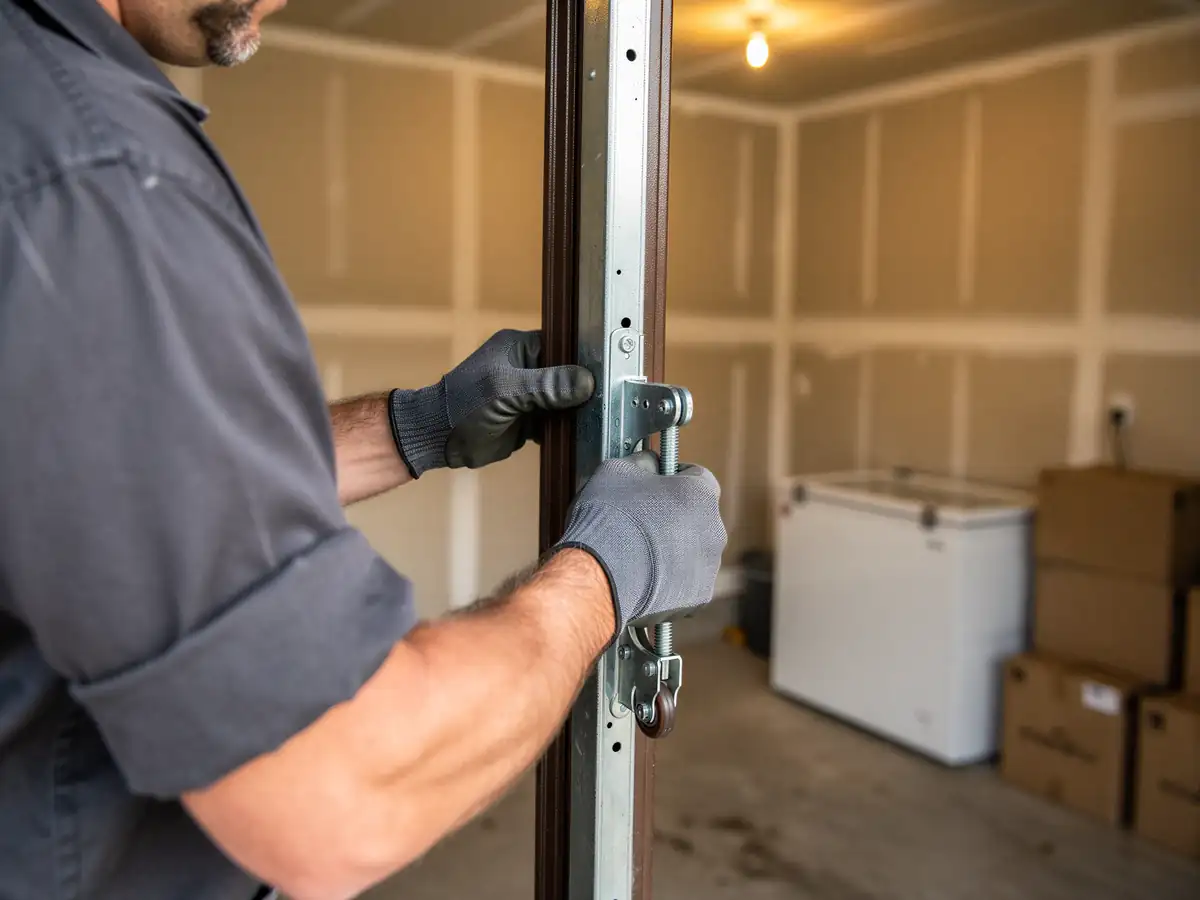
When that happens the motor runs but the door doesn't move. Rollers crack and bind in the track, especially steel ones that were never upgraded to nylon. None of these are emergencies that can't wait an hour, but a door stuck halfway open, or hanging on one cable, is a door you leave alone and call about rather than try to force shut.
How to Book
We run this job out of Savage, about 15 miles from Shorewood, so when you call we're scheduling a drive, not dispatching from a depot in town. That's worth knowing going in - we don't keep a branch or a standing crew in Shorewood, and we're not going to pretend otherwise. What we can do is get a truck stocked for springs, cables, rollers, and common opener parts out to you and get the job done in one visit for most repairs.
If you want to see what else we cover in the area, the Shorewood service page lists the towns nearby we also run calls to. For the home base and the rest of what we do day to day, there's the Savage garage door repair page.
What You Are Seeing
If the door is noticeably heavier to lift by hand than it used to be, or the opener strains and sometimes reverses partway up, that's usually spring tension going away. A loud bang from the garage followed by a door that won't budge is almost always a broken torsion spring - don't try to lift it past that point. A door hanging crooked, lower on one side than the other, points to a frayed or snapped lift cable.
Grinding or clicking from the opener head with no door movement usually means the drive gear has worn through, which is common on units from the 1980s and 90s that have never been replaced. Rollers that pop or squeal loudly as the door travels, especially in cold weather, are often original steel rollers that have outlasted their useful life. Any of these is worth a call before the next cycle, since a door that's already failing partway rarely fixes itself.