Doing It Yourself
Swapping a garage door opener looks like a weekend project until you're standing on a ladder with the old unit half-disconnected and no good way to test the safety reversal sensors
At a household income level like Shorewood's median of $172,325, most owners aren't trying to save $150 on labor - they're trying to avoid buying a $400 unit when the problem is a $40 part. That distinction matters more than the install itself.
If your opener is from a house built in the 1986 range typical for this area, the motor housing, the logic board, and the drive mechanism are often original or one generation removed
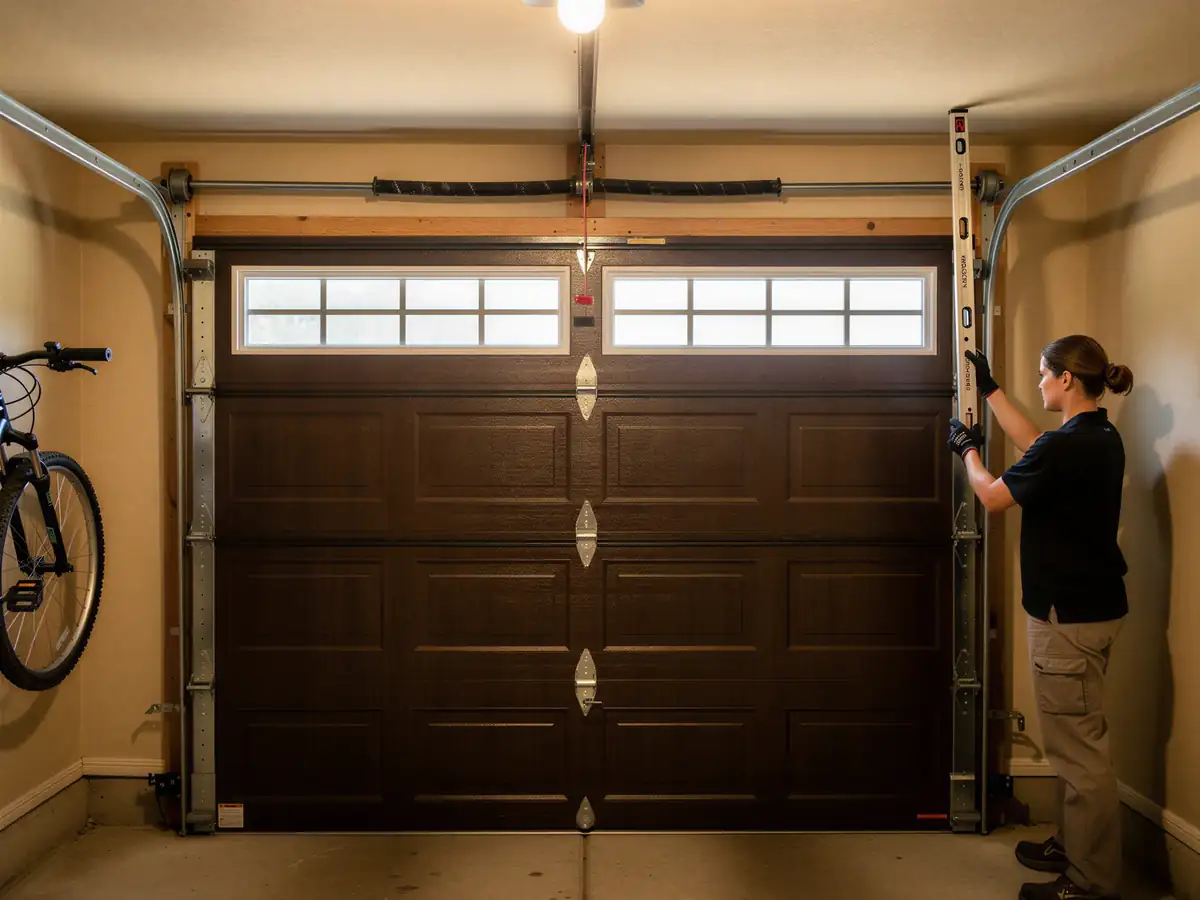
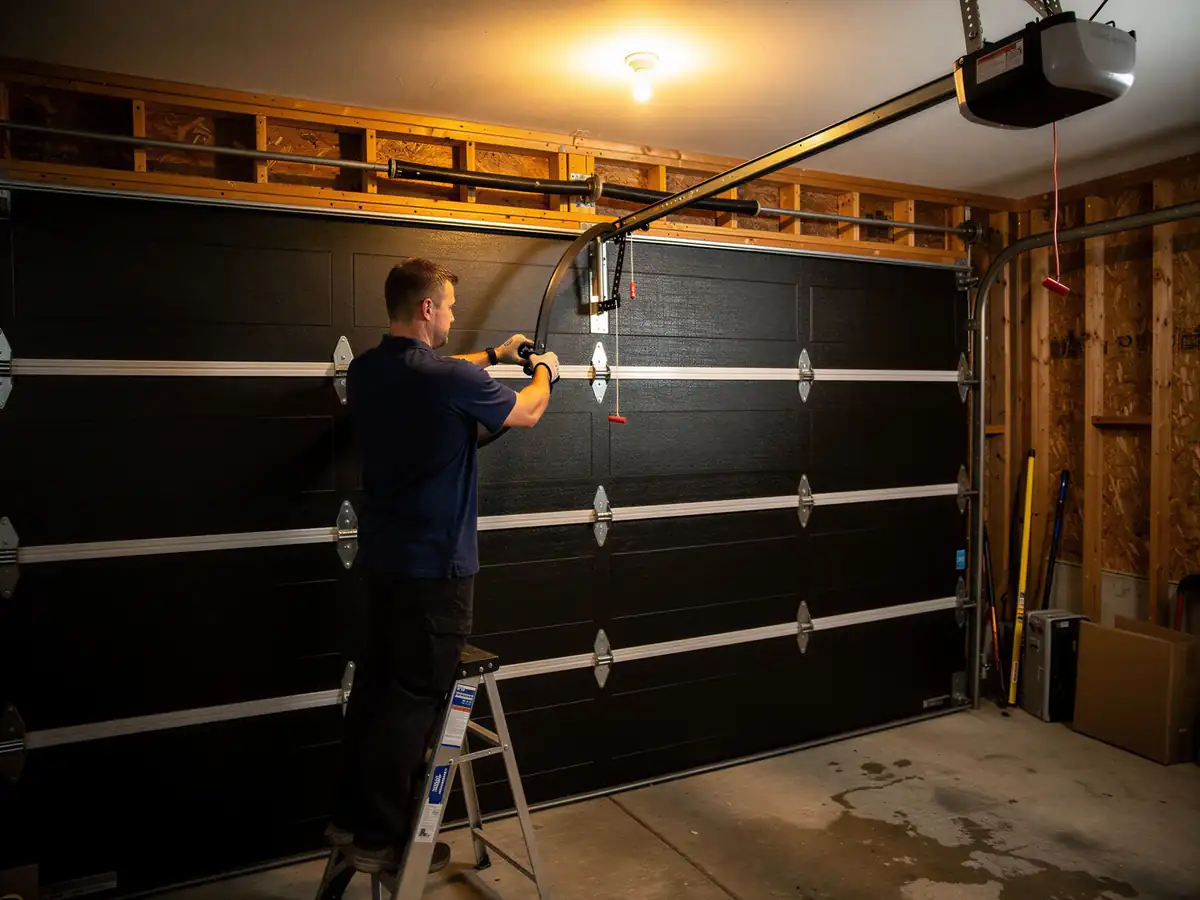
Pulling the old unit tells you fast whether the rail is bent, the trolley is cracked, or the whole thing is just tired. We'll say plainly: if you're comfortable with a multimeter and have a second set of hands to hold the rail steady, a basic swap isn't beyond a capable homeowner. Wiring the safety sensors correctly and getting the travel limits set without stressing the top panel is where most DIY jobs go sideways. That part is worth having someone check even if you did the rest yourself.
What the Repair Takes
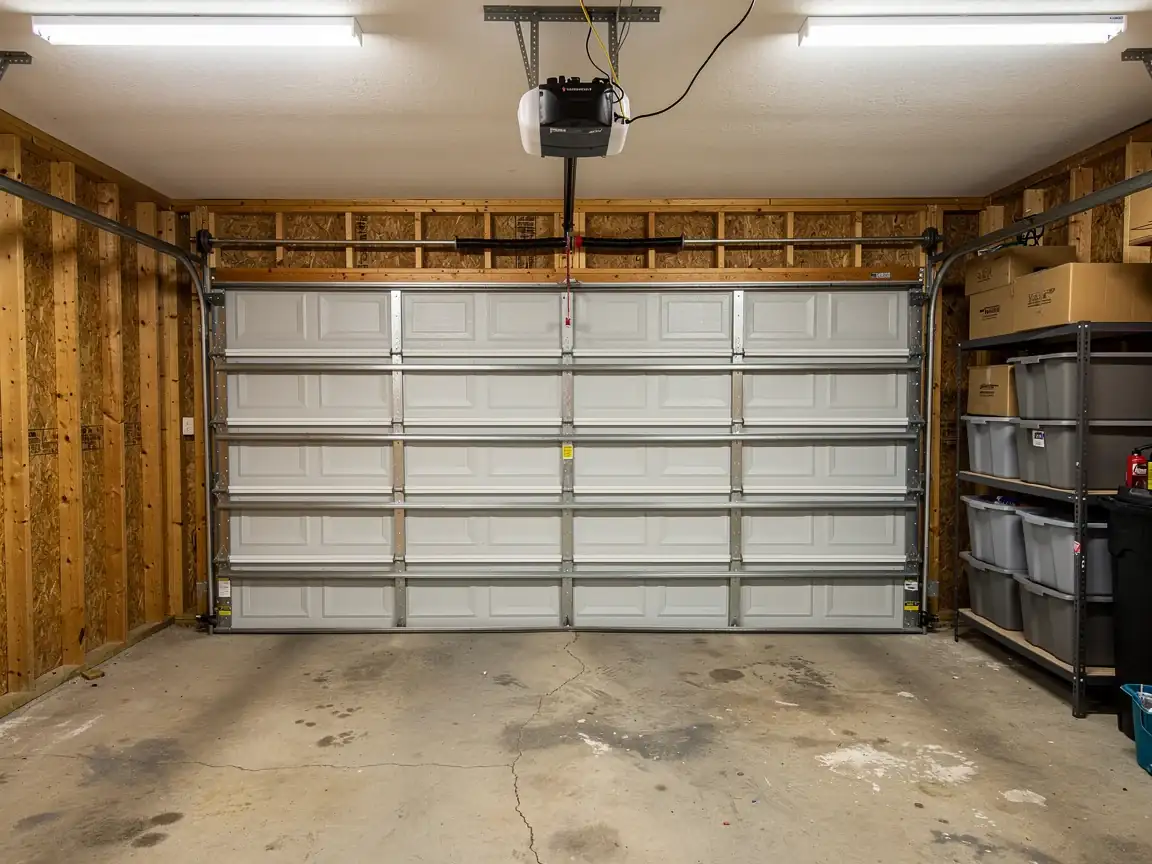
A straight opener swap on a house from the 1986 era usually means matching a newer chain or belt-drive unit to a rail and bracket setup that's held up fine - you're replacing the motor and logic, not rebuilding the header. Where it gets longer is when the mounting bracket itself has sagged over three-plus decades, or the wiring to the wall control predates the safety codes that came later.
We don't carry every belt-drive unit on the truck for every call; some upgrades, especially ones that need a battery backup module or a specific rail length, mean a return trip once the part's in. That's the honest limitation here - we'd rather tell you that up front than promise a same-visit install we can't back from 15 miles away in Savage. For most single motor swaps on an unmodified rail, it's a half-day job including setup and safety testing.
Why It Happens Here
Shorewood's housing stock centers on a median build year of 1986, which puts a lot of openers squarely in their second or third motor generation - these aren't the 1960s cable-and-pulley doors you'd find elsewhere in the broader Savage service territory, where the overall housing spans 1956 to 2005. A chain-drive unit installed in the late 80s or 90s is now old enough that its capacitor is failing, its gear is stripped, or its logic board doesn't support a modern keypad or app connection at all.
At $172,325 median household income, well above the wider area's $108,611, replacement tends to win over patch repair here sooner - the math on a $600 upgrade against a $150 band-aid fix favors doing it once. With roughly 2,952 households in Shorewood, it's a smaller, more uniform pocket than the 109,890-household territory as a whole, so the fixes repeat: same era, same motor type, same failure points.
What Can Go Wrong
On an opener from the 1986-era bracket of houses
The two most common failures are a stripped nylon drive gear inside the motor housing and a dying start capacitor - both cheap parts, both easy to mistake for a dead unit. Winters here fall in the cold-moderate band, and temperature swings are hard on plastic gear housings and rubber belt materials that were never rated for the range they're seeing now, especially on units pushing 25-plus years.
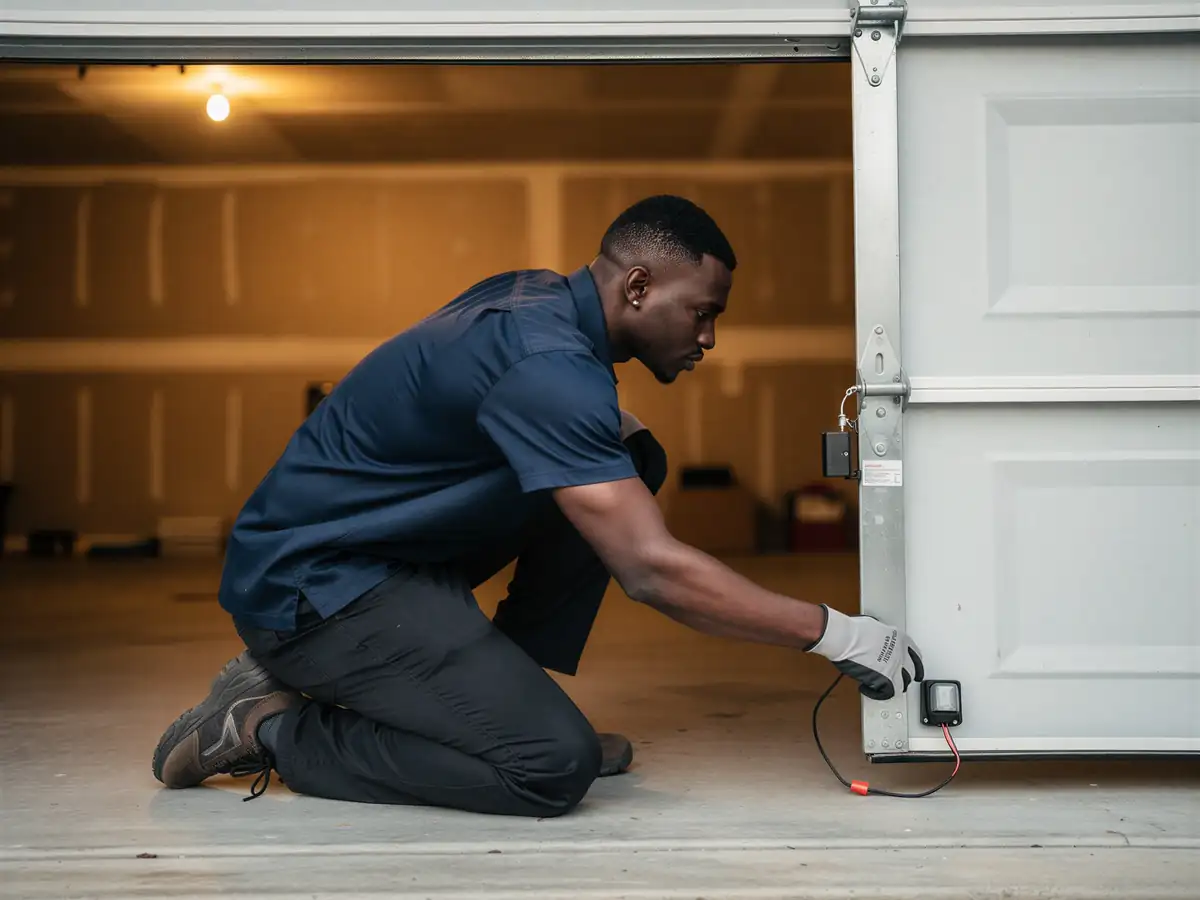
We also see safety sensor failures that aren't really sensor failures
A bracket that's drifted out of alignment over the years, which reads as a broken eye but isn't. Worth checking before anyone condemns the whole unit. One thing we won't do is sell a new opener onto a rail or header that's structurally shot; if the track's bent or the header's rotted, that's a door problem first, and fixing the opener on top of it is wasted money.
How to Book
We run opener installs in Shorewood as scheduled trips out from Savage, about 15 miles away, rather than same-day emergency calls - that lets us bring the right unit and rail length instead of guessing. If you know your opener's brand and roughly how old your house is, mentioning both when you call saves a diagnostic trip. See our coverage for Shorewood for what's included, or check the Savage opener installation page for the full list of units and options we carry.
What You Are Seeing
If your opener is grinding, stuttering mid-travel, or reversing before it hits the floor, that's almost always the drive gear or the limit switch, not the motor itself - common on units original to houses built around 1986. A remote that works intermittently but a wall button that always works points to a dying antenna board, a cheap fix next to a full replacement.
If the light blinks a set number of times and won't run at all, that's a diagnostic code most units display plainly in the manual - worth checking before assuming the worst. And if the door reverses immediately on close with no obstruction, check the sensor alignment at the base of the tracks first; it's the single most common false alarm we see on openers in this age range.