Doing It Yourself
With about 2,952 households in Shorewood, this isn't a problem that comes up on every block
So most owners have never dealt with it before and don't have a feel for what's safe to touch. A door that's jumped its track is usually still under spring tension even when it looks dead in the opening. If a cable has come off the drum along with the track, do not put your hands near the bottom corners of the door and do not try to force the panel back onto the rail with a pry bar or your knee - that's how fingers get crushed and tracks get bent worse than they already are.
- 2,952 households
What you can safely do
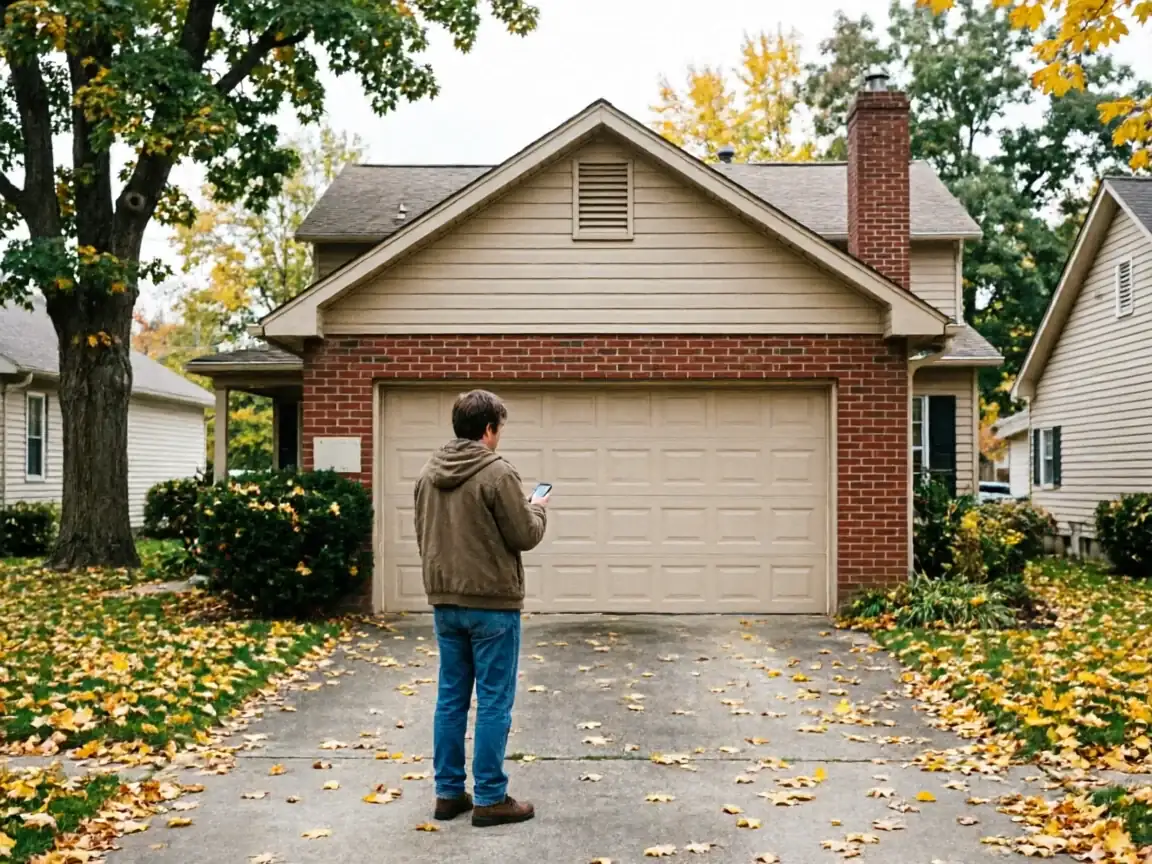
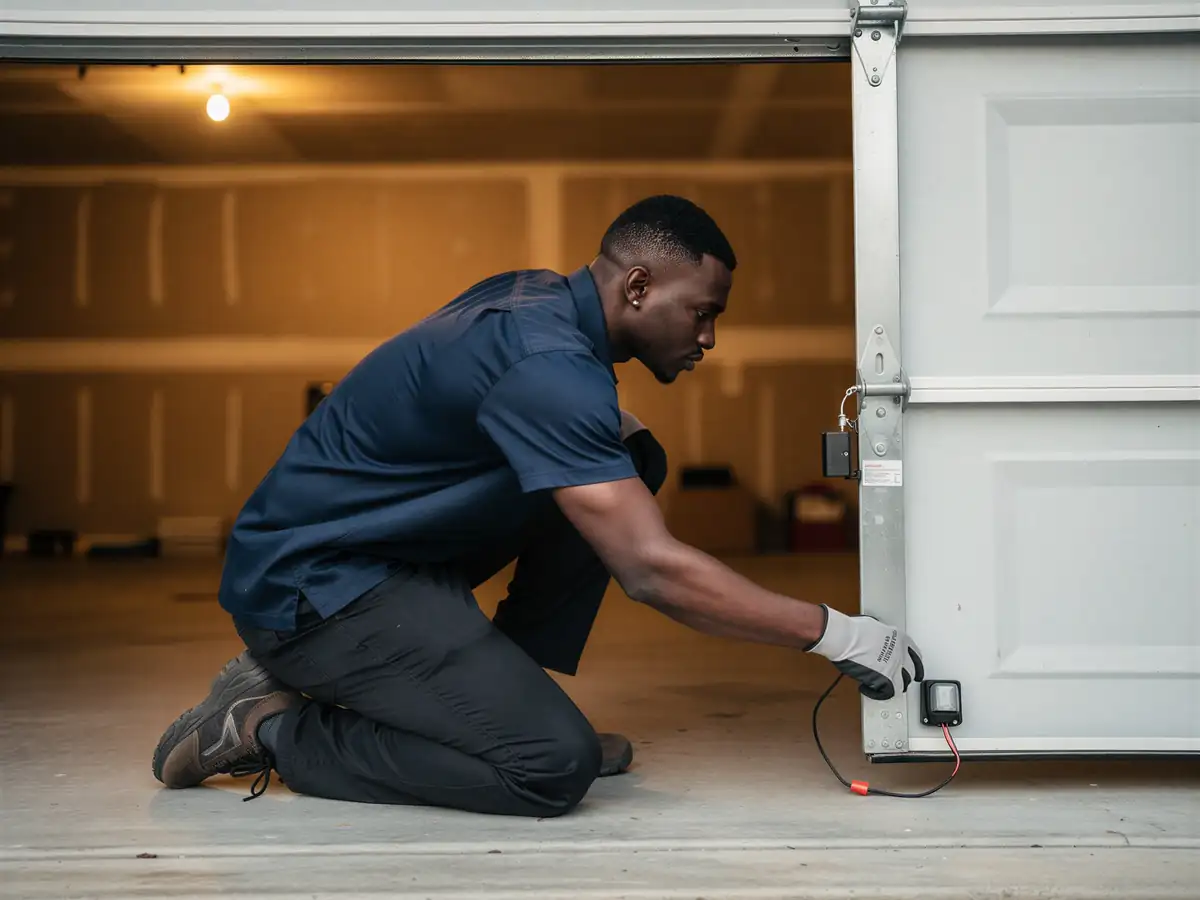
Kill power to the opener, leave the door exactly where it sits, and take a few photos from a couple feet back so whoever comes out can see whether it's one track bent at a bracket or both tracks pulled loose from the wall. If the door is only an inch or two off the track and nothing looks bent, sometimes it's just a roller that's worn through and popped out of the channel - that's a smaller job than a track that's been yanked off its mounting. Either way, this isn't a project to finish with a rubber mallet and hope.
What the Repair Takes
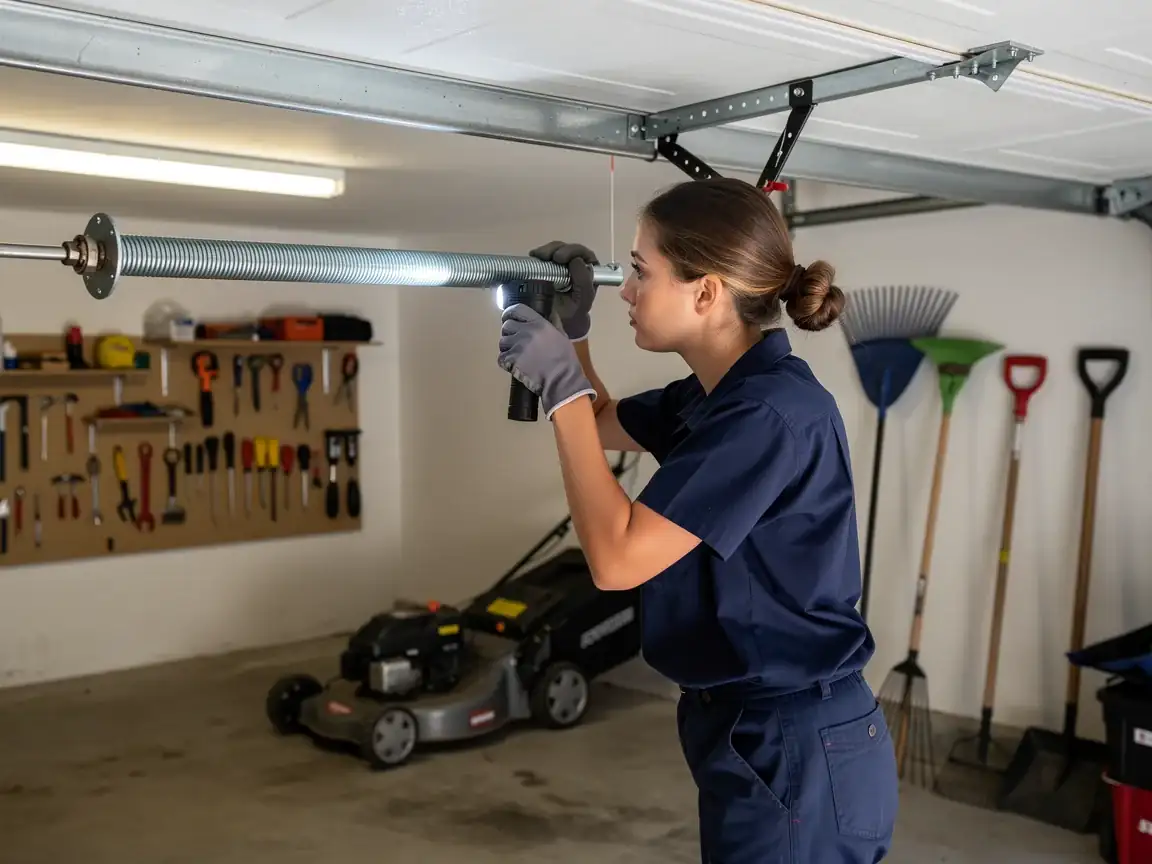
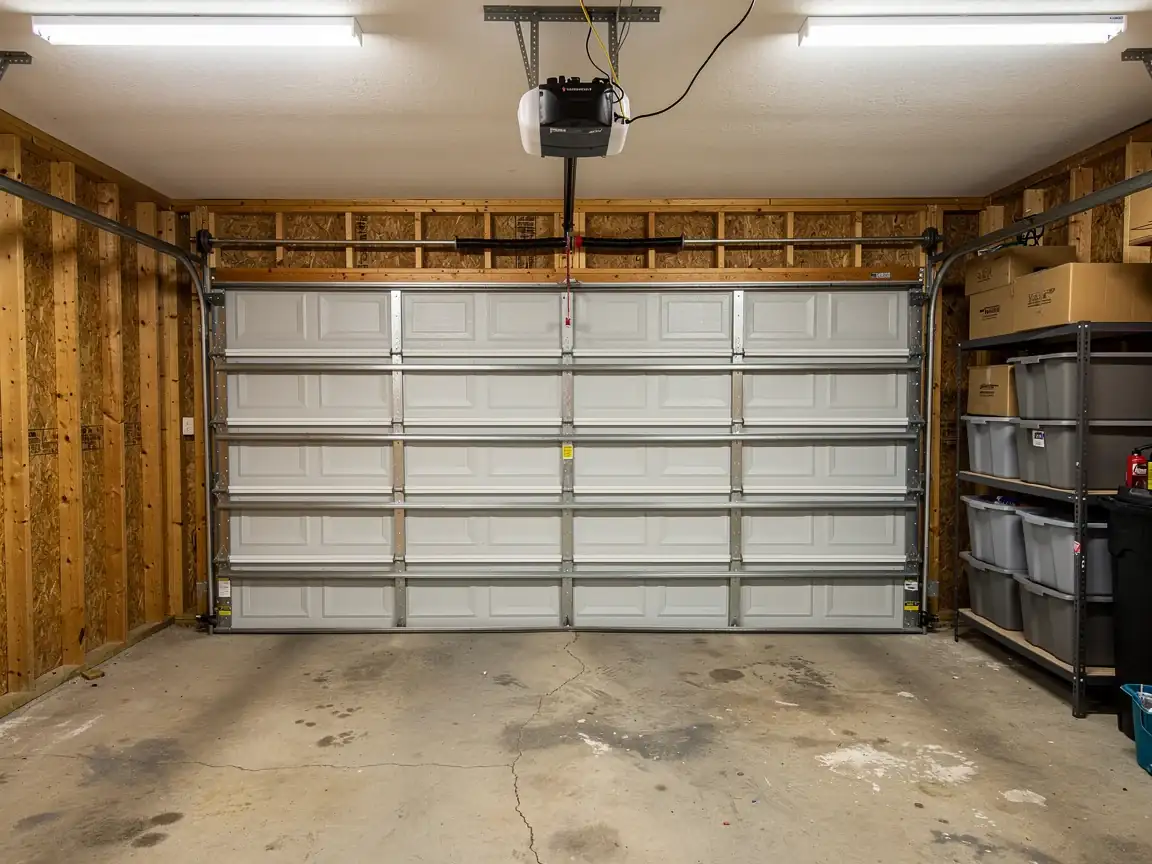
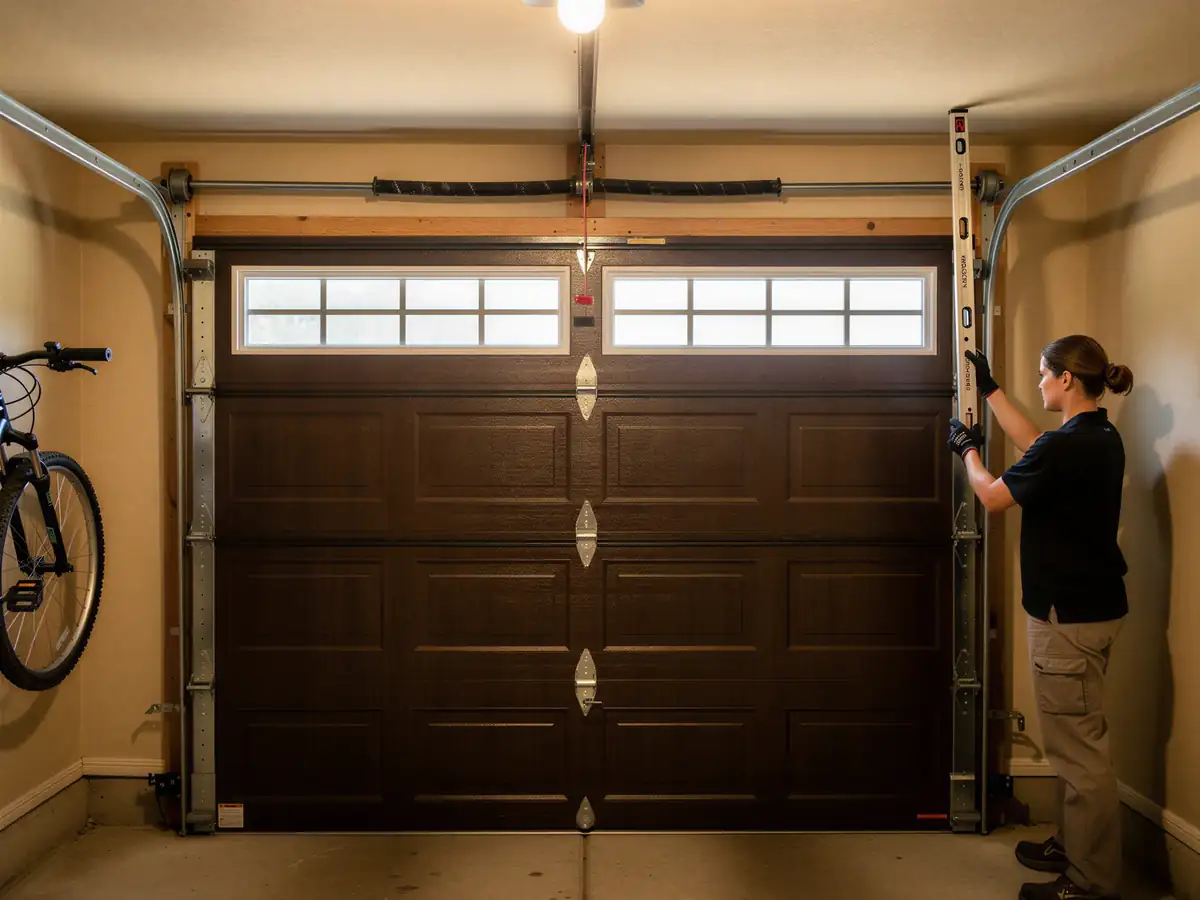
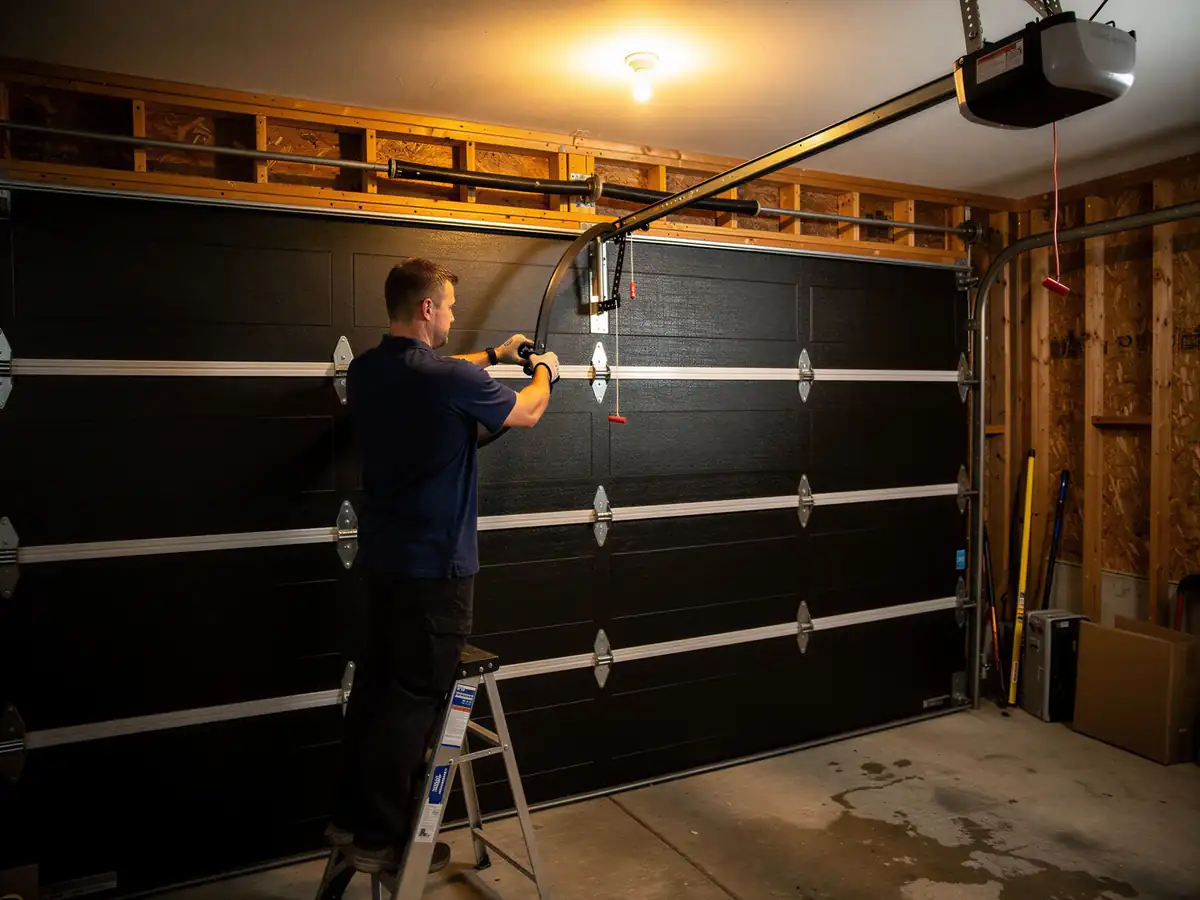
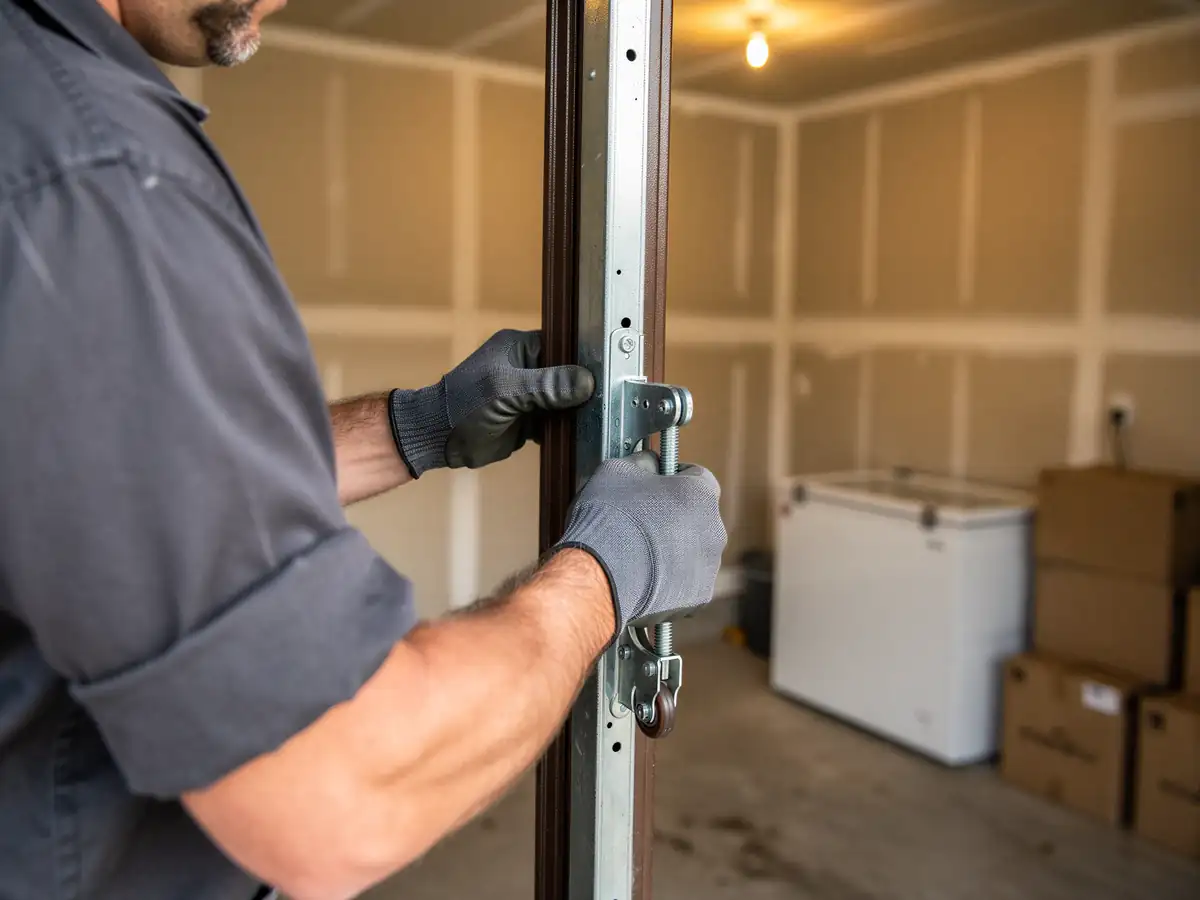
Most of Shorewood's housing stock was built around 1986, which usually means galvanized steel tracks on roller brackets rather than the older wood jamb setups you'd find in a house from the 1950s or 60s. Fixing an off-track door on that generation of hardware starts with releasing tension safely, then checking whether the track itself is bent or just knocked loose from its wall brackets - those are two different repairs. A bent track gets replaced, not hammered straight; straightening it back into alignment almost always leaves a soft spot that throws the door off again within a few months.
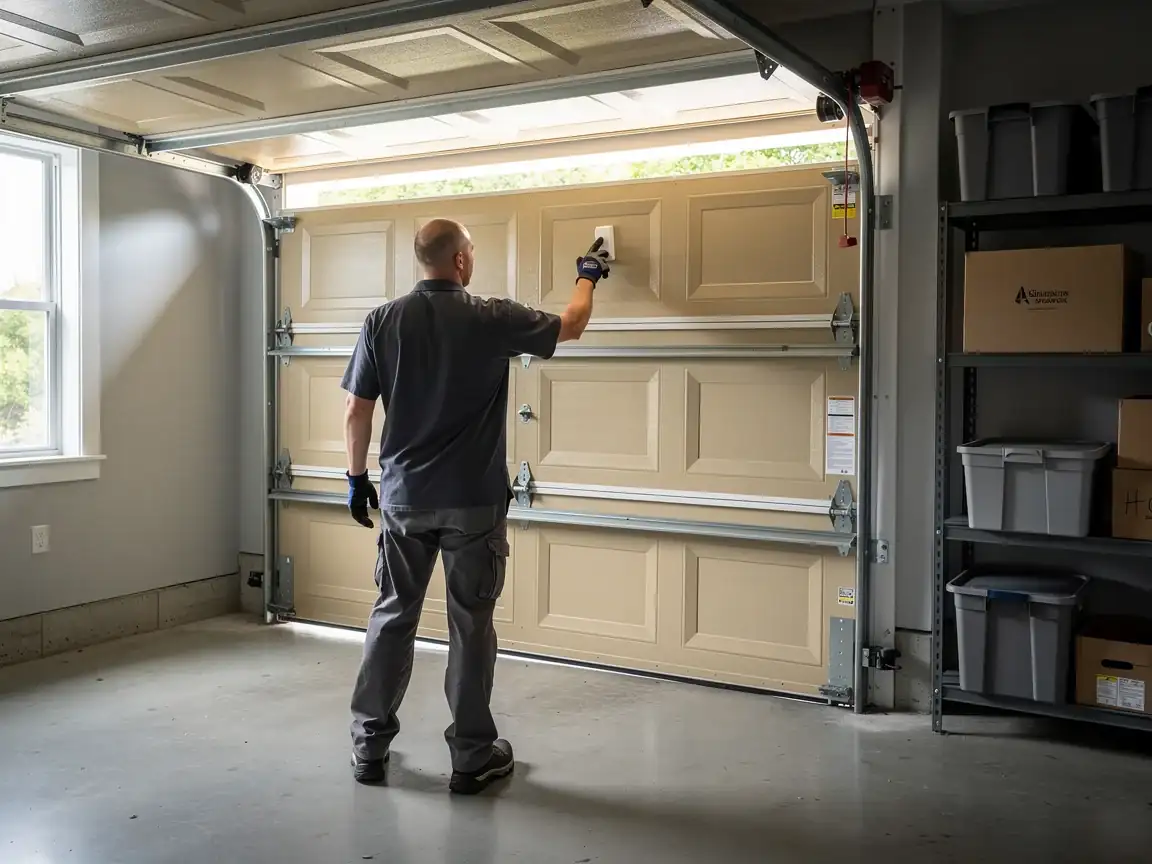
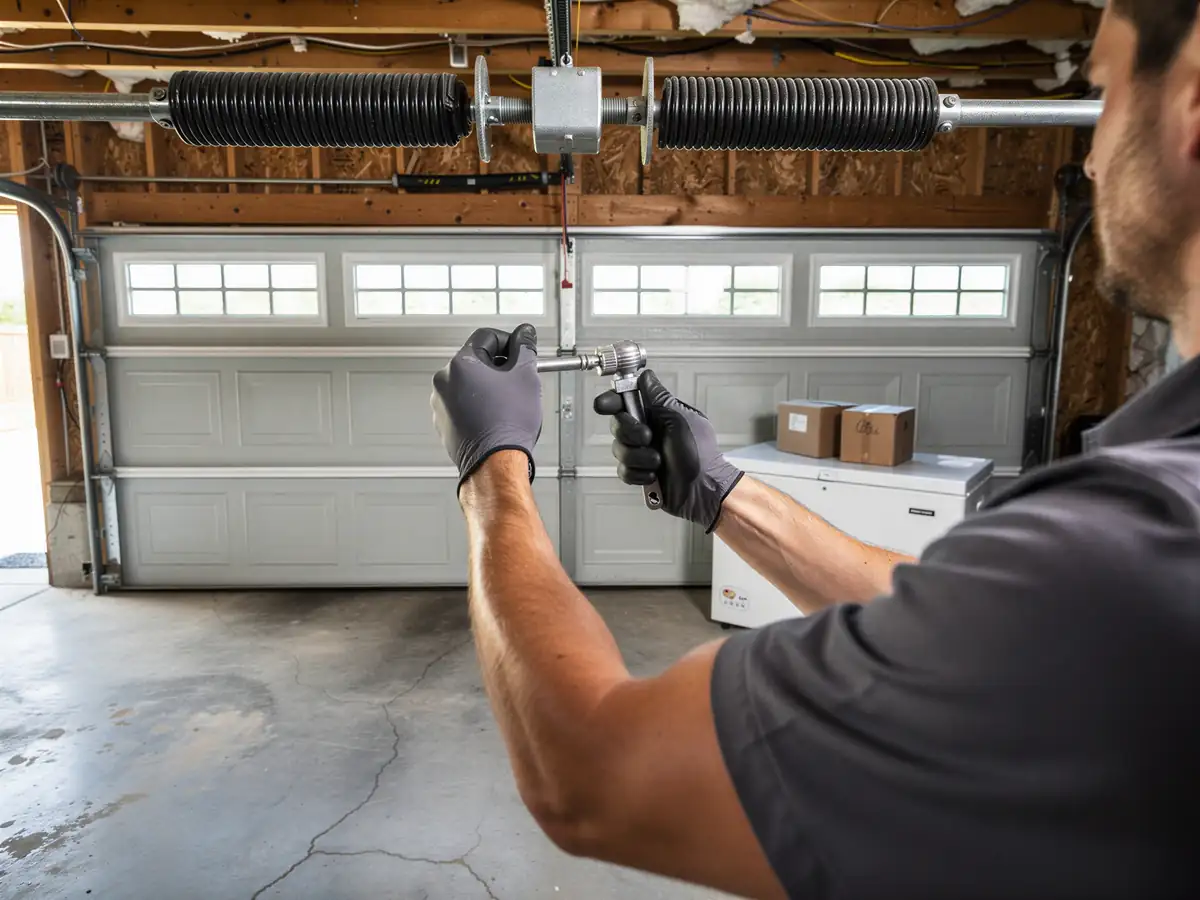
After the track is squared up, every roller on that side gets checked, since a worn or cracked roller is often what let the door jump in the first place. The door gets run through a full cycle by hand before the opener is reconnected, checking for binding, rubbing, or a panel that doesn't sit flush in the frame. If the cable came off the drum during the jump, that gets re-seated and tensioned evenly on both sides - an uneven cable is the fastest way to have this happen again.
Why It Happens Here
Shorewood's median year built sits around 1986, newer than a lot of the surrounding area where plenty of houses date back to the 1960s and 70s. Newer doesn't mean immune - it means a different failure pattern. Doors from that era commonly run on lighter steel tracks and plastic or nylon rollers, and after three-plus decades those rollers wear thin and start to wobble in the channel instead of rolling cleanly. A wobbling roller eventually walks itself right out of the track, especially on the bottom panel where the stress from a broken or worn cable gets concentrated.
Cold is the other factor. This area sits in a cold, moderate climate band, and the freeze-thaw cycle through a Minnesota winter stiffens the lubricant in tracks and rollers, then loosens mounting bolts as wood and metal expand and contract. A track bracket that's been working its way loose all winter can let go all at once on a cold morning, right when the door's being used and under the most load. Household income in this part of the service area runs well above the regional median, and we see that reflected less in why doors go off track and more in how quickly people replace rather than patch worn hardware once it starts acting up.
What Can Go Wrong
An off-track door is rarely just a track problem by the time someone calls
If a cable slipped off the drum at the same time the door jumped, the cable can fray or kink, and a frayed cable under tension is not something to reuse - it gets replaced outright. Hinges between panels take a beating too; when a door is forced back toward center while still off the rail, the hinge screws can pull loose from the panel, which weakens that section permanently if it's not caught.
The panel itself can also take damage
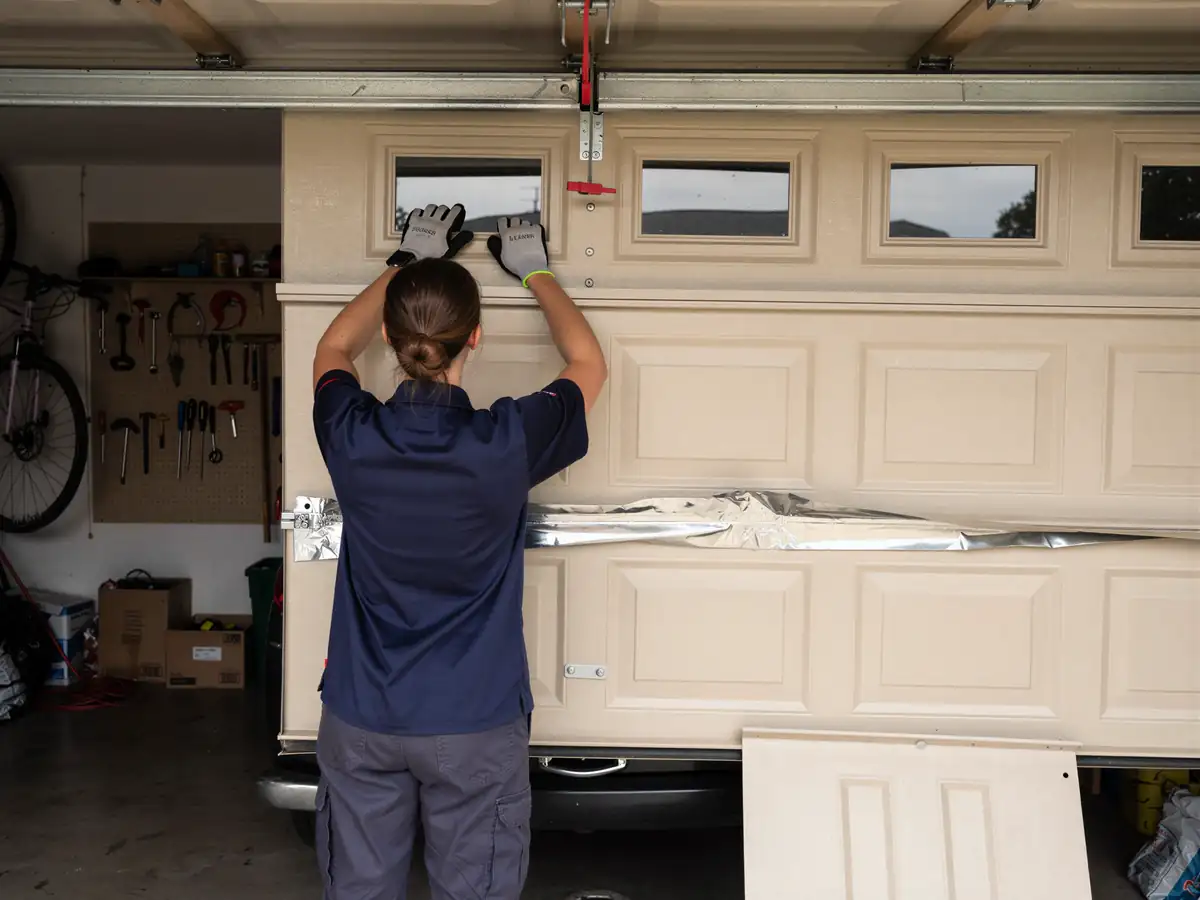
Steel panels from this build era dent and bow where a roller bracket has been pulling against the frame at an angle, and once a panel bows, it won't sit flat again even after the track is fixed. In that case, replacing just that panel is usually more sensible than trying to repair it in place, though matching an older panel can take time to source. That's the one honest limit here: if the door is bowed badly or the track damage is extensive, a full new door section is often the better call than patching the old one back together.
How to Book
Shorewood sits about 15 miles from our shop in Savage, and we run jobs out that way as part of our regular service area - there's no separate branch here, just the same crew making the drive. If the off-track issue is part of a bigger question about what's wrong with your door, our main Savage page covers the full range of what we handle: garage door off-track repair out of Savage. You can also see the rest of the towns we cover near Shorewood at our nearby service areas.
When you call, it helps to know roughly how old the door is and whether it's one track affected or both, since that changes what gets loaded on the truck before the drive out. A door that's fully off both tracks with a snapped cable needs different parts on hand than a single roller that's walked loose.
What You Are Seeing
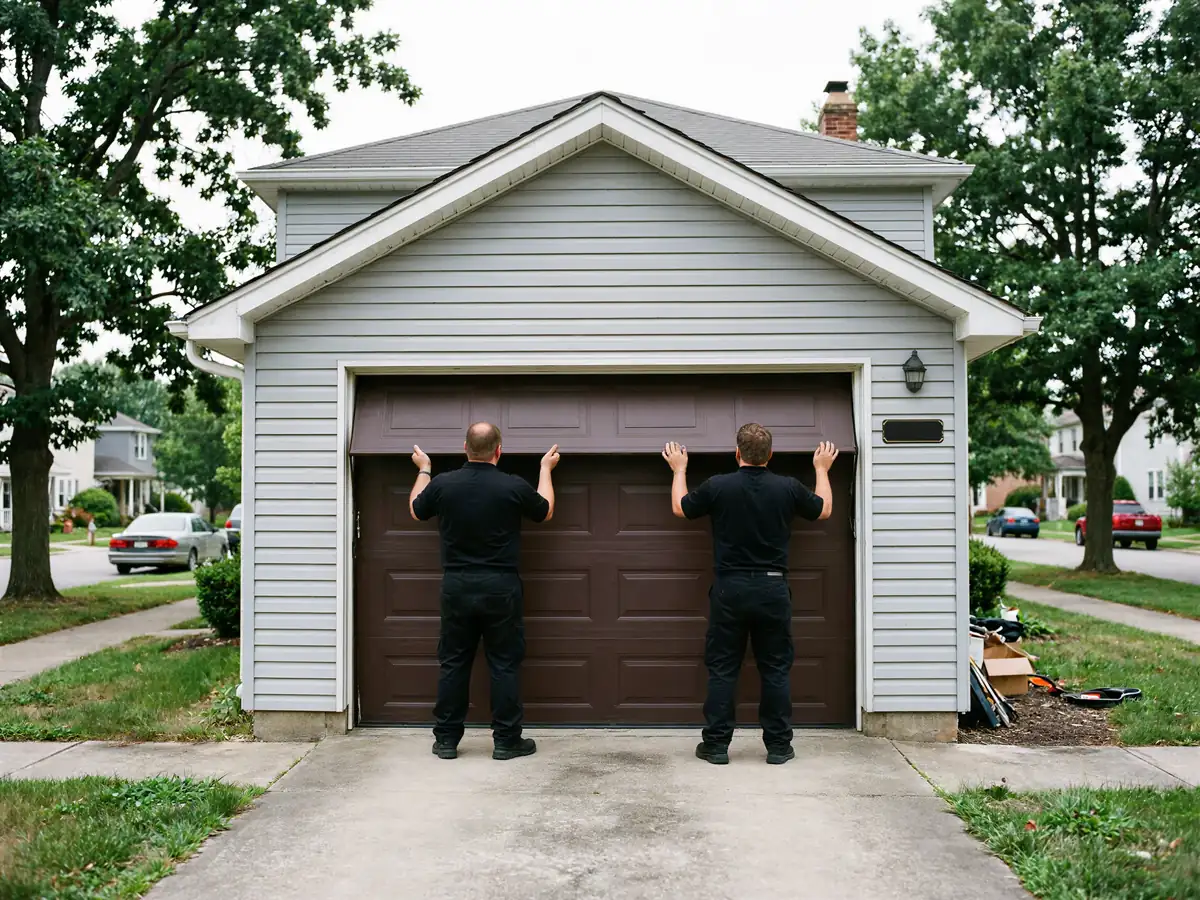
The clearest sign is a door that sits crooked in the opening - one side higher than the other, or a visible gap between the bottom panel and the track on one side. You might hear a grinding or popping sound right before it happens, which is usually a roller giving out. Sometimes the door looks fine when closed but binds or jerks partway through opening, catching on a spot where the track has pulled away from the wall bracket.
If the opener is still running but the door isn't moving smoothly, or it stops and reverses on its own partway up, that's often the opener sensing resistance from a track that's no longer straight. Don't keep running the opener through repeated cycles trying to force it - that just adds more wear to a roller or cable that's already failing, and turns a contained repair into a bigger one.